Day/Date: Monday 15 July 2025
Timing: 10:00 am - 1:00 pm
Activity Organised by: Ar. Aakriti Dewan
Activity Organised for: Third Year Students
No. of participants in the activity: 4 Students + 1 Faculty
Introduction to the Activity
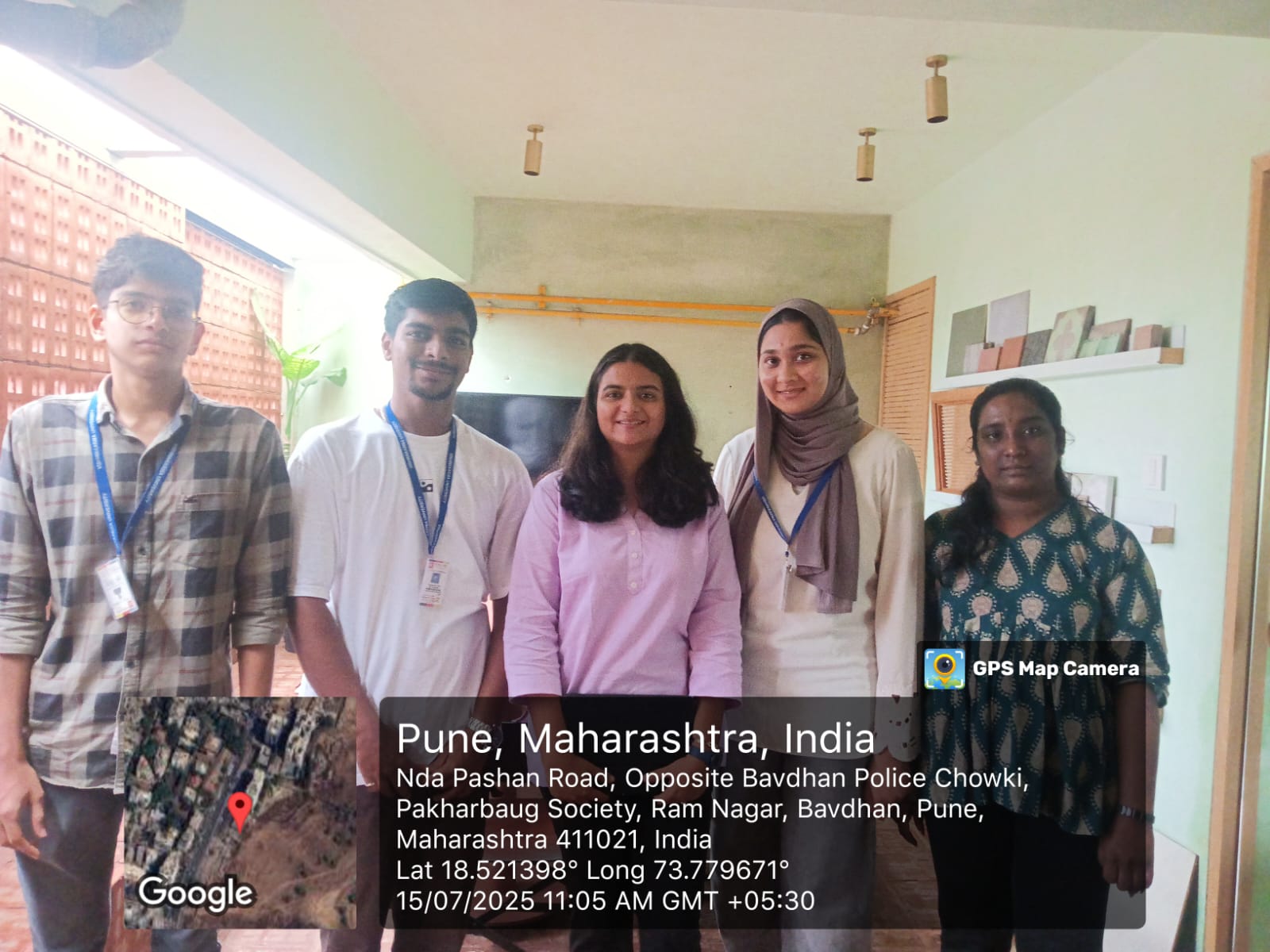
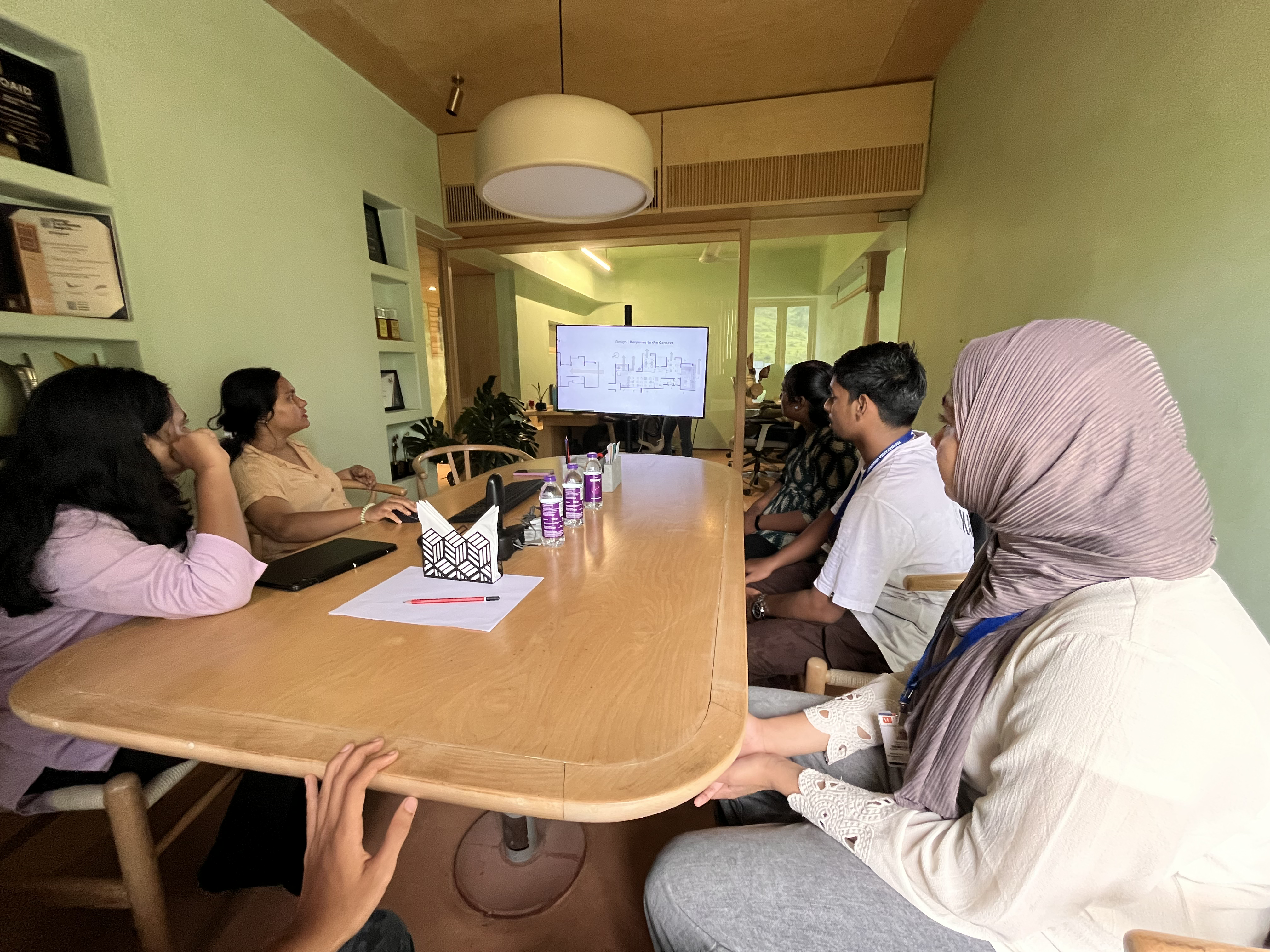
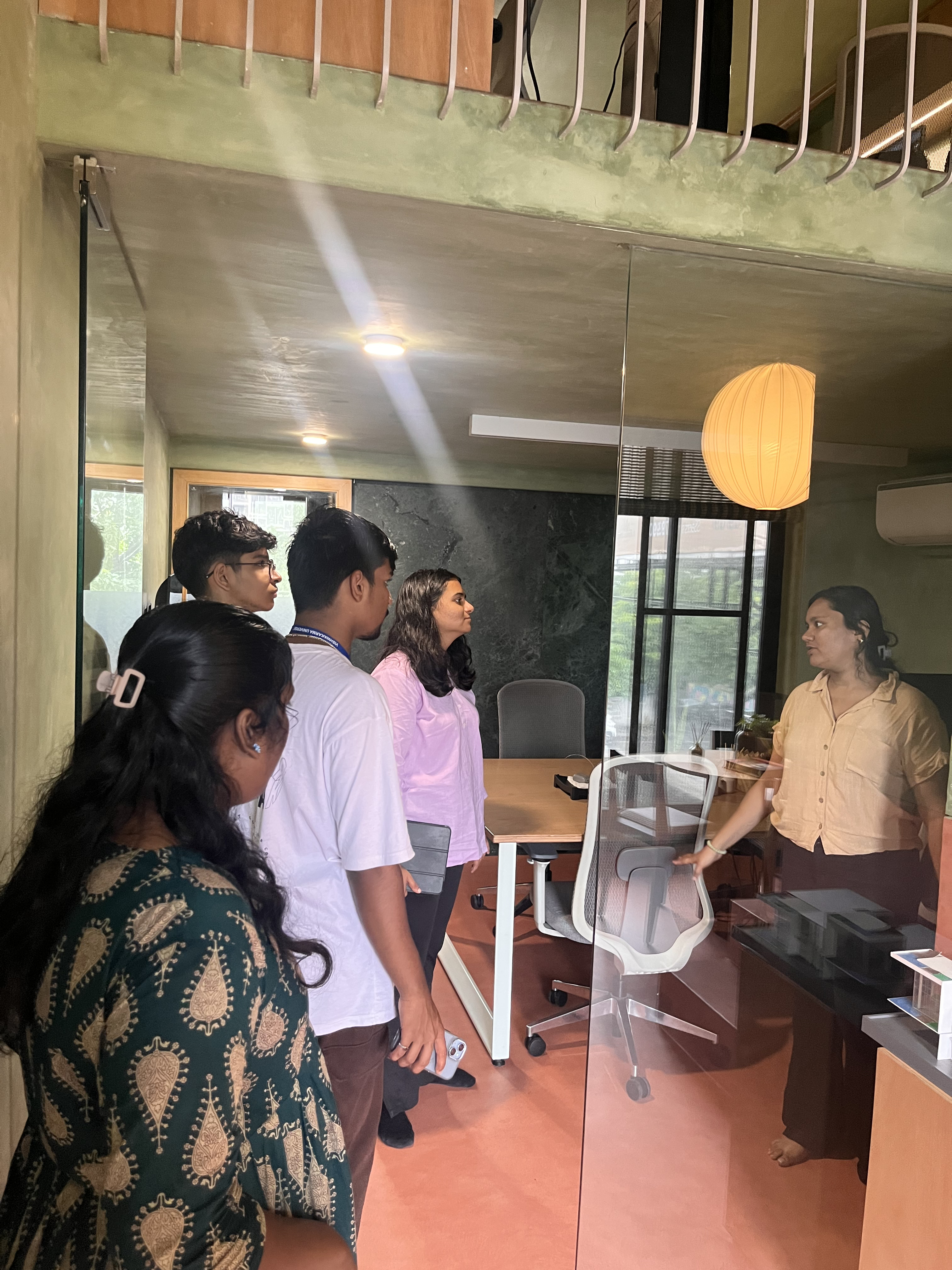
A case study visit was organized to Mind Manifestation Design Studio, an award-winning architectural practice known for its creative and contextual approach to design. The visit was part of the ongoing elective for Third Year architecture students, focused on designing workspaces for artists and creatives. This studio was selected for its innovative spatial organization, material expression, and the way it fosters collaboration and creative thinking—qualities that align closely with the elective's design brief. The students interacted with the studio team and explored how the space supports design processes, communication, and ideation.
Objective Of The Activity:
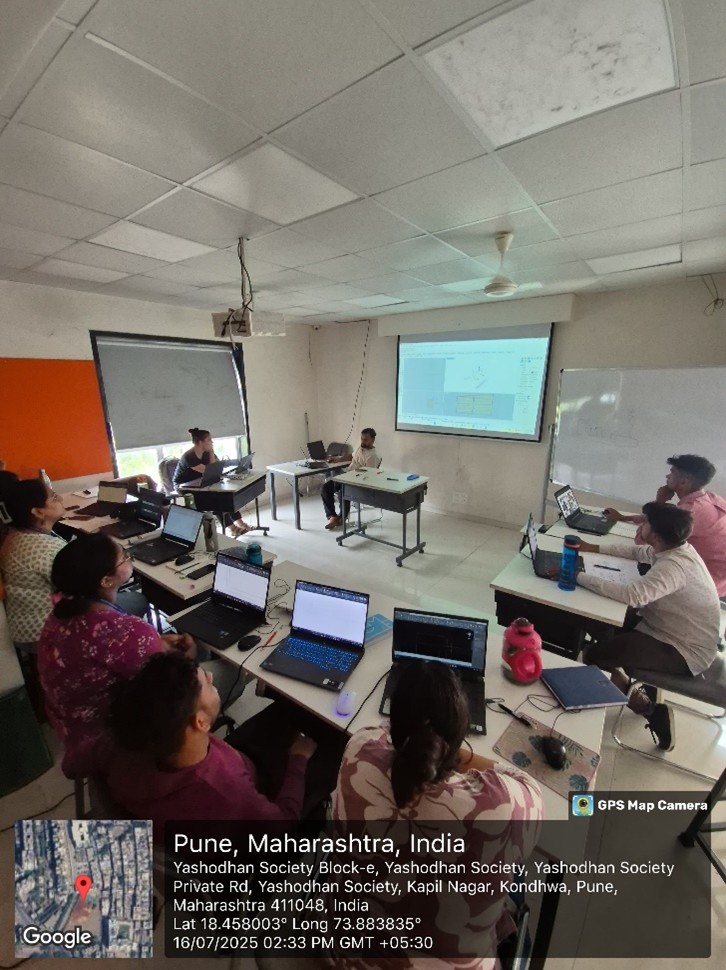
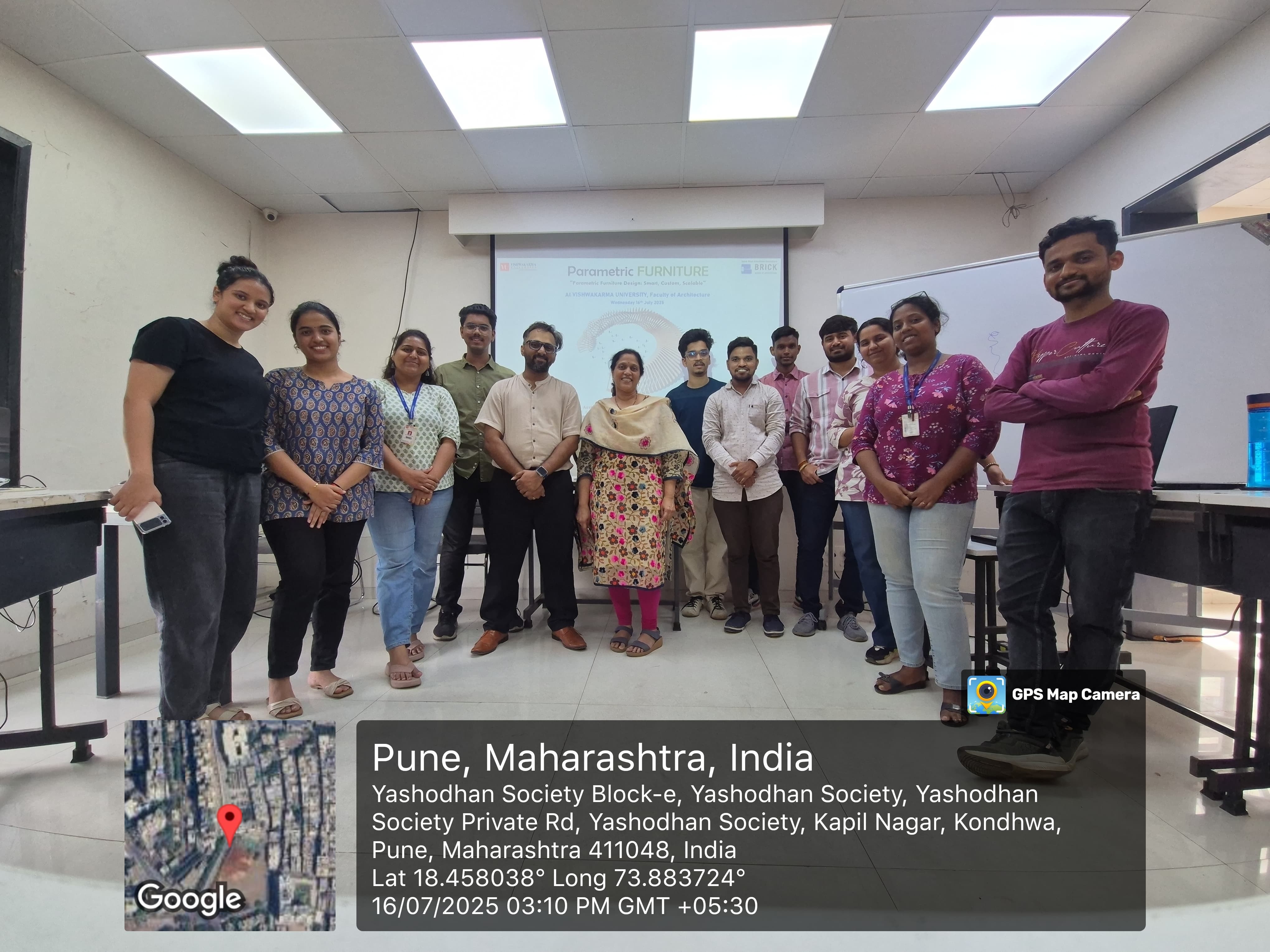
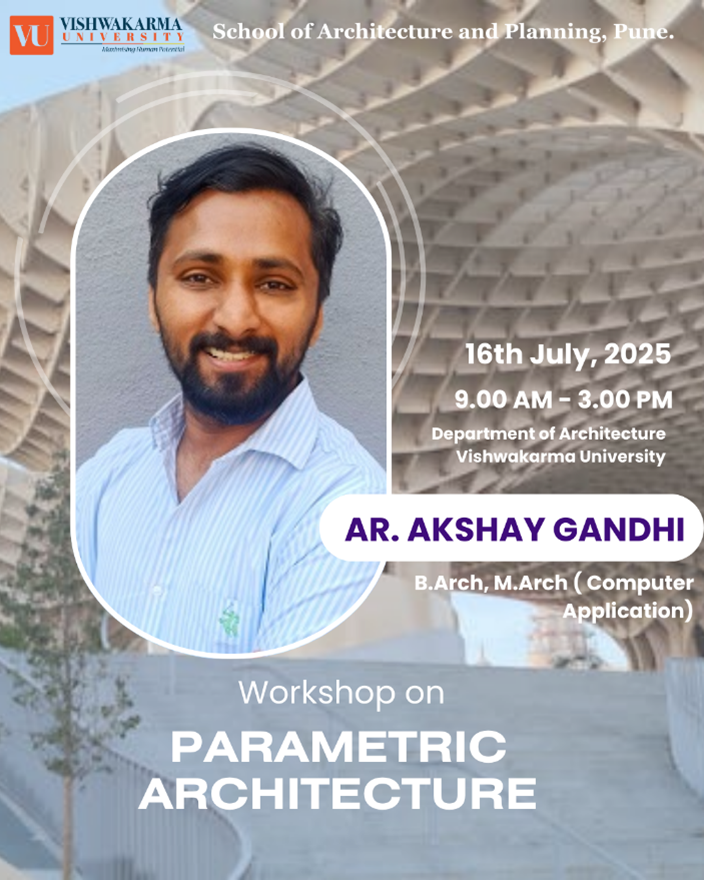
Day/Date: 16th July ‘25
Timing: 9:00 a.m. to 3:00 p.m.
Lecture Organized For: Fifth Year Students
For The Subject Of : Elective- V
No. of Participants in the Activity: 11
Visit Organised By: Ar. Anjali Rasane
Objective Of The Workshop:
The primary objective of the workshop To introduce students to the principles, tools, and applications of parametric design in architecture, enabling them to develop the ability to create responsive, data-driven, and computational design solutions through hands-on exercises and digital modeling techniques.
Important Aspects/Points Of The workshop:
Introduction to Parametric Thinking
2. Design Logic and Parameters
3. Software & Tools Overview
4. Hands-on Modeling Sessions
5. Real-World Applications
6. Collaborative Problem Solving
7. Integration with Architecture Studio
8. Presentation & Reflection
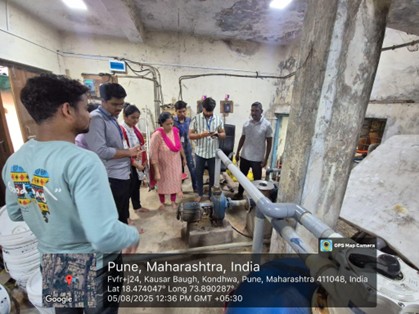
Day/Date: Tuesday 05 Aug 2025
Timing: 12:00 am - 1:00 pm
Activity Organised by: Ar. Anjali Rasane
Activity Organised for: Fifth Year Students
No. of participants in the activity: 14 Students + 1 Faculty
Introduction to the Activity
A study visit was organized to Veer Savarkar Swimming Pool, Kondhwa, Pune. The visit was part of the ongoing ABMT II for Final Year architecture students, focused on Construction methodology and details Planning, Services involved. The students interacted with the Supervisor at the Swimming Pool and explored how the Services are working and what are the specifications of the pool.
Objective Of The Activity:
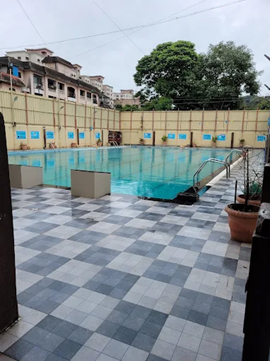
Day/Date: Tuesday 29 July 2025
Timing: 12:00 am - 4:00 pm
Activity Organised by: Ar. Anjali Rasane
Activity Organised for: Third Year Students
No. of participants in the activity: 5 Students
Introduction to the Activity
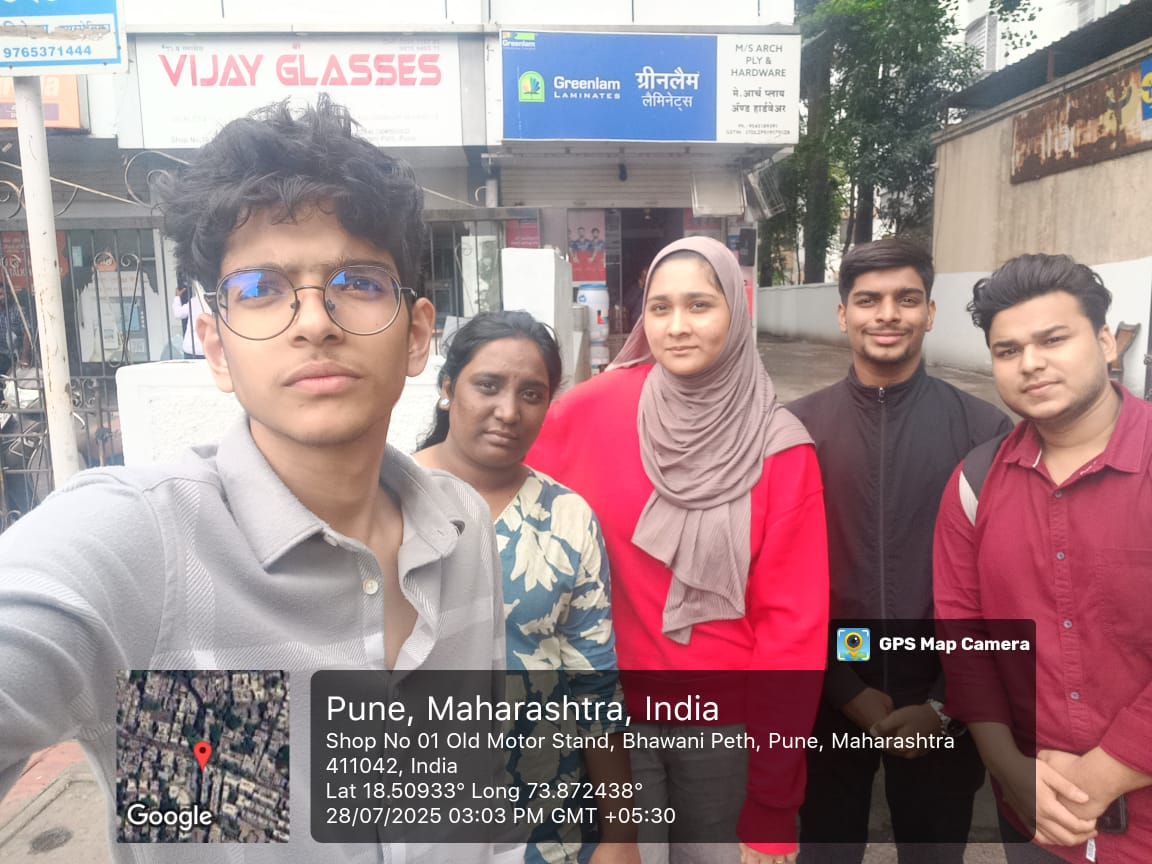
A Market survey was organized for Third year students. The visit was part of the ongoing BMT V for Third Year architecture students, focused on Interior Construction and finishing materials . The students interacted with the shop owners and explored various materials available in the market.
Objective Of The Activity:
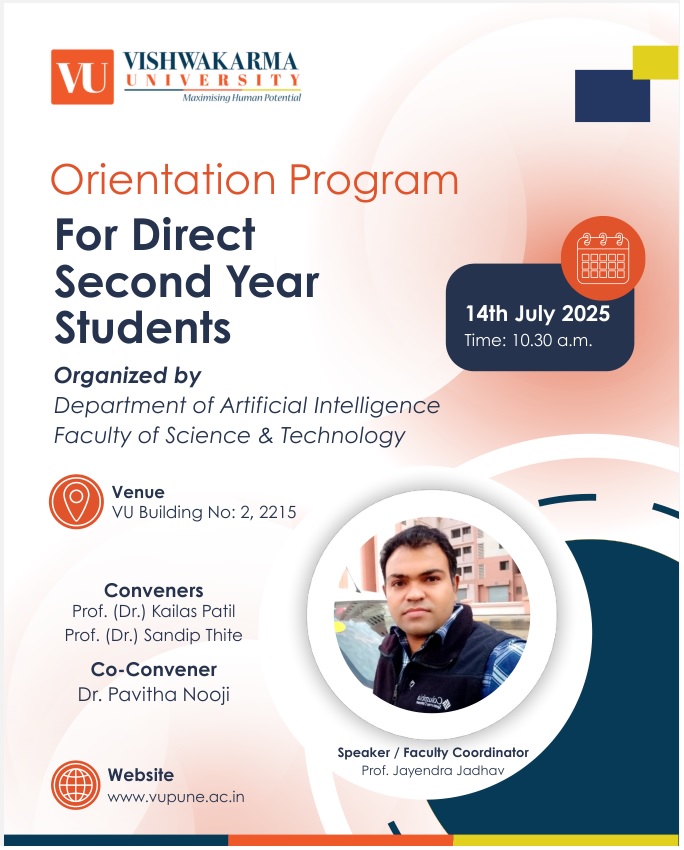
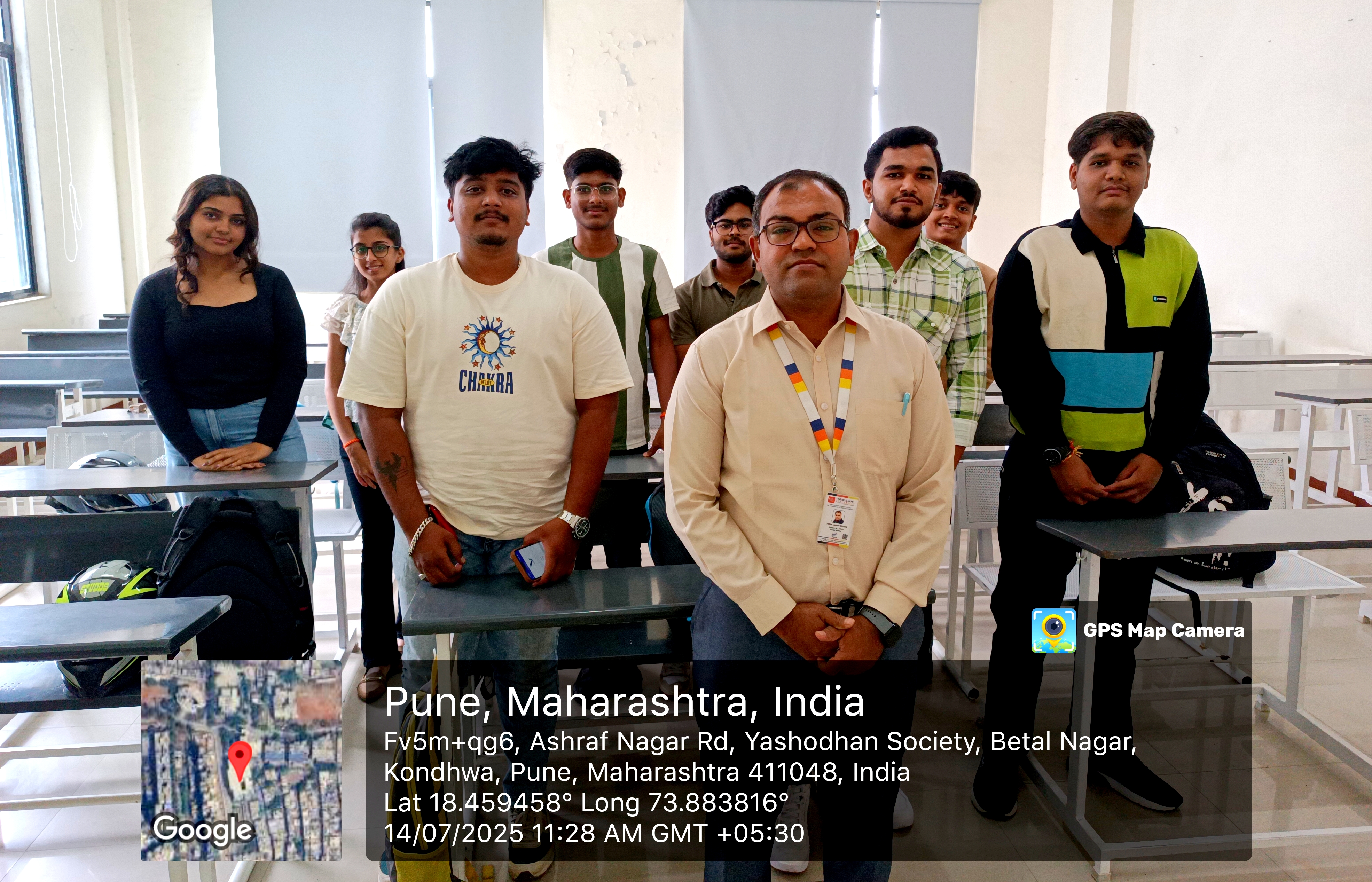
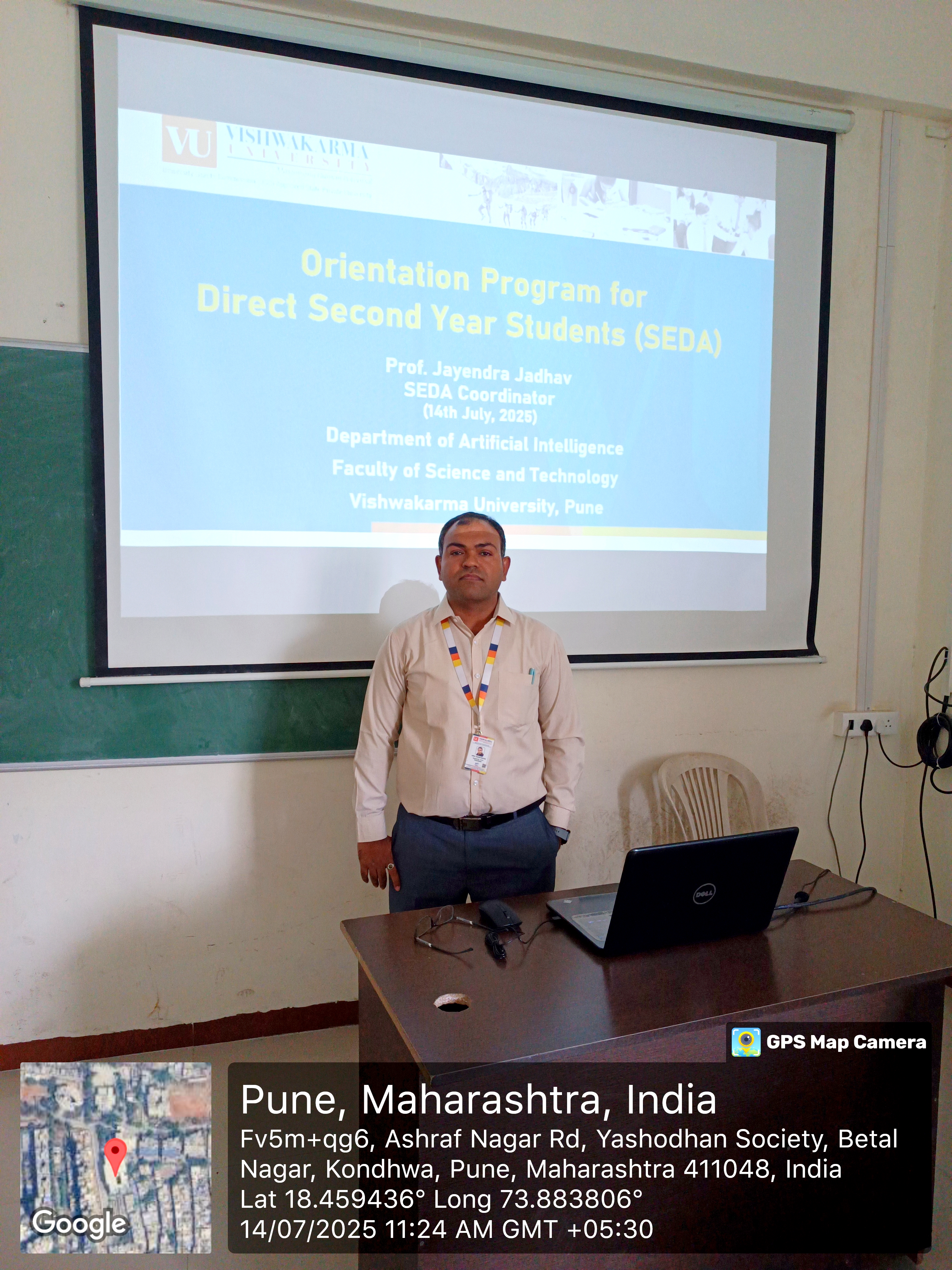
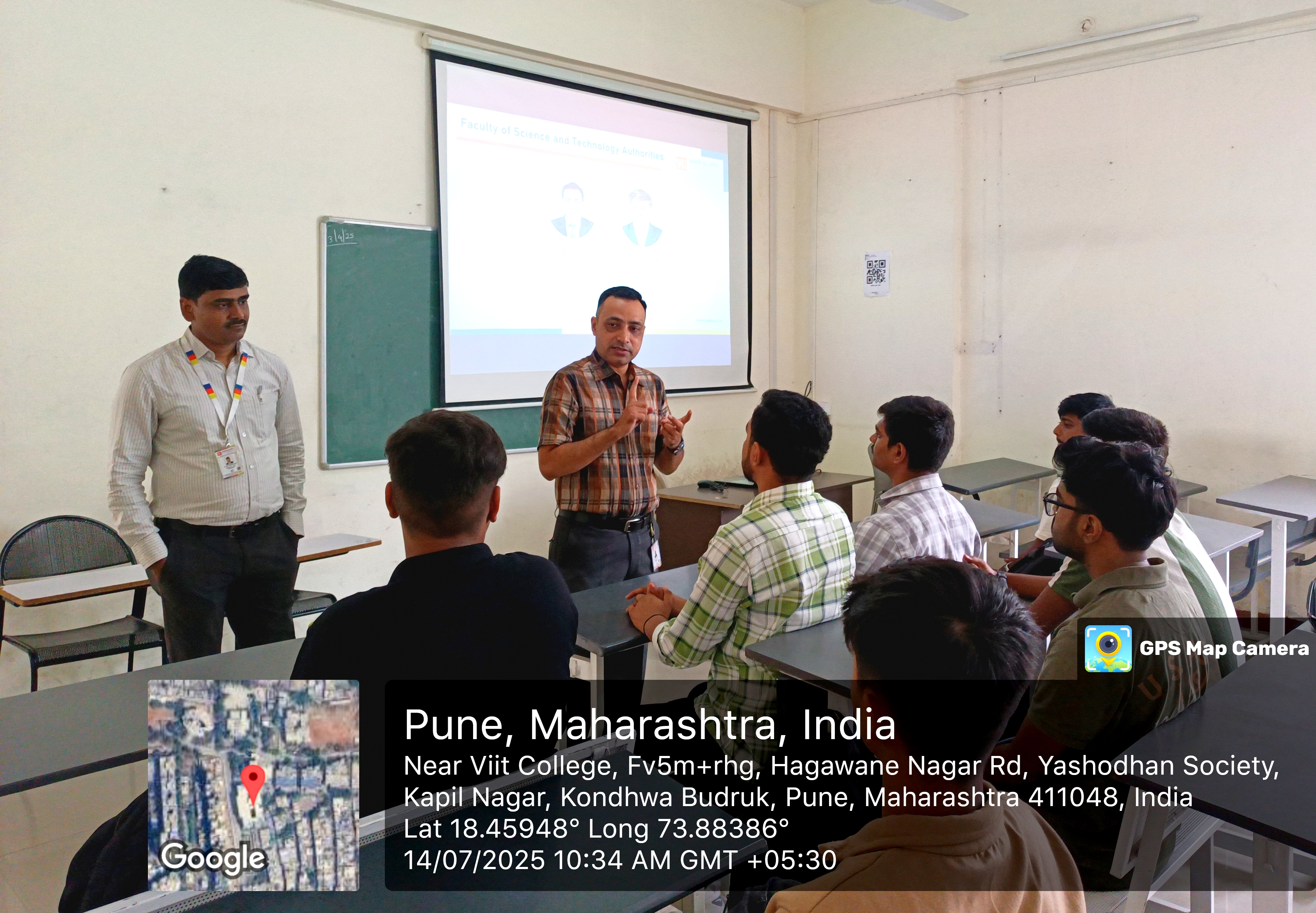
The Orientation Program was designed to warmly welcome Direct Second Year Students of the Department of Artificial Intelligence, Vishwakarma University, equipping them with a comprehensive understanding of the academic framework, resources, and innovative opportunities within the department as well as in the university. It aimed to inspire students to leverage the university’s cutting-edge AI curriculum, research prospects, and industry-aligned skill development programs to excel academically and professionally, while fostering a collaborative community spirit in alignment with the university’s mission
Date: 14th July 2025
Venue: VU Building No: 2, Room 2215, Vishwakarma University
Mode: Offline
Participants :Direct Second Year Students of the Department of Artificial Intelligence, Faculty of Science & Technology
Conveners:
Co-Convener: Dr. Pavitha Nooji
Speaker/Faculty Coordinator: Prof. Jayendra Jadhav
Course: Design Studio I (R) – BAID24301
Semester: III (BAID – Interior Design & Decoration)
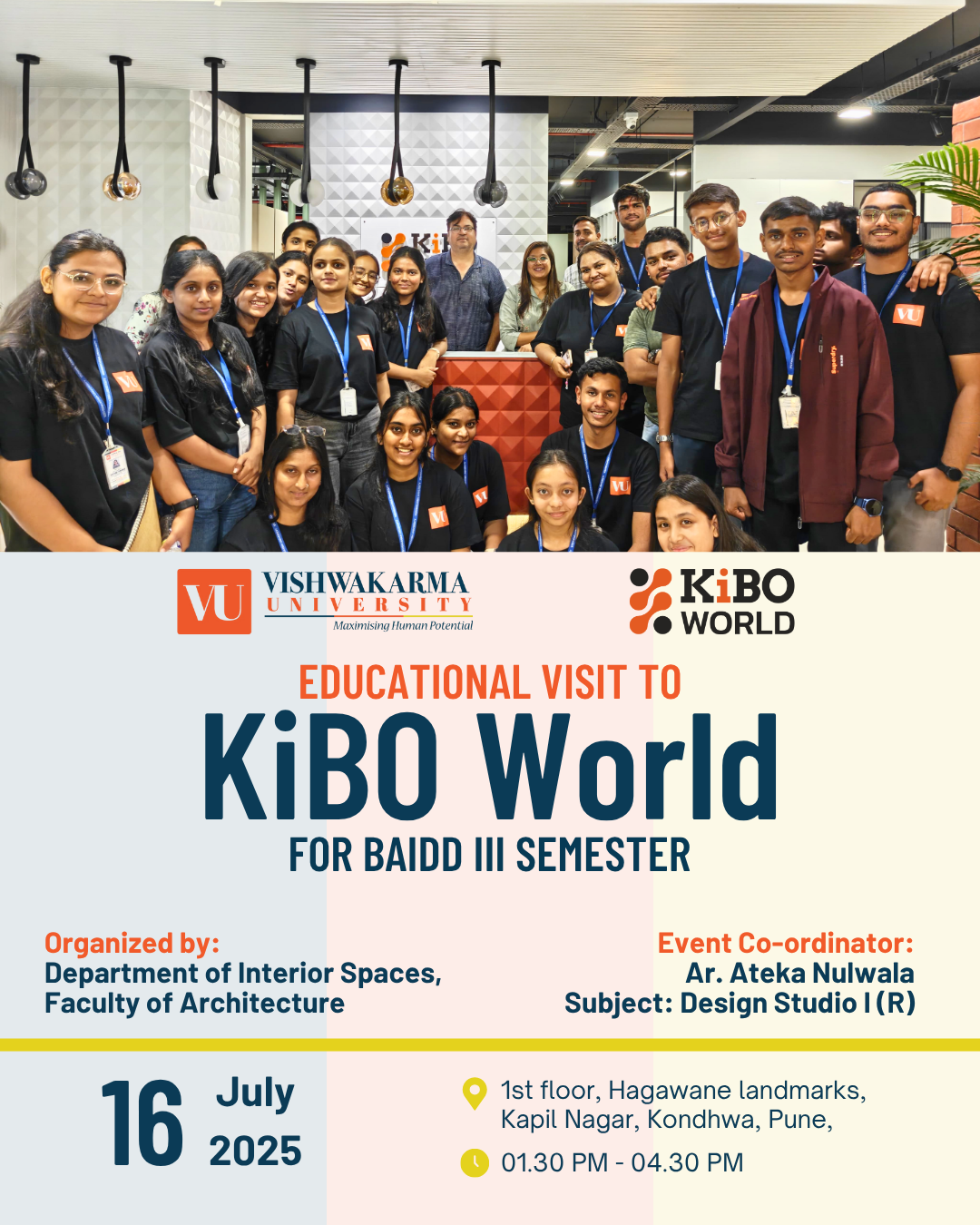
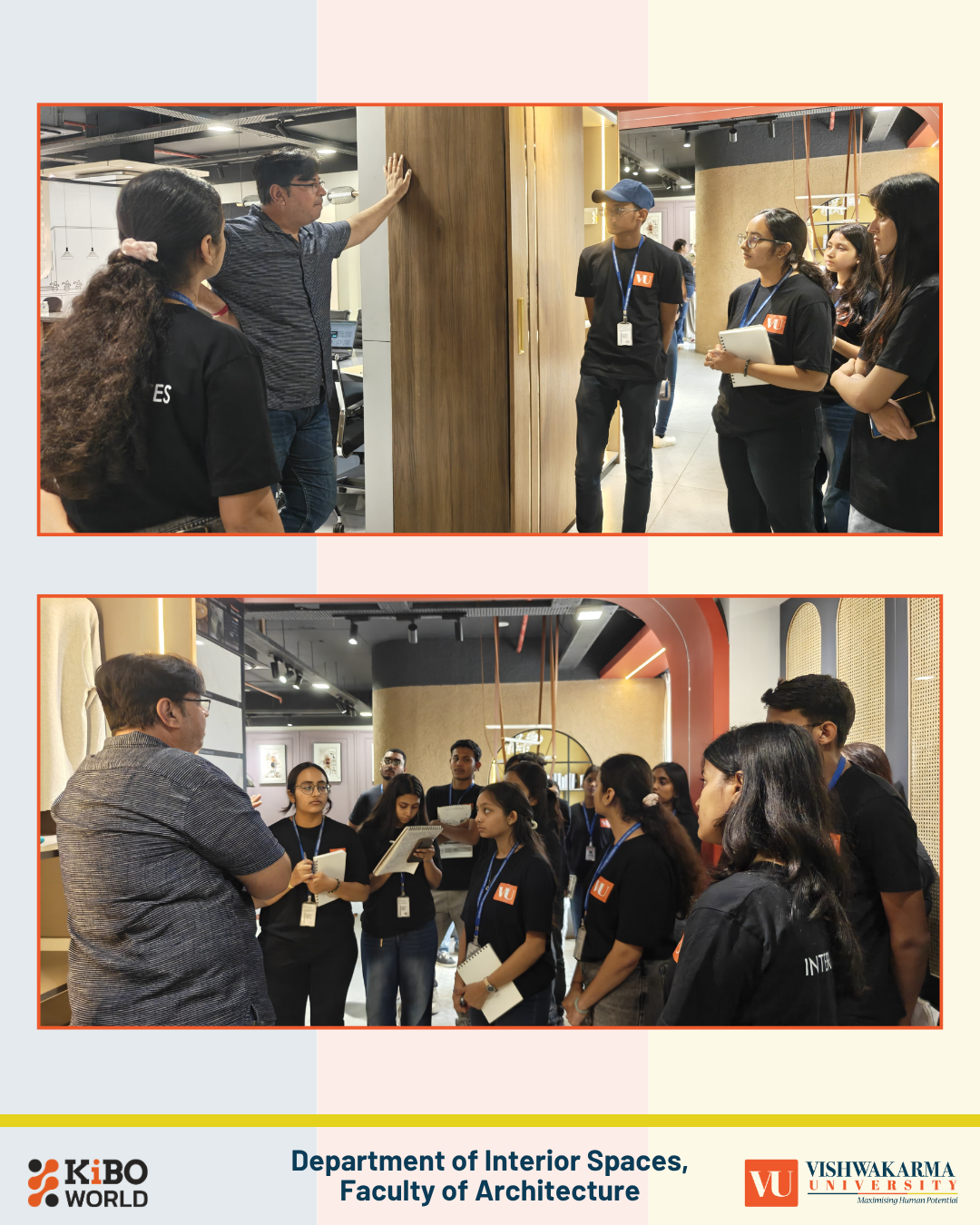
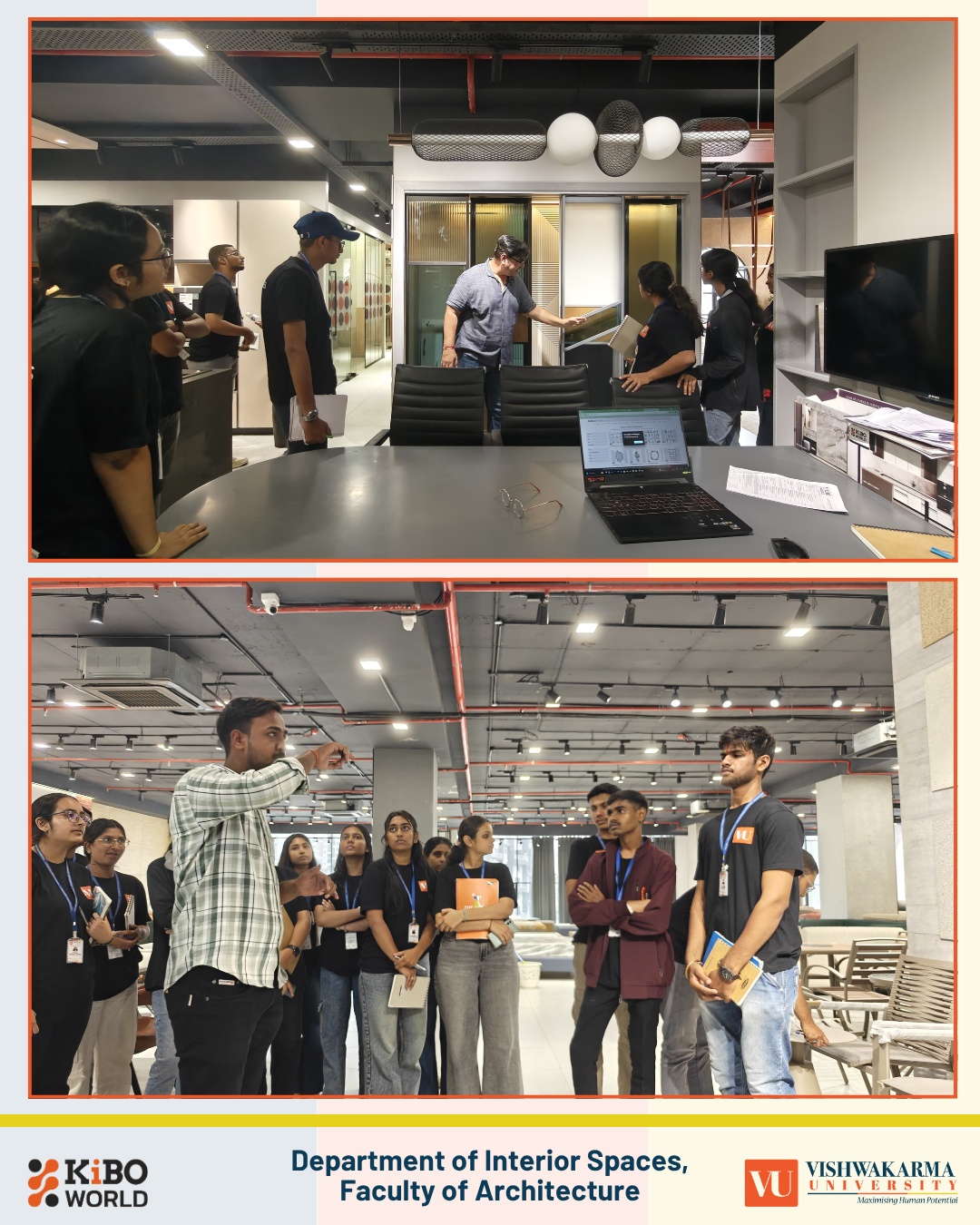
Date of Visit: 16th July 2025
Time: 1:15 PM – 5:30 PM
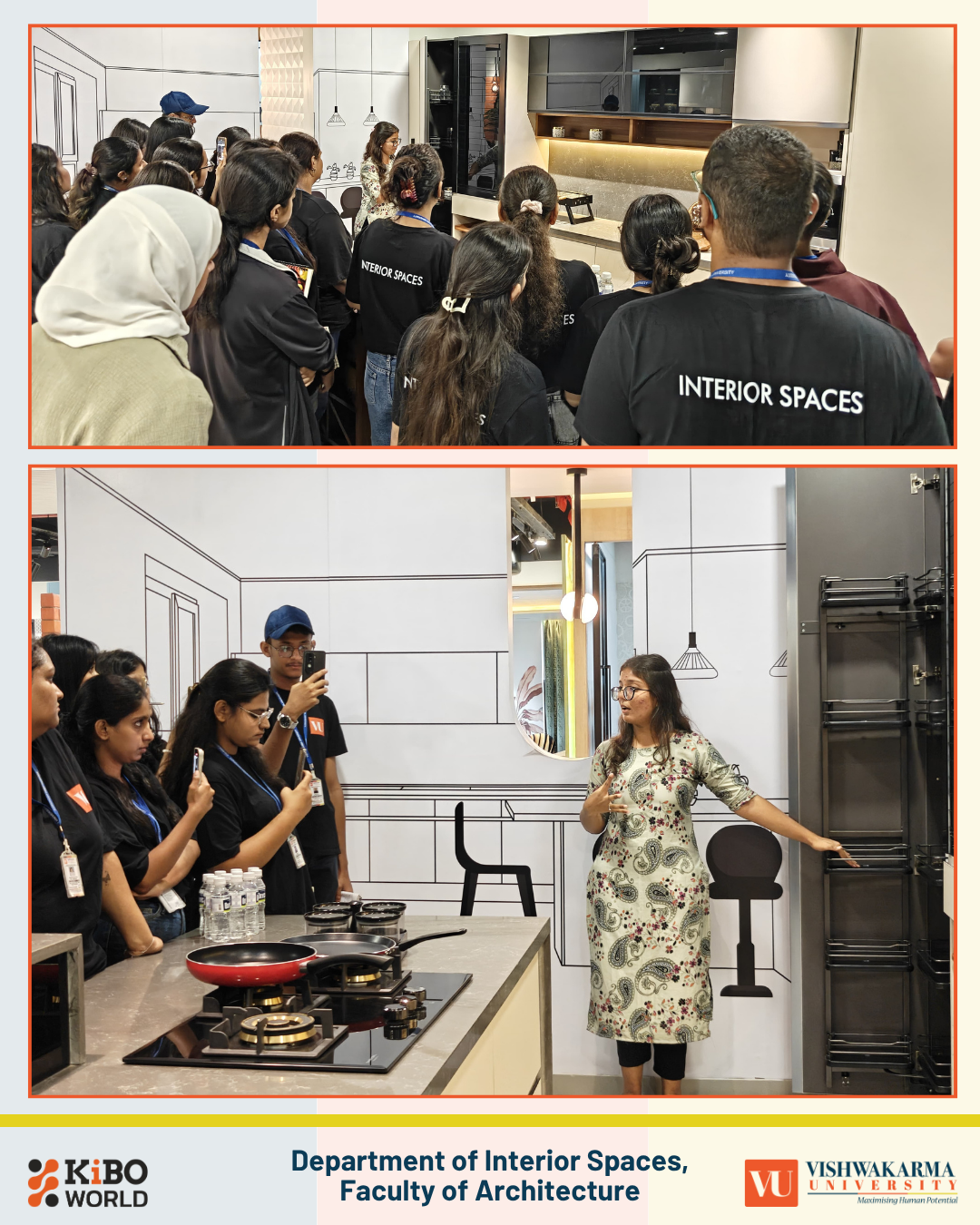
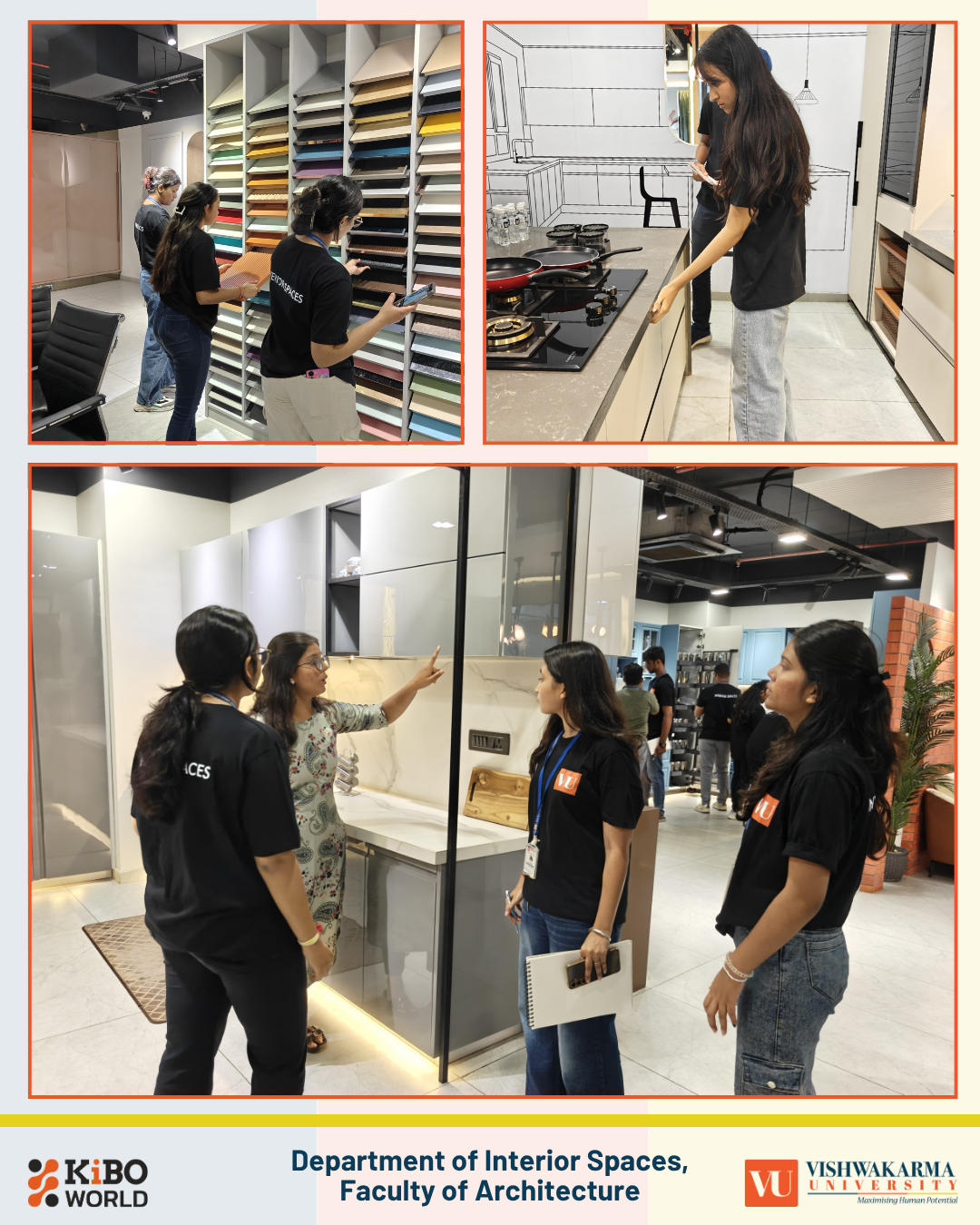
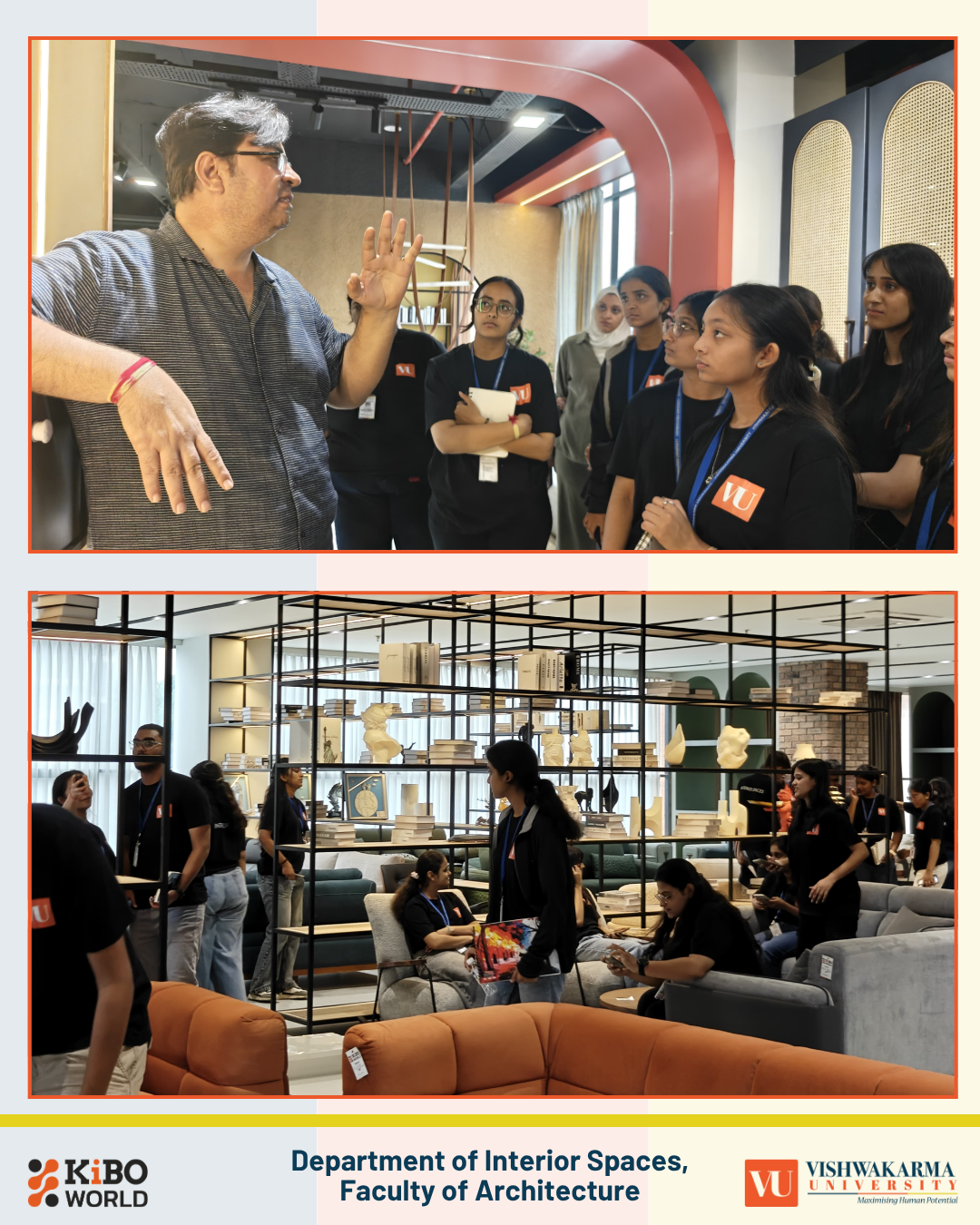
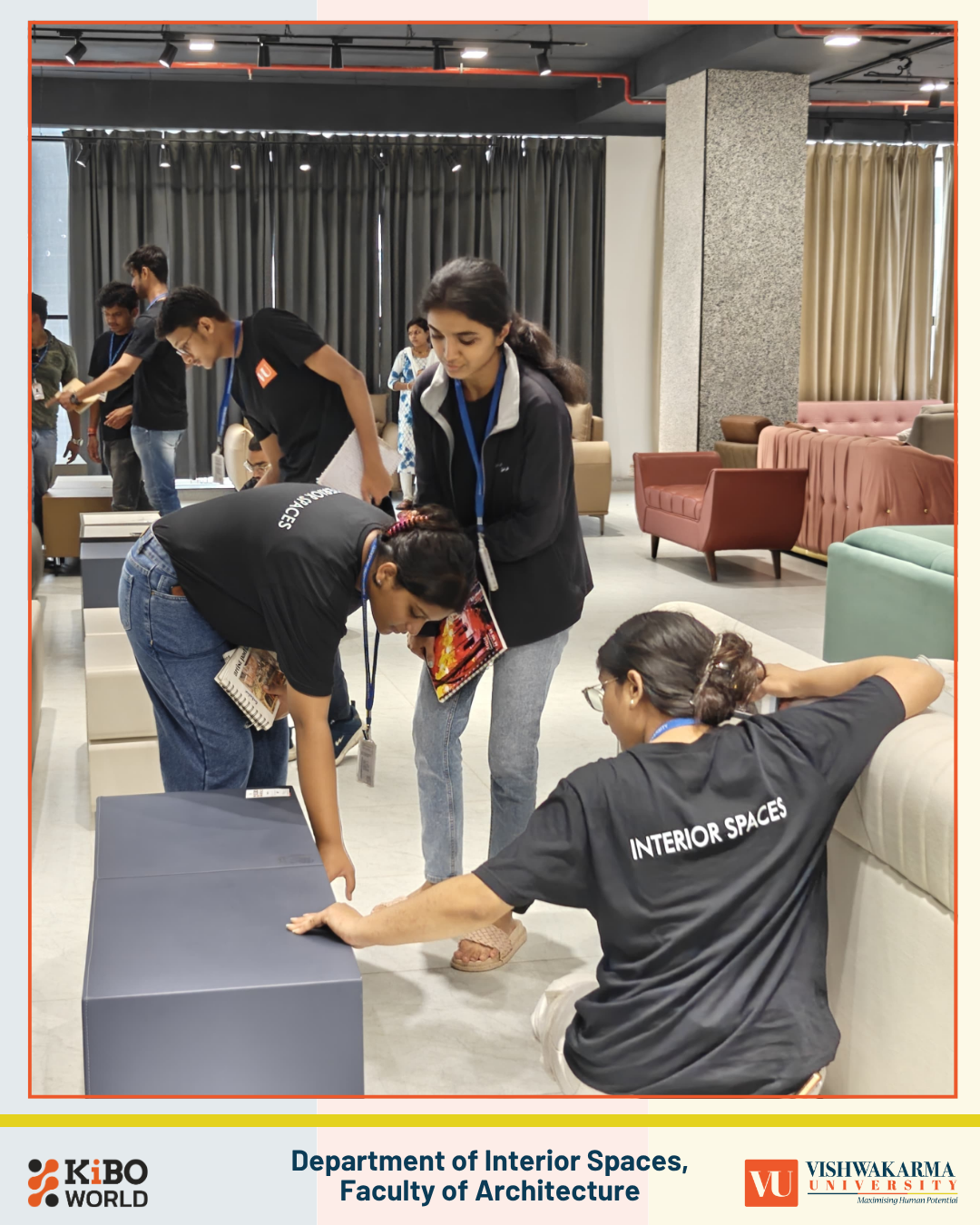
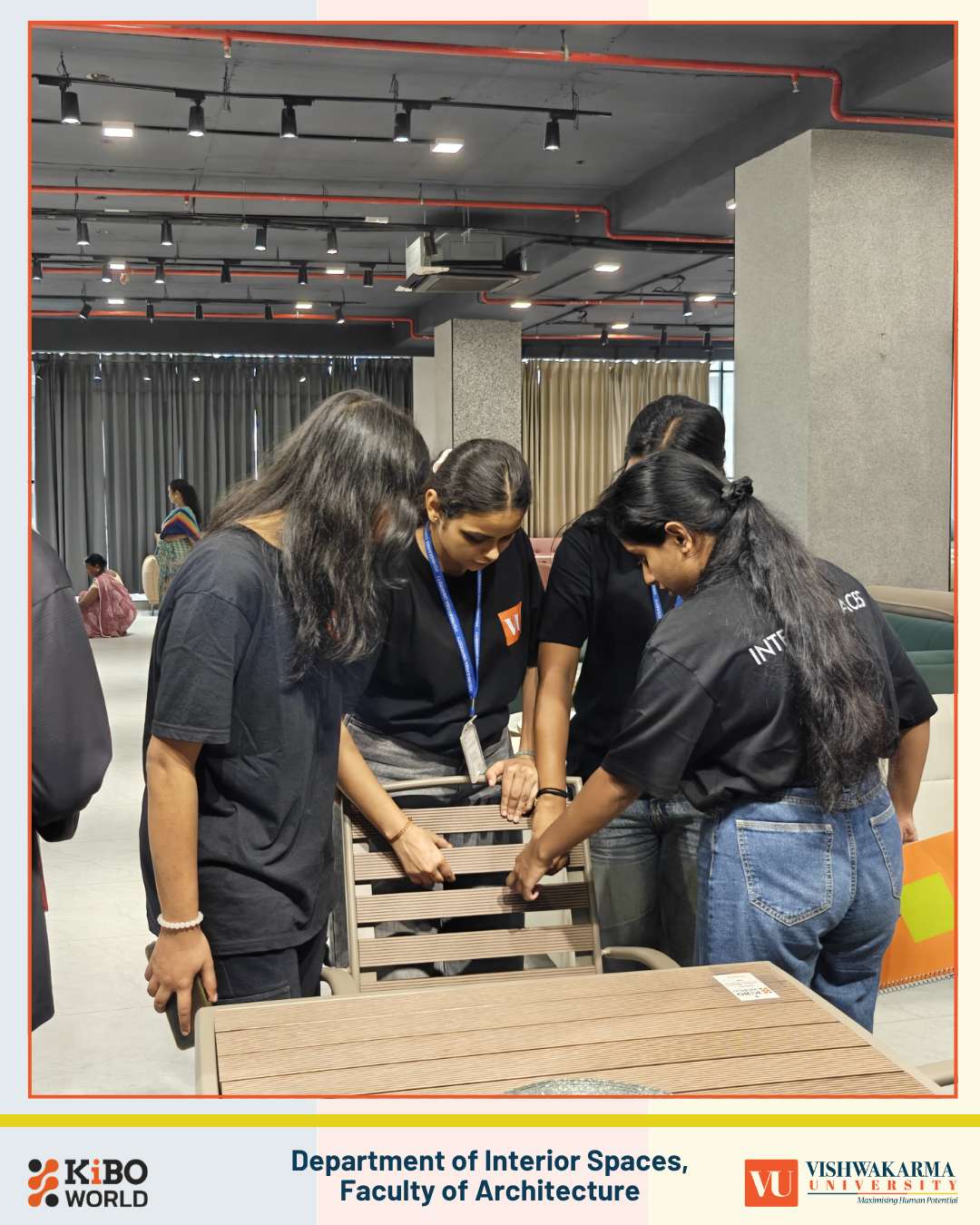
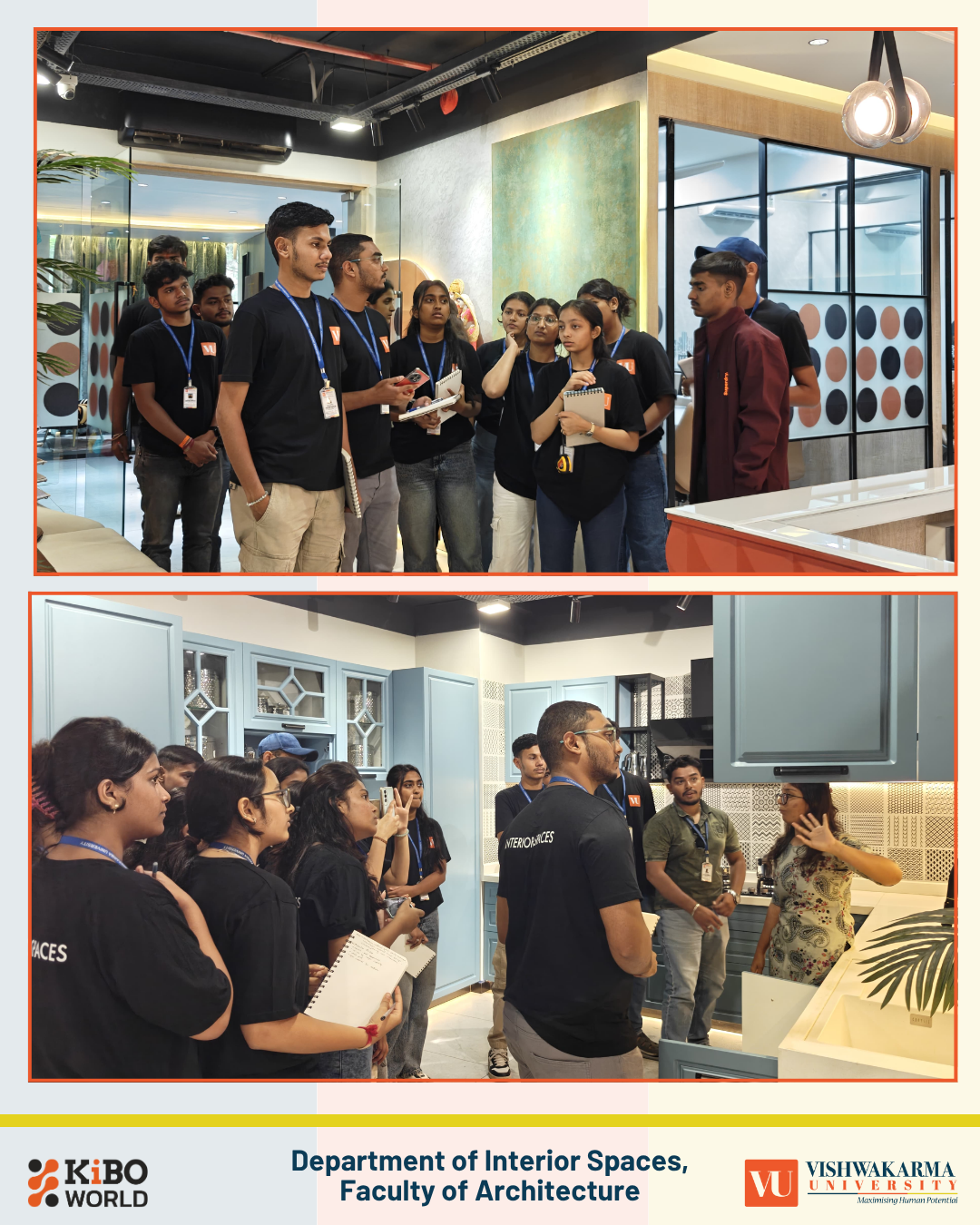
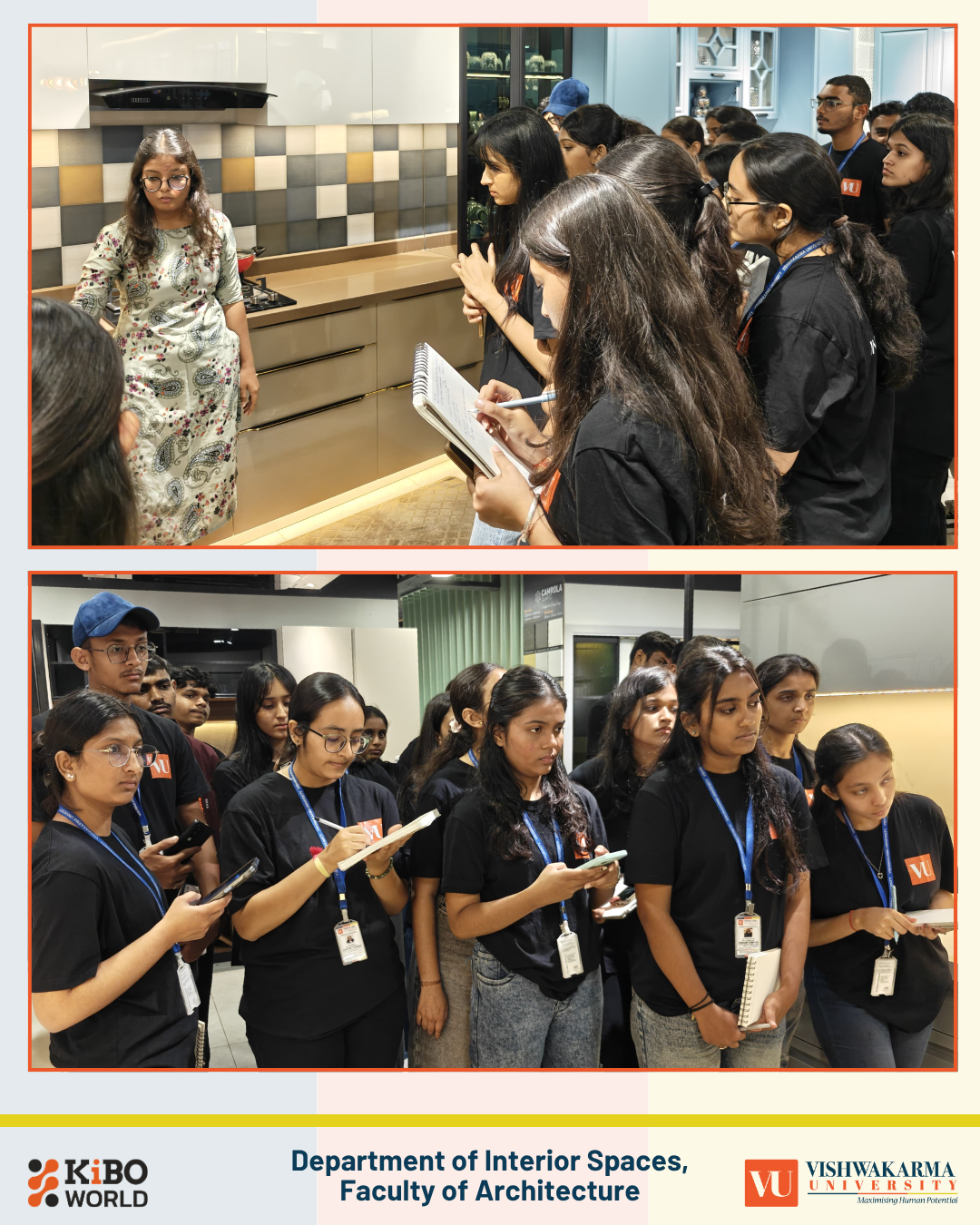
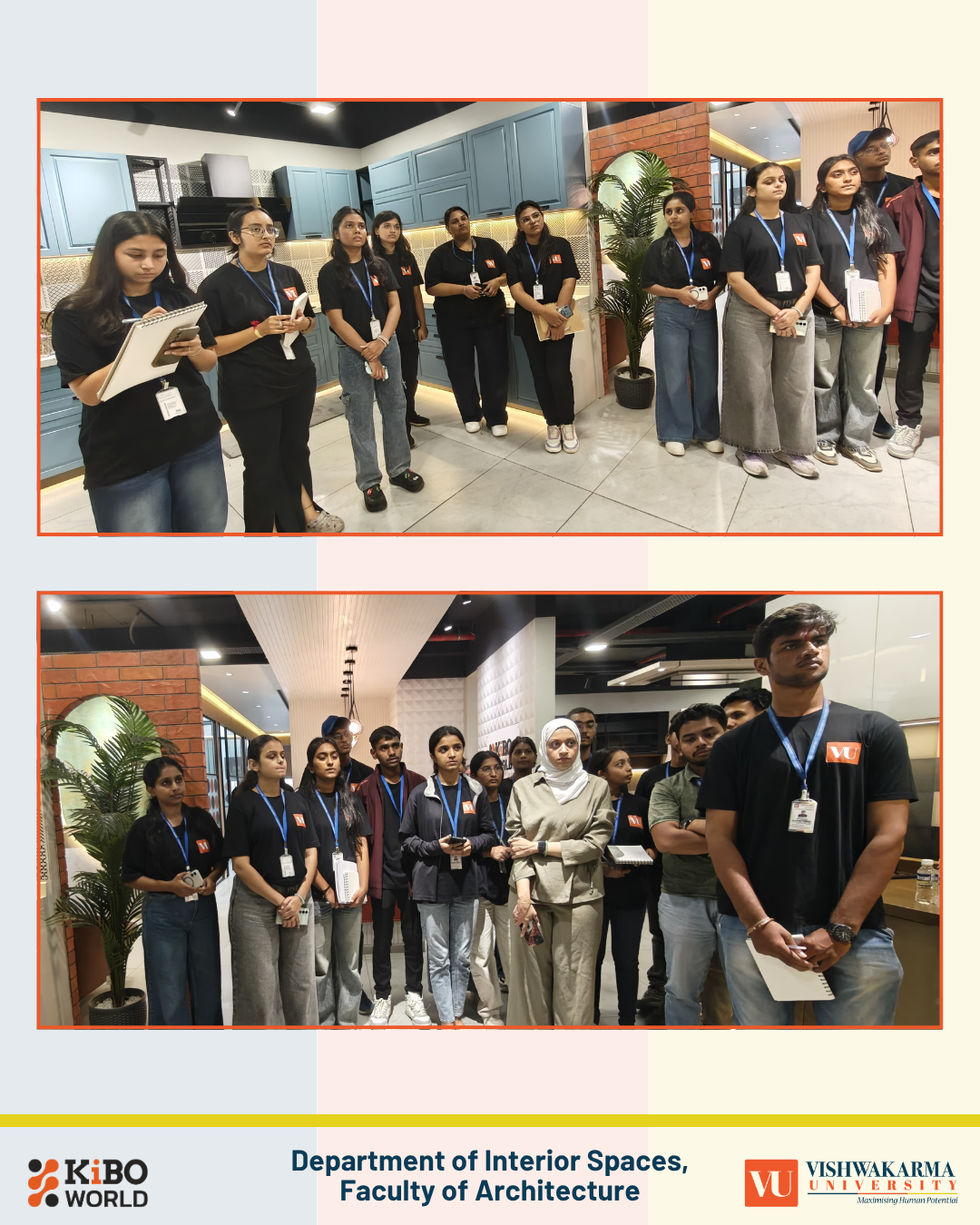
Location: Kibo Modular Furniture Showroom, Pune
Accompanying Faculty: Prof. (Ar.) Ateka Nulwala
The visit was organized as part of Project 1: Studio Apartment Design, with the aim to:
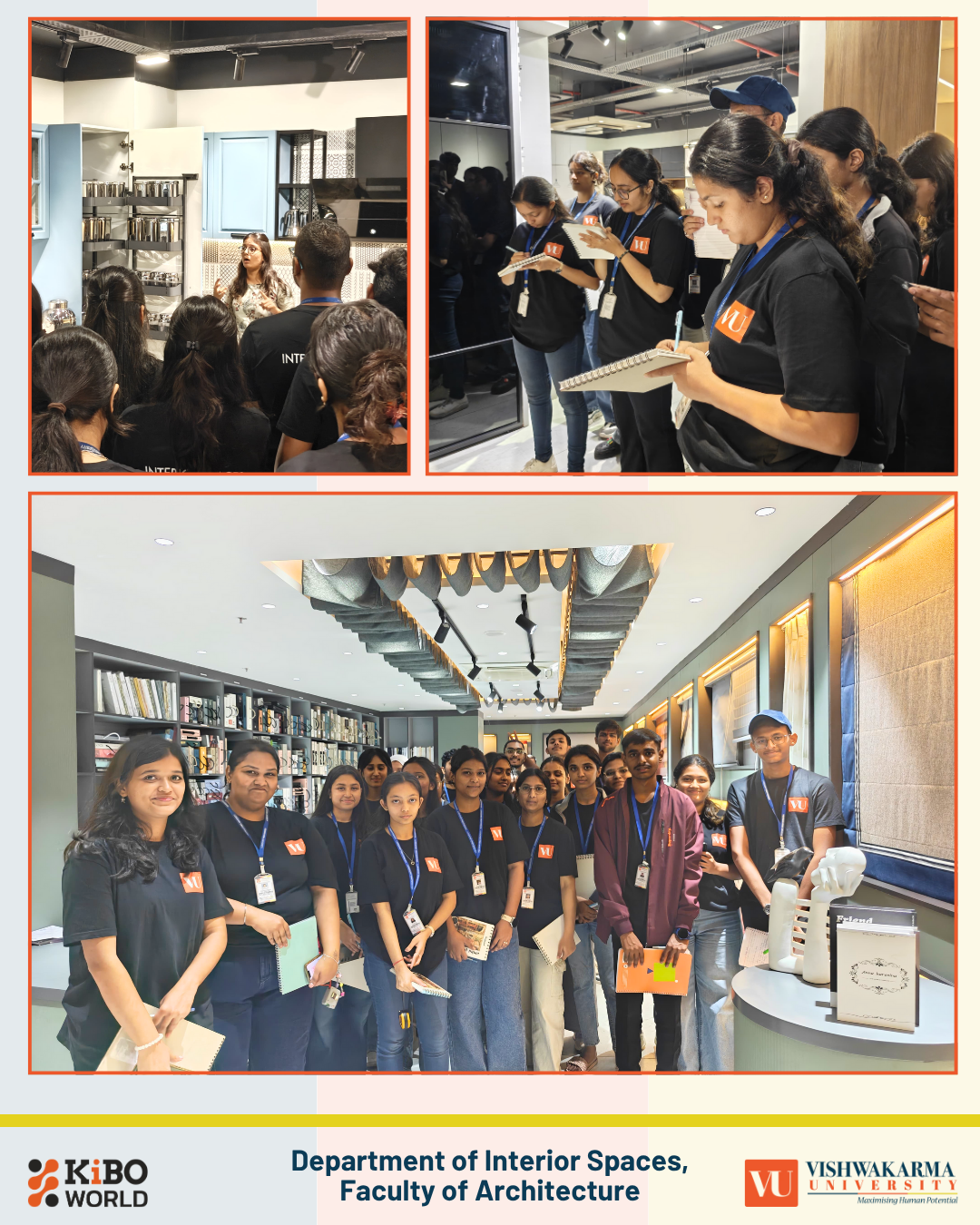
Kibo is a leading brand in modular furniture and interior solutions, offering customizable kitchens, wardrobes, beds, and multipurpose furniture designed for efficiency and aesthetic appeal. Their products demonstrate precision joinery, material variety, and modular adaptability, making them a relevant study resource for interior design students.
The visit to Kibo Modular Furniture Showroom provided students with practical exposure to contemporary modular solutions, aligning with the objectives of Project 1: Studio Apartment Design. It bridged the gap between theoretical standards (anthropometry, ergonomics) and real-world product applications, thereby enhancing the quality of student outputs.
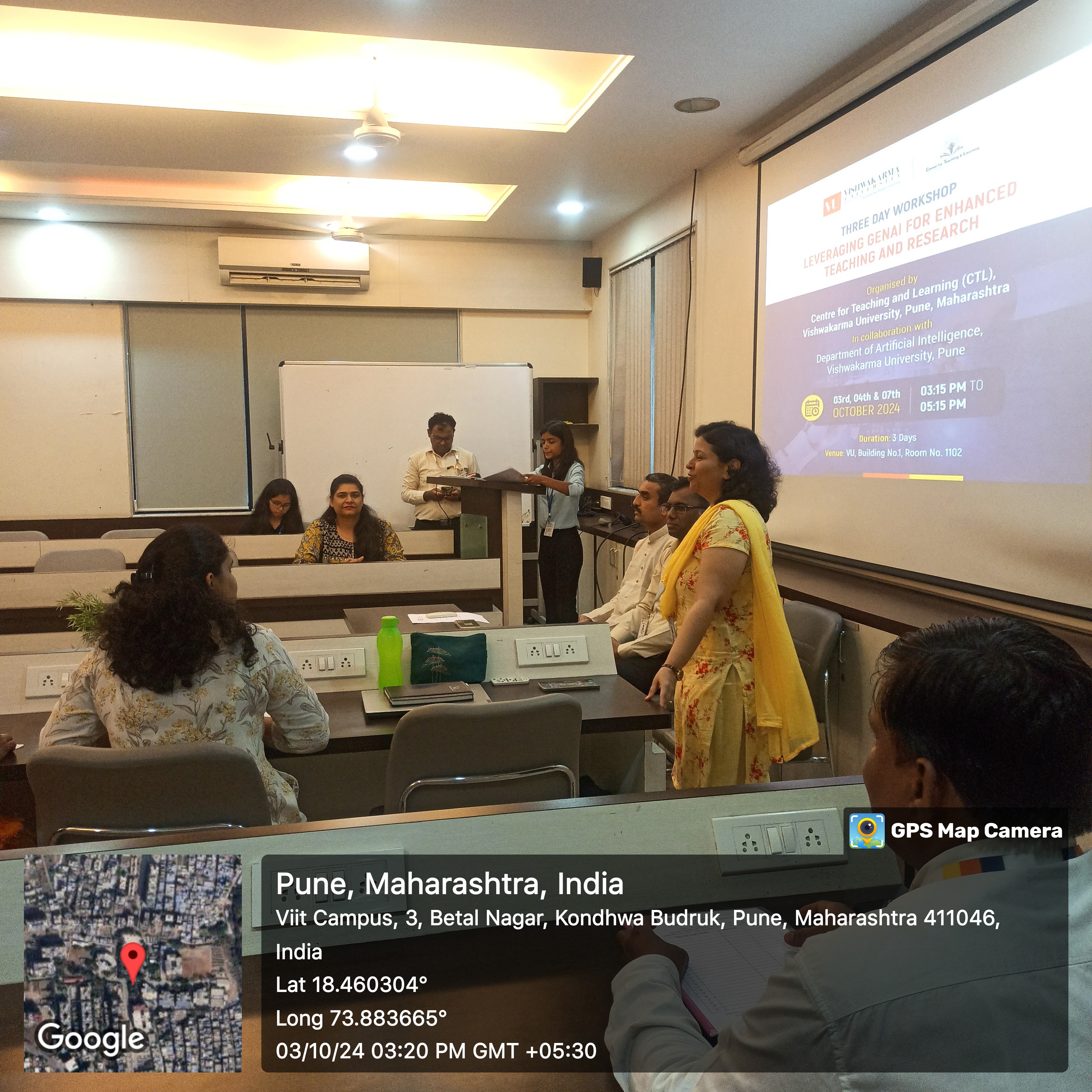
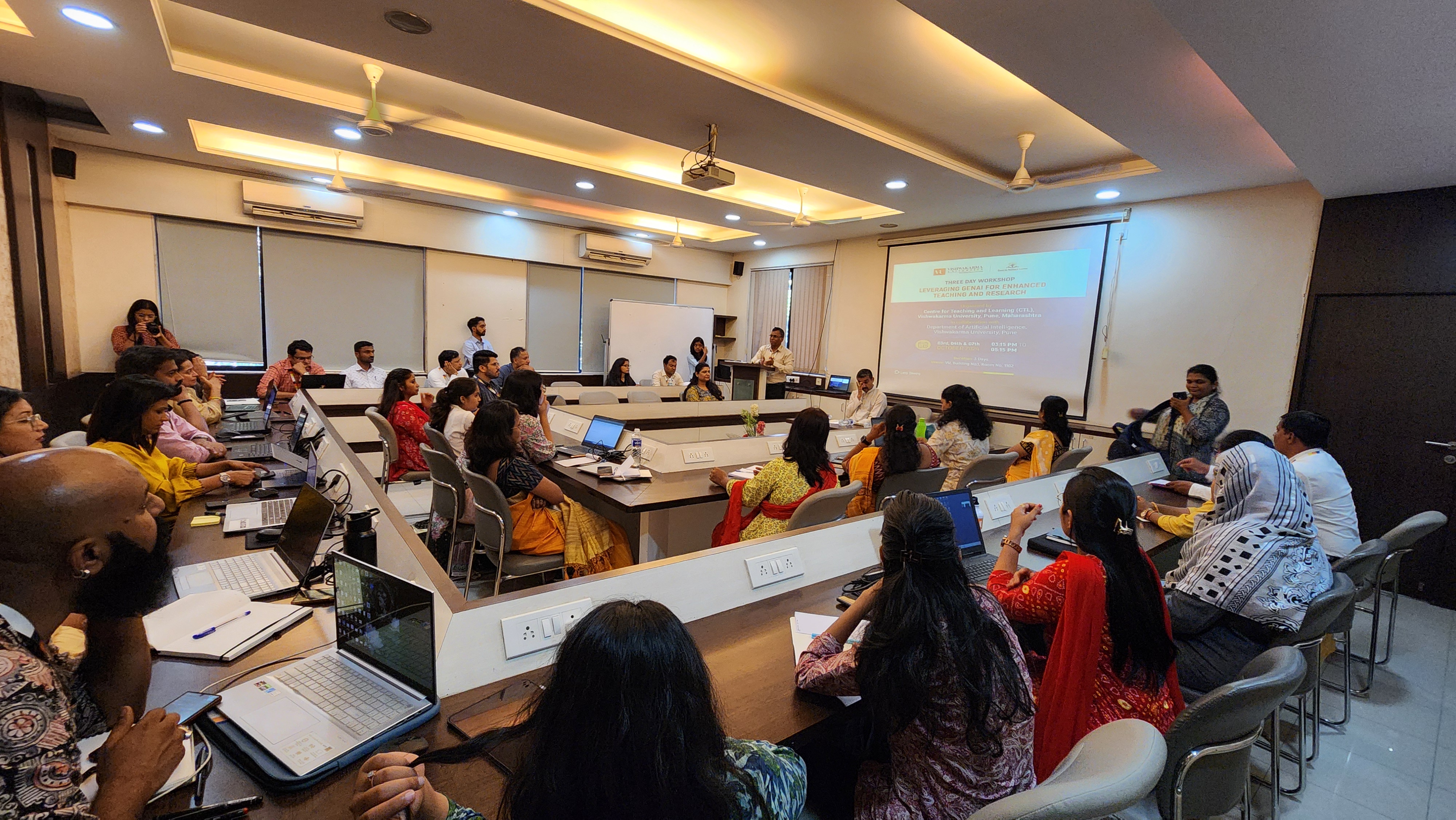
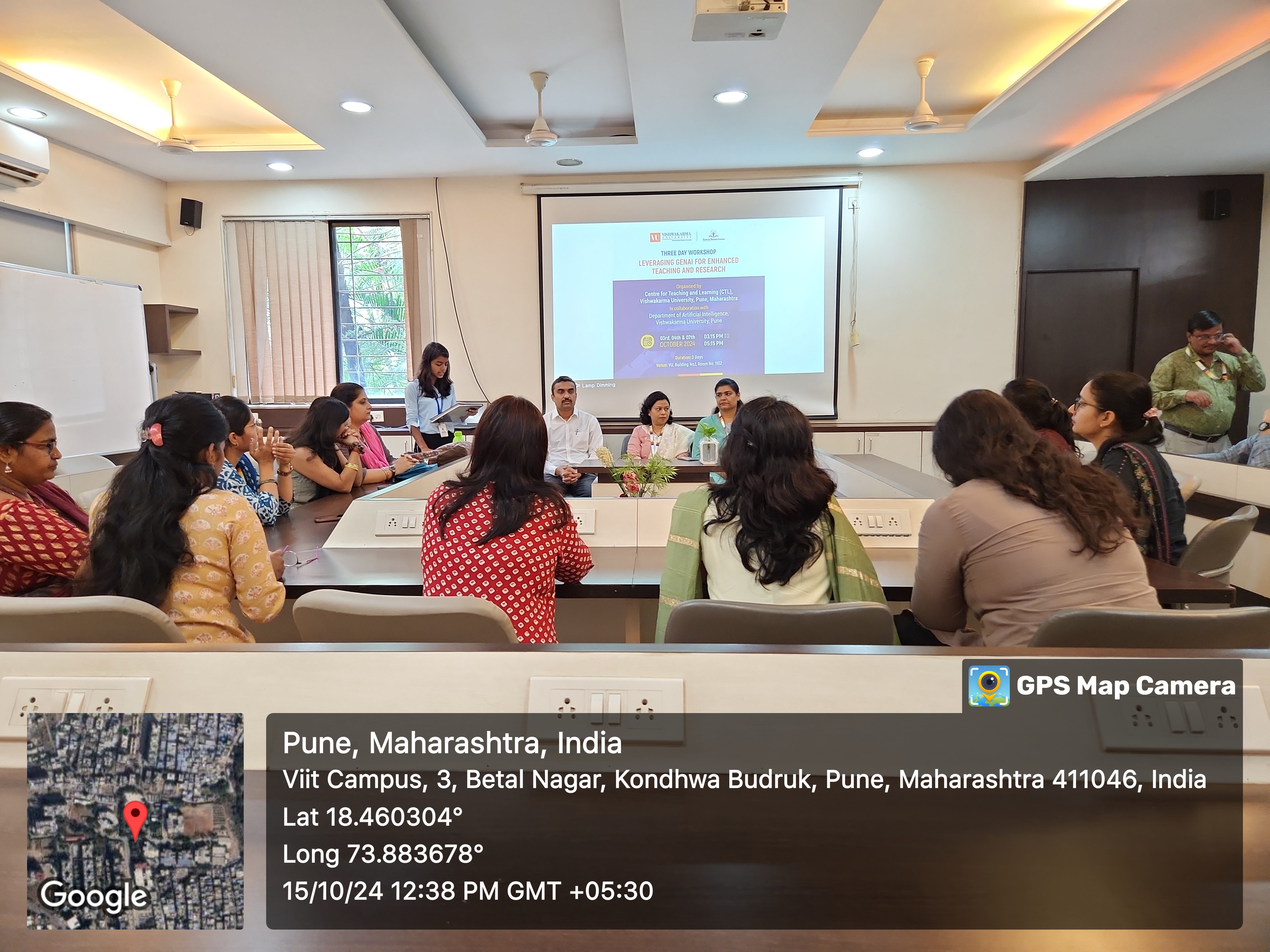
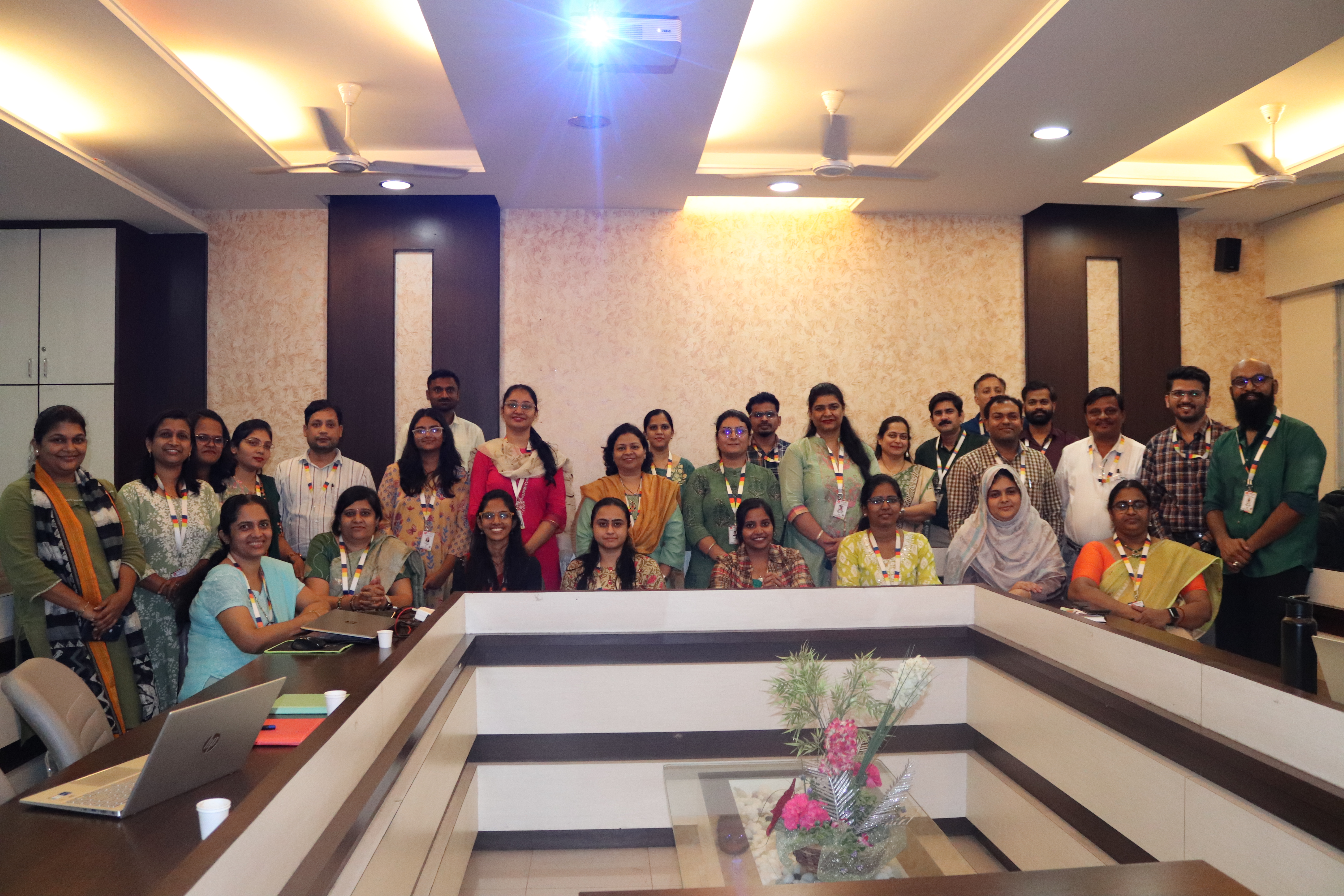
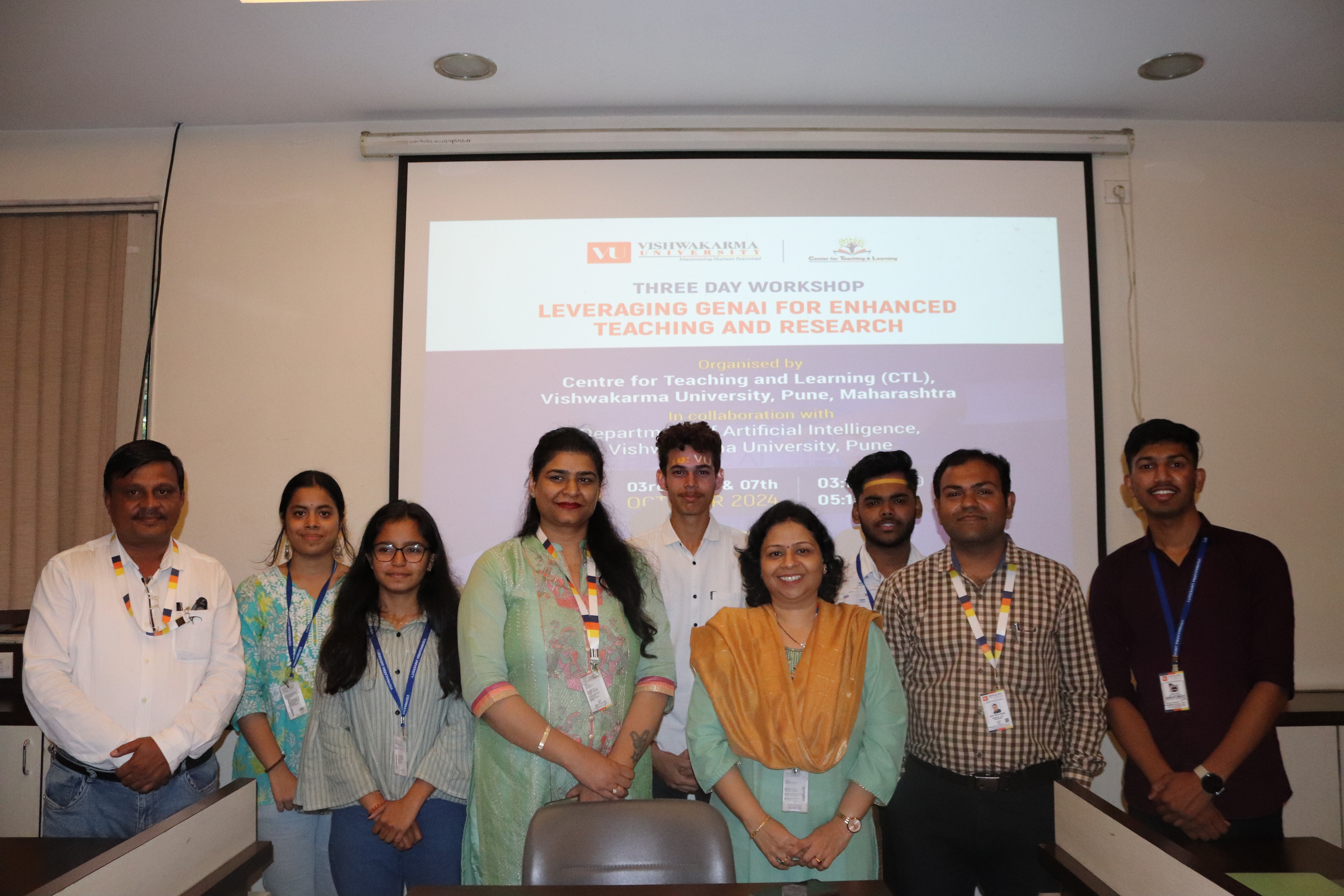
Organised by Centre for Teaching and Learning (CTL), Vishwakarma University, Pune, Maharashtra
In collaboration with Department of Artificial Intelligence, Vishwakarma University, Pune
About Center for Teaching and Learning (CTL), Vishwakarma University, Pune:
The Center for Teaching and Learning (CTL) at Vishwakarma University, established in 2022, supports the university in achieving excellence in teaching, learning, research, and innovation. CTL bridges the gap between industry demands, student needs, and contemporary teaching methods. Its mission is to enrich and modernize the university’s teaching community by developing innovative pedagogies and building essential skill sets.
Workshop Objective:
The workshop aims to empower faculty members with a comprehensive understanding of Generative AI tools and their applications in education. Participants will gain hands-on experience with AI-powered tools, enabling them to enhance their teaching methods, streamline research processes, and foster creativity in the classroom. Additionally, the workshop will provide guidance on the ethical considerations of AI use in academia, helping faculty members to implement these technologies responsibly. By the end of the workshop, participants will be equipped to integrate Generative AI tools into their curricula and collaborate with colleagues on innovative AI-driven projects.
Target Audience:
This Workshop is designed for VU AI Champions and C2P2 Mentors across various disciplines who are committed to improving their teaching strategies and fostering a more engaging and effective learning environment for their students and enhancing AI integration in teaching, learning, and research
Pedagogy:
This workshop adopts a Blended Learning Pedagogy, combining theoretical foundations with hands-on exploration of Generative AI tools to equip faculty members with practical skills for interactive and outcome-oriented teaching practices.
No. of Participants: 40 (Maximum)
Mode of Conduct: Offline
Registration: Registration is open for VU AI Champions and C2P2 Mentors
Last Date of Registration: Wednesday, 27th September 2024
Workshop Details:
Dates: Thursday, 03rd October 2024 to Friday, 04th October 2024 and Monday, 07th October 2024
Timings: 03:15 PM to 05:15 PM
Duration: 3 Days
Venue: Room No. 1102, 1st Floor, Building No.1, Vishwakarma University, Pune
Workshop Prerequisite: Laptop with internet connectivity
Certificate of Participation: On completion of the workshop, the participants will be awarded “Certificate of Participation” (100 % Attendance and Min. 60% in Quiz & Assessments)
Workshop Inauguration
Day 1: Thursday, 03rd October 2024
Workshop Session 1:
Time: 03:15 PM - 04:15 PM
Topic: AI in Teaching-Learning
Facilitator: Dr. Chetan Kapadnis, Director, IQAC, Vishwakarma University, Pune
Description: This session introduces the transformative role of Artificial Intelligence (AI) in enhancing teaching and learning processes. Participants will explore practical AI applications that can streamline content delivery, foster student engagement, and personalize learning experiences.
Workshop Session 2:
Time: 04:15 PM - 05:15 PM
Topic: Enhancing Writing Skills with GenAI Tools
Facilitator: Dr. Pratibha Mahajan, HoD, Department of Artificial Intelligence, Faculty of Science and Technology, Vishwakarma University, Pune
Description: This session offers insights into how Generative AI tools can revolutionize writing. Participants will learn techniques to enhance their writing skills, focusing on the principles, benefits, and effective use of AI for improved clarity, structure, and creativity.
Day 2: Friday, 04th October 2024
Workshop Session 3:
Time: 03:15 PM - 05:15 PM
Topic: Developing AI-Enhanced Teaching Materials
Facilitator: Dr. Sukhpreet Kaur, Assistant Professor, Department of Artificial Intelligence, Faculty of Science and Technology, Vishwakarma University, Pune
Description: In this session, participants will explore how AI can be used to create adaptive and personalized teaching materials. These materials enhance learner engagement through real-time analytics and feedback, catering to diverse educational needs and optimizing content delivery.
Day 3: Monday, 07th October 2024
Workshop Session 4:
Time: 03:15 PM - 05:15 PM
Topic: Writing Research Papers with AI Assistance
Facilitators: Prof. Jayendra Jadhav, Assistant Professor, Department of Artificial Intelligence, Faculty of Science and Technology, Vishwakarma University, Pune
Description: This session focuses on how AI can aid the research process by simplifying literature reviews, data analysis, and drafting. Participants will also explore AI tools for citation management, content refinement, and overall research efficiency.
Day 4: Wednesday, 09th October 2024
Valedictory Session & Vote of Thanks
Organizing Committee:
Workshop Chairperson
Dr. Supriya Lakhangaonkar
Director, Center for Teaching and Learning (CTL)
Vishwakarma University, Pune
This email address is being protected from spambots. You need JavaScript enabled to view it.
Workshop Coordinator
Prof. Jayendra Jadhav
Assistant Professor
Department of Artificial Intelligence
Faculty of Science and Technology
Vishwakarma University, Pune
This email address is being protected from spambots. You need JavaScript enabled to view it.
Workshop Convenor
Dr. Pratibha Mahajan
Head, Department of Artificial Intelligence
Faculty of Science & Technology
Vishwakarma University, Pune
This email address is being protected from spambots. You need JavaScript enabled to view it.
Workshop Coordinator
Dr. Mayur Deshmukh
Assistant Professor
Department of Computer Science
Faculty of Science and Technology
Vishwakarma University, Pune
This email address is being protected from spambots. You need JavaScript enabled to view it.
.jpg)
International Conference on Reverse Logistics and Circular Economy Strategies for Sustainable Development (ICRCSD 2025)
Dates: 15–16 July 2025
Venue: Vishwakarma University, Pune, Maharashtra, India
Mode: Hybrid (Online & Offline)
Organized by: Vishwakarma University, Pune
In collaboration with: SUNY Binghamton University, New York, USA
Publication Partners: Apple Academic Press (AAP) & CRC Press (Taylor & Francis Group)
Inauguration Ceremony Highlights
Date & Time: 15th July 2025, 10:00 AM – 10:50 AM
Venue: Auditorium, Building 1, Vishwakarma University
The inauguration of ICRCSD 2025 marked a grand opening to two days of academic and professional engagement on sustainable development themes. The ceremony
commenced with the arrival of esteemed dignitaries, followed by a traditional lighting of the ceremonial lamp.
Dignitary Addresses:
Keynote Sessions
Following the inauguration, two distinguished keynote sessions were conducted:
Technical Sessions and Paper Presentations
ICRCSD 2025 featured 16 high-quality research papers presented across five thematic tracks, encompassing both online and offline formats:
Conference Tracks & Themes:
1. Reverse Logistics & Supply Chain Management
2. Circular Economy Models & Business Strategies
3. Sustainable Development Goals (SDGs) & Environmental Policy
4. Technological Innovations & Digital Transformation
5. Industry-Specific Circular Economy Applications
Each session was chaired by subject experts from academia and industry, fostering rich dialogues and feedback loops. The presented research spanned innovative topics such as:
Conclusion
ICRCSD 2025 successfully brought together researchers, industry professionals, and policy advocates to exchange knowledge, best practices, and emerging strategies in sustainability. With keynote insights, scholarly research, and international collaboration, the conference underscored the pivotal role of reverse logistics and circular economy in driving sustainable development. The hybrid format enabled inclusive participation, amplifying the global impact of this flagship event.
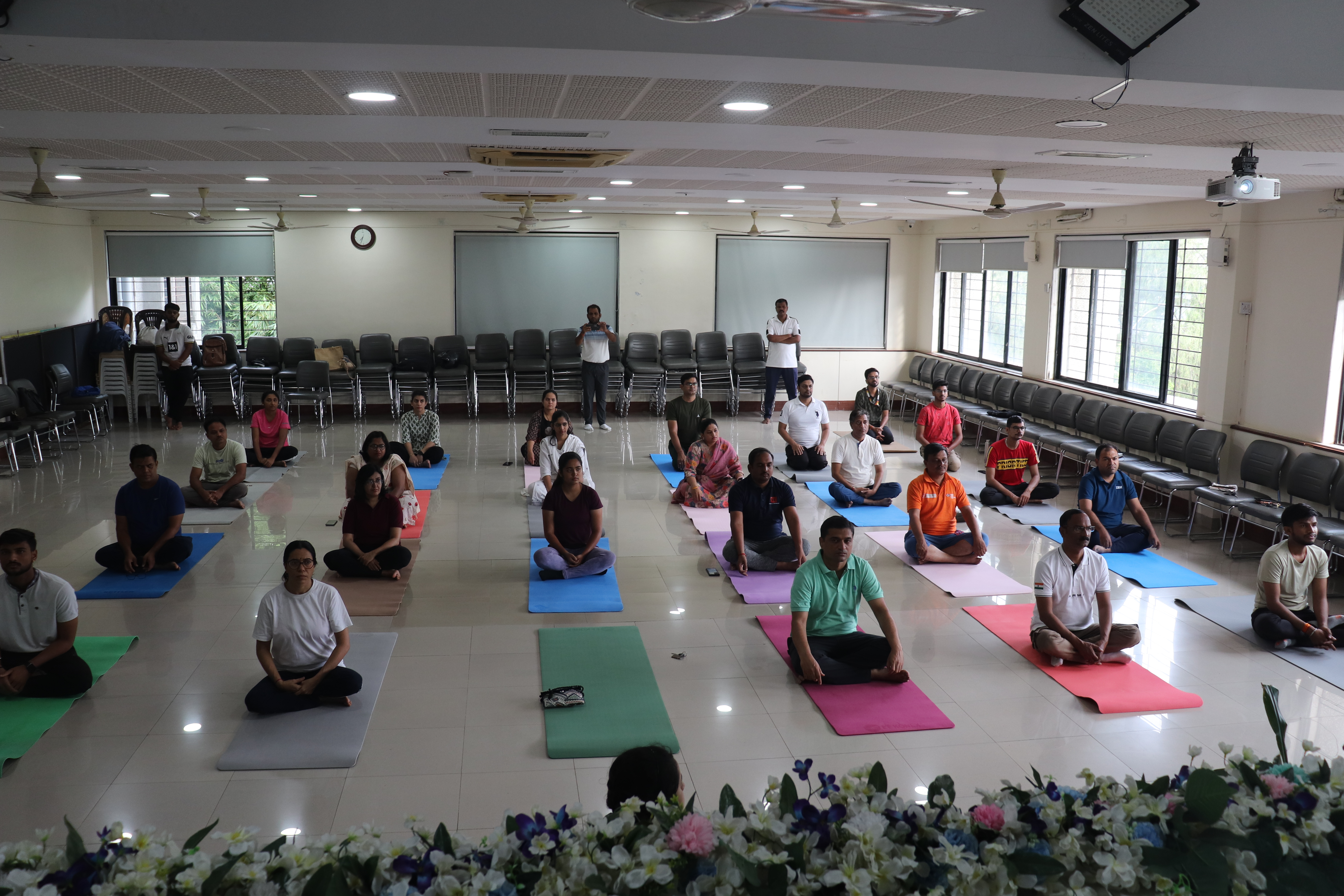
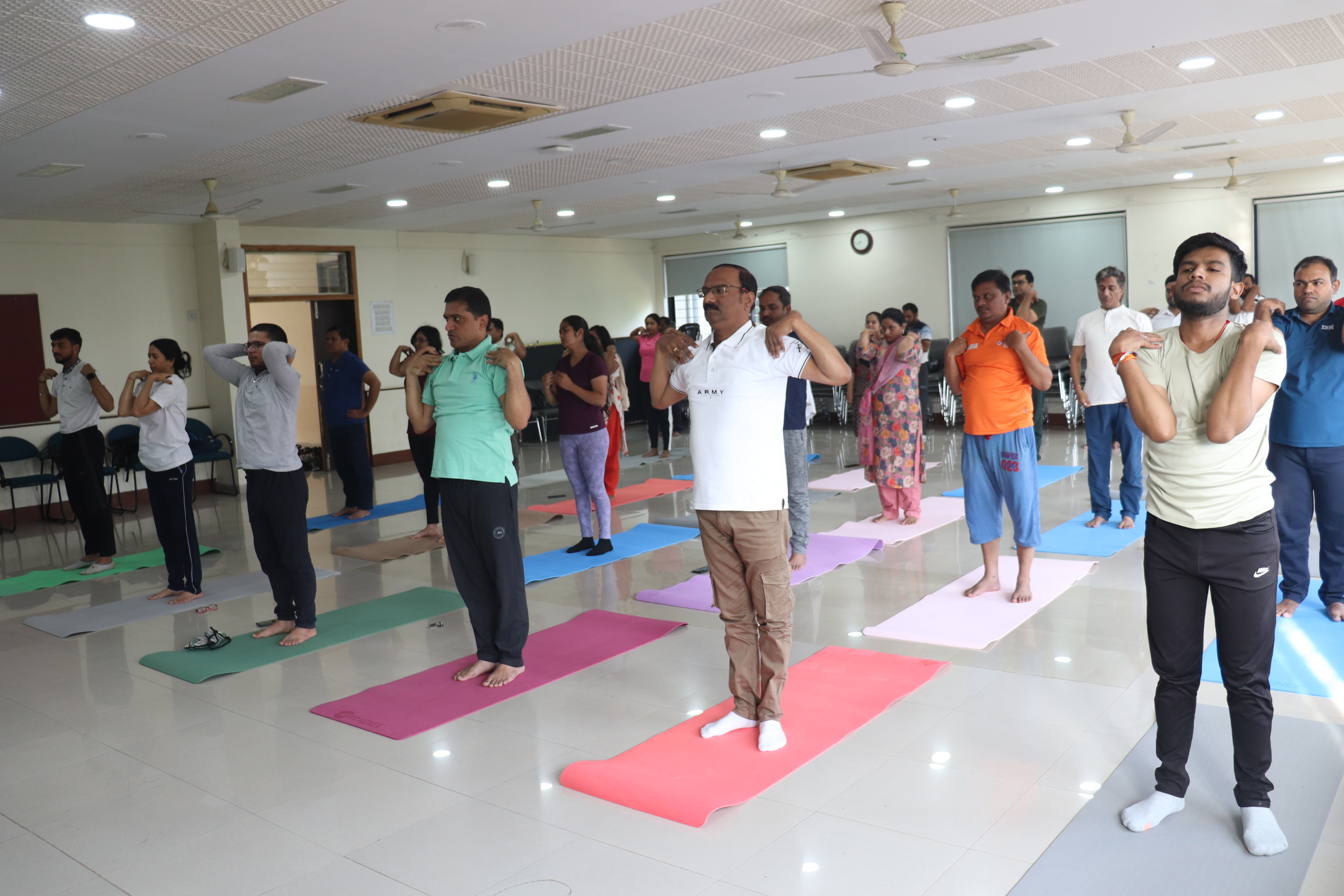
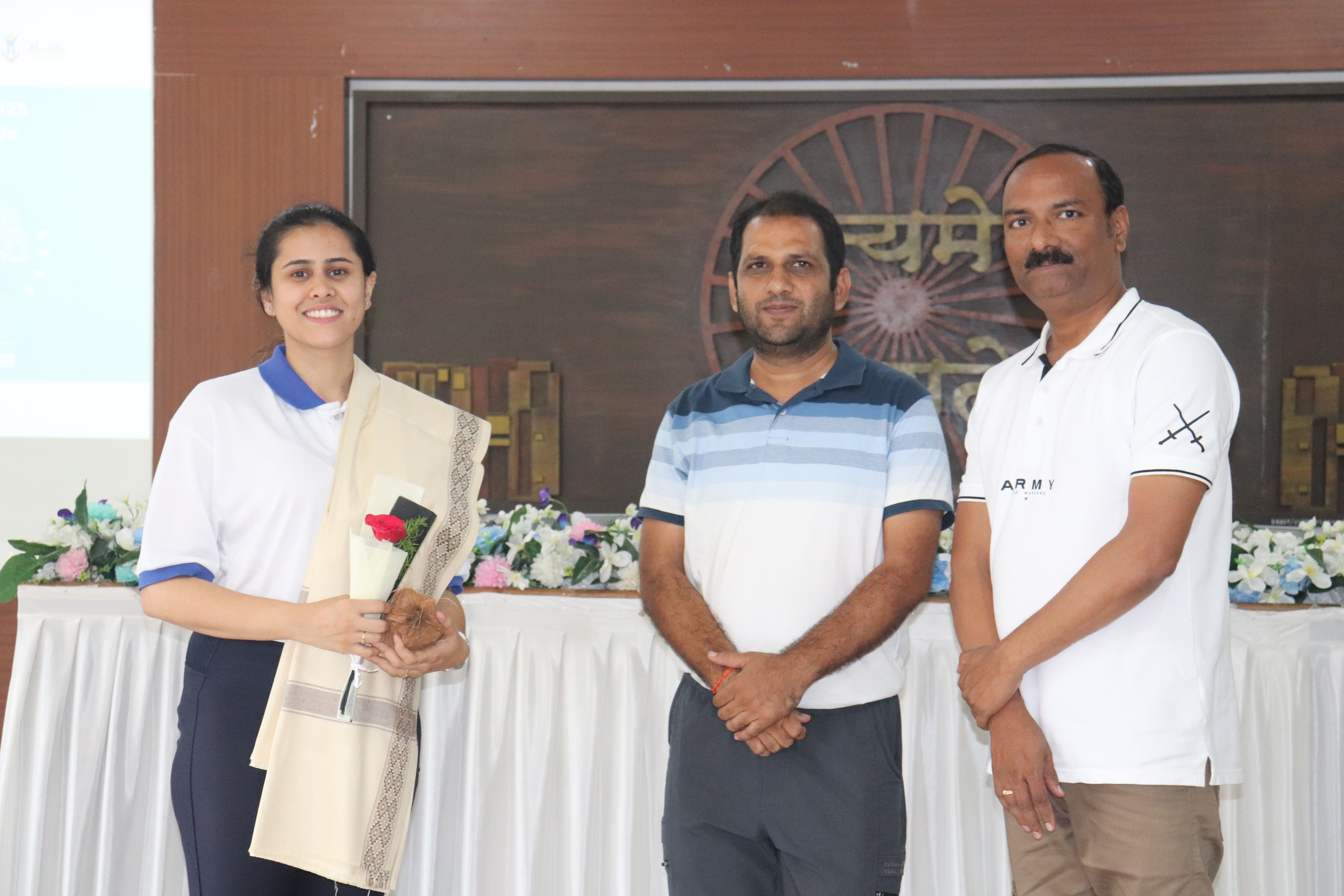
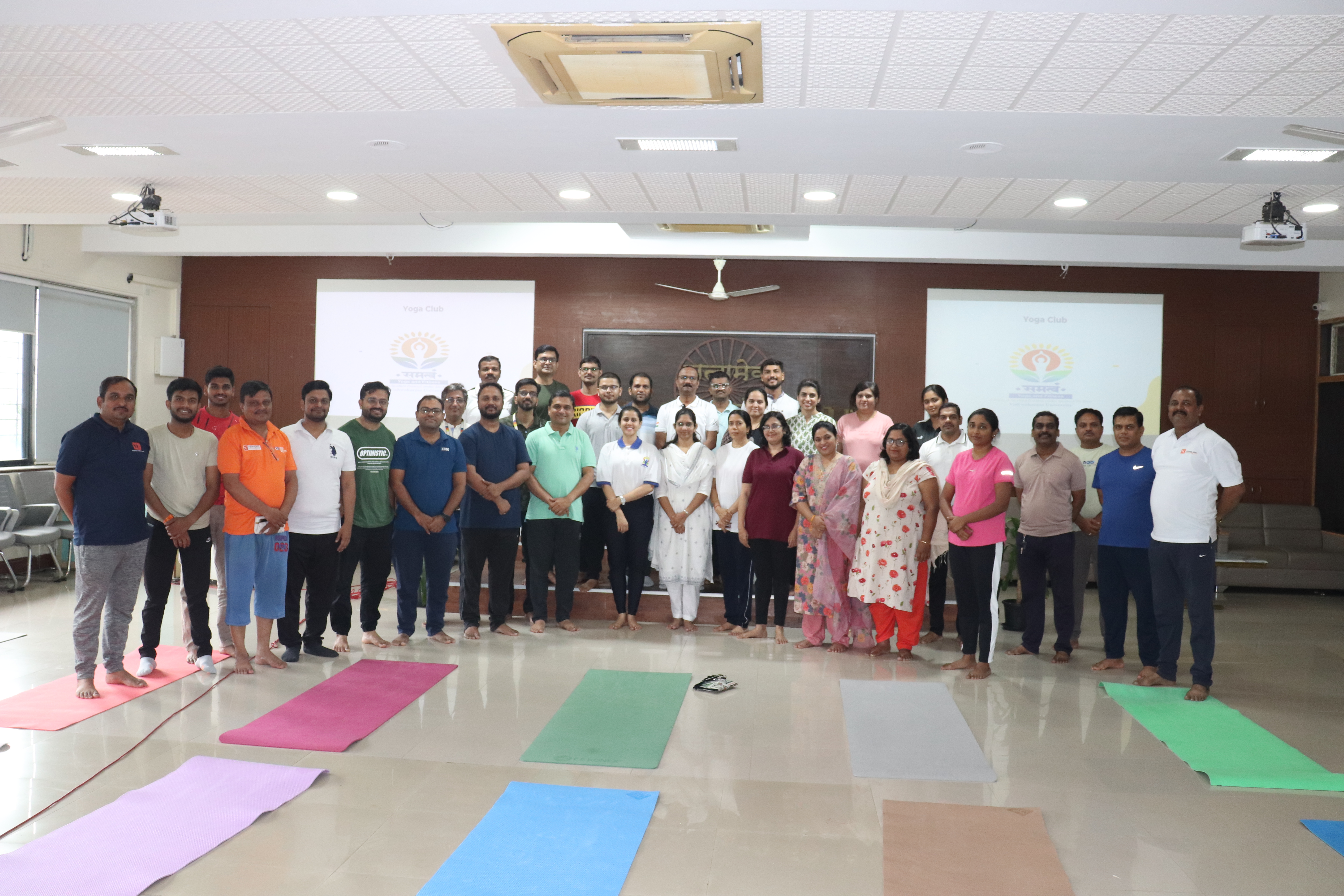
Event Report: Yoga Sangam 2025 Celebration of International Day of Yoga (IDY)
Date: 21st June 2025
Venue: VU Auditorium
Time: 7:00 AM – 08:30 AM
1. Introduction:
In celebration of the International Day of Yoga (IDY) and as per the guidelines of the University Grants Commission (UGC), Yoga Sangam 2025 was successfully organized at Vishwakarma University, Pune on 21st June 2025. The event aimed to raise awareness about the importance of Yoga for physical and mental well-being among students, faculty, and staff.
2. Objectives:
5. Highlights of the Event:
6. Participation:
The event saw active participation from over 70 attendees, including students, faculty, non-teaching staff, and dignitaries. Attendance was recorded as per committee guidelines.
8. Outcomes & Feedback:
Participants expressed great appreciation for the well-structured session, engaging content, and launch of a dedicated Yoga wing. Many expressed their interest in future workshops and joining “समत्व” as regular members.
9. Conclusion:
Yoga Sangam 2025 successfully fulfilled its mission to foster a campus culture of wellness, discipline, and mindfulness. The inauguration of “समत्व” marks the beginning of a new chapter in the University’s health and wellness initiatives. We look forward to continued participation and activities under this banner.
Report Prepared by:
Dr. Chetan Chouhan
Convener – Yoga Sangam 2025
Director, Physical Education & Sports
Organised by
The Department of Travel and Tourism
In collaboration with
Center of Excellence for Sustainable Tourism Innovation and Research
Introduction
The tourism industry is undergoing a paradigm shift with emerging technologies like the Metaverse and Big Data shaping the future of smart tourism. The integration of these technologies enables immersive virtual experiences, real-time data-driven decision-making, and enhanced customer engagement. This Faculty Development Program (FDP) aims to equip educators, researchers, and professionals with insights and practical applications of these innovations in tourism management.
This FDP explored these cutting-edge technologies, discussed case studies, and provided hands-on training to empower participants with the skills to integrate them into research, teaching, and industry collaborations. Given the rapid advancements in technology, faculty need to stay updated and integrate these emerging tools and concepts into our curriculum to benefit our students and institution.
Primary objectives
FDP Dates: 13 – 17th May 2025
FDP Time : 3:15pm - 5:15pm
Mode : Online
Audience: Faculties and research scholars from the domain of tourism, hospitality, aviation and other allied fields.
Registration fees: 300 INR
Organizing Team:
Session details and resource persons:
|
SN |
Date |
FDP Topic |
Resource Persons |
|
1 |
Tuesday, 13th May 2025 |
Introduction to Metaverse and its Applications in Tourism |
Dr H Sandhya |
|
2 |
Wednesday, 14th May 2025 |
Fundamentals of Big Data in Tourism Management |
Dr Ganesh Narkhede |
|
3 |
Thursday, 15th May 2025 |
Integrating Metaverse for Smart Tourism |
Dr Sana Maidullah |
|
4 |
Friday, 16th May 2025 |
Practical Applications and Case Studies |
Dr Sana Maidullah |
|
5 |
Saturday, 17th May 2025 |
Future Trends and Opportunities in Smart Tourism Management |
Dr Aruditya Jasrotia |
Resource persons :
1. Dr H Sandhya
Dr. Sandhya H, Assistant Professor at Christ (Deemed to be) University, Bangalore, holds a Ph.D. in Tourism Management. A gold medalist during her studies, she has an extensive research portfolio with several SCOPUS-indexed book chapters and articles focusing on Smart Tourism, Big Data, Artificial Intelligence, and Destination Competitiveness. Her notable works include publications on "Big Data and Artificial Intelligence for Destination Competitiveness," "Smart Tourism Narratives: Maturity Matrix and Digital Transformation," and "Virtual Horizons: AI, Metaverse, and Industry 4.0 Revolutionizing Tourism," among others. Her research emphasizes the strategic role of data analytics and Metaverse in designing resilient and competitive tourism ecosystems post-COVID-19.
2. Dr Ganesh Narkhede
Dr. Ganesh B. Narkhede is a distinguished academician and researcher at Vishwakarma Institute of Information Technology, Pune. A post-doctoral fellow at Amity University, Dubai, he holds a Ph.D. from COEP Pune. His research expertise spans Industry 4.0, Industry 5.0, sustainable manufacturing, and digital transformation of SMEs. His prolific output includes over 10 SCOPUS and WoS-indexed papers, notably on digitalization and sustainability, and he has actively explored how smart manufacturing and data-driven innovations reshape industries. His collaborative projects with Dublin City University and IIT Varanasi emphasize the darker side of Industry 4.0 and the socio-technical integration of Industry 5.0, aligning closely with smart and sustainable operational ecosystems that resonate with Big Data and Metaverse applications in tourism.
3,4. Dr. Sana Maidullah
Dr. Sana Maidullah is a Ph.D. in Humanities & Social Sciences from the Indian Institute of Technology Jodhpur, Rajasthan, India. Her areas of interest are Tourism Marketing, Smart Tourism Technology, Tourism Operation Management, Travel and Tourism Laws, Regulation, Tourism Entrepreneurship, and Marketing Research. She has presented various research papers at international conferences and published several research articles and book chapters in Scopus-listed national and international journals. She has participated in MHRD-UGC ePathshala Project for the subject PG English as Content Writer for one module titled ‘Consumer Cultures’ for Paper XVI [Cultural Studies] and finalized it for INFLIBNET.
5. Dr Aruditya Jasrotia
Dr. Aruditya Jasrotia, Assistant Professor at Amity Institute of Travel & Tourism, Amity University Noida, specializes in Smart Tourism Destinations, Sustainable Tourism, and ICT interventions in tourism planning. A Ph.D. from Central University of Jammu, his doctoral research focused specifically on Smart Tourism Destinations in Himalayan cities. Dr. Jasrotia has authored over 15 SCOPUS-indexed papers and multiple ABDC-category publications on smart tourism, virtual tourism experiences, and technology adoption in tourism. His research on manifesting smart destinations, virtual reality in tourism, and post-COVID smart recovery strategies deeply engages with Big Data analytics and Metaverse concepts as tools for enhancing destination competitiveness and sustainability.
Rules and Regulations :
Participation is strictly by prior registration only.
All participants must complete the registration form and submit it before the specified deadline.
The participants must fulfil the following criteria to get the E-certificate:
- 80% attendance is mandatory
- 80% of assignments should be submitted
- 50% marks should be scored in the assignments.
The participants should fill out all feedback forms.
Session details:
Day 1 : Tuesday, 13th May 2025
Resource Person: Dr H Sandhay
Her session on "Introduction to Metaverse and its Applications in Smart Tourism" was truly engaging and informative. Through well-curated videos and real-world examples, Dr. Sandhya simplified complex concepts, making it easier for all participants to grasp the future-forward potential of the Metaverse in tourism.
The session witnessed enthusiastic participation, with a vibrant Q&A segment reflecting the curiosity and eagerness of attendees to dive deeper into this evolving domain.
Day 2 : Wednesday, 14th May 2025
Resource Person: Dr Ganesh Narkhede
We were privileged to have Dr. Ganesh B. Narkhede, a distinguished academician and researcher from Vishwakarma Institute of Information Technology, Pune, deliver an insightful session on "Big Data and its Applications in Tourism."
Dr. Narkhede not only explained the core concepts of big data but also provided valuable insights into how it can be leveraged for tourism research. The session featured hands-on demonstrations using tools like R, VOSviewer, and Bibliometrix, which added great practical value for the participants.
Day 3: Thursday, 15th May 2025
Resource Person: Dr Sana Maidullah
The sessions on Metaverse and its application in smart tourism dealt with the details regarding different metaverse techniques like blockchain, Non-Fungible Tokens (NFT), extended realities and their applications for smart tourism.
Day 4: Friday, 16th May 2025
Resource Person: Dr Sana Maidullah
The session on cases and applications discussed in detail case studies of the metaverse and smart tourism. The case study of the Marriott hotel is discussed in detail. It made the understanding easy for the participants.
Day 5: Saturday, 17th May 2025
Resource Person: Dr. Aruditya Jasrotia
The session had a discussion on emerging research avenues in smart and immersive tourism, Career opportunities shaped by Metaverse and Big Data applications, and Curriculum enhancement for aligning tourism education with Industry 5.0. covering future research areas in the domain of smart tourism. Through understanding future career paths, faculty can encourage their students to discover these career paths.
From understanding virtual tourism environments to leveraging data analytics for personalized travel experiences, the FDP equipped us with actionable knowledge to reimagine tourism education and research.
Participant details:
A total of 67 participants across India registered for the FDP. Among them, 47 completed all the criteria and received the certificate of completion. The participants were from different states of India like Goa, Gujarat, Himachal Pradesh, Assam, Tamil Nadu, Rajasthan, Kerala and Andhra Pradesh. Thus, the FDP received an overwhelming response.


Organizing Body: Department of Travel and Tourism,Vishwakarma University,Pune
Date: April 16th and 17th, 2025
Event: World Heritage Day Celebration
Venue: Eventorium,Vishwakarma University,Pune and Tribal Museum,Camp,Pune
Time: 10:00 AM - 4:00 PM
Participants: 20
Faculty Event Coordinator: Mr. Nishant Sureshkumar Sutare
Student Event Coordinators: Ms.Vishi Jain and Mr.Aman Maske
Objective:
Event Summary:
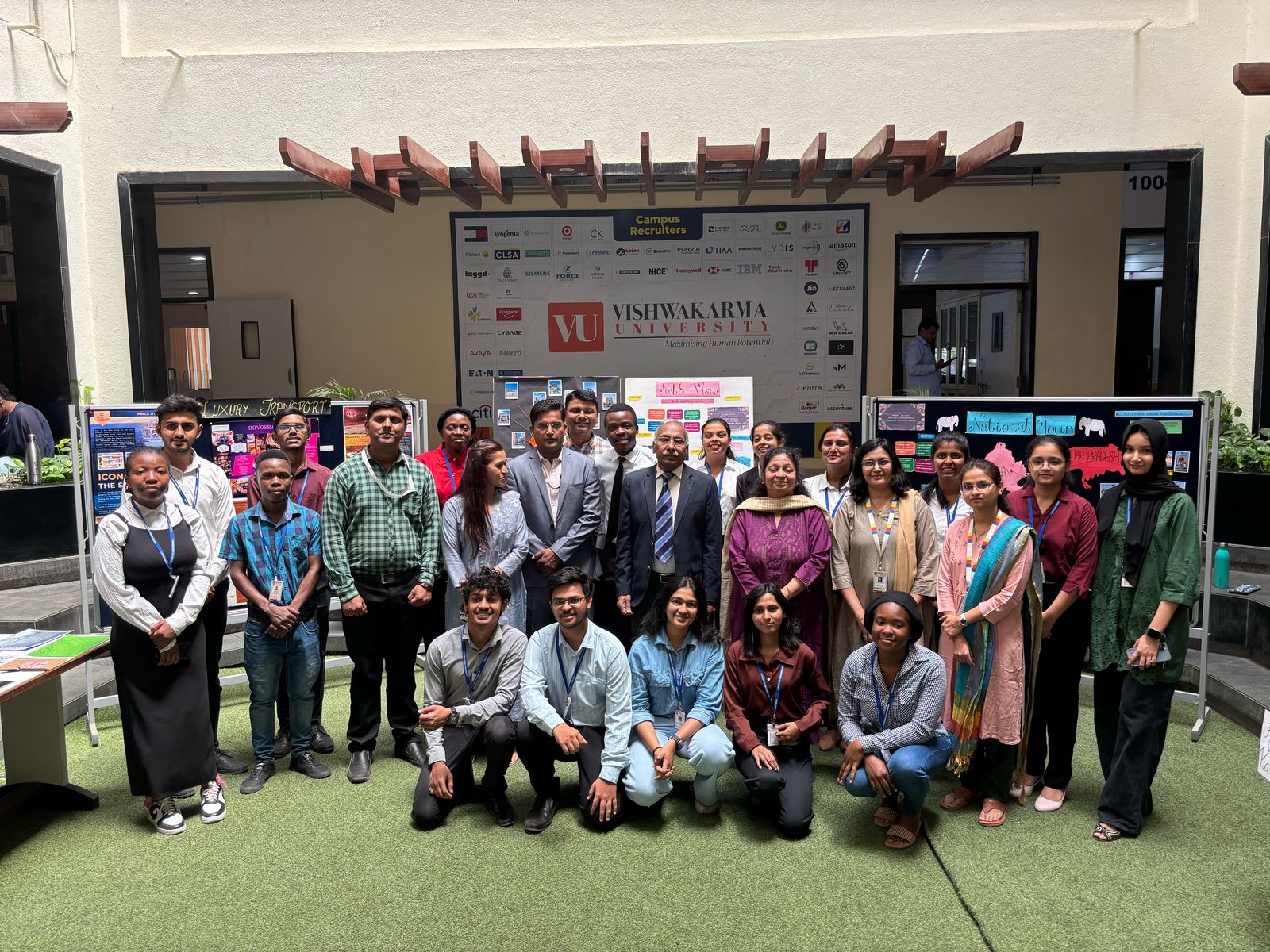
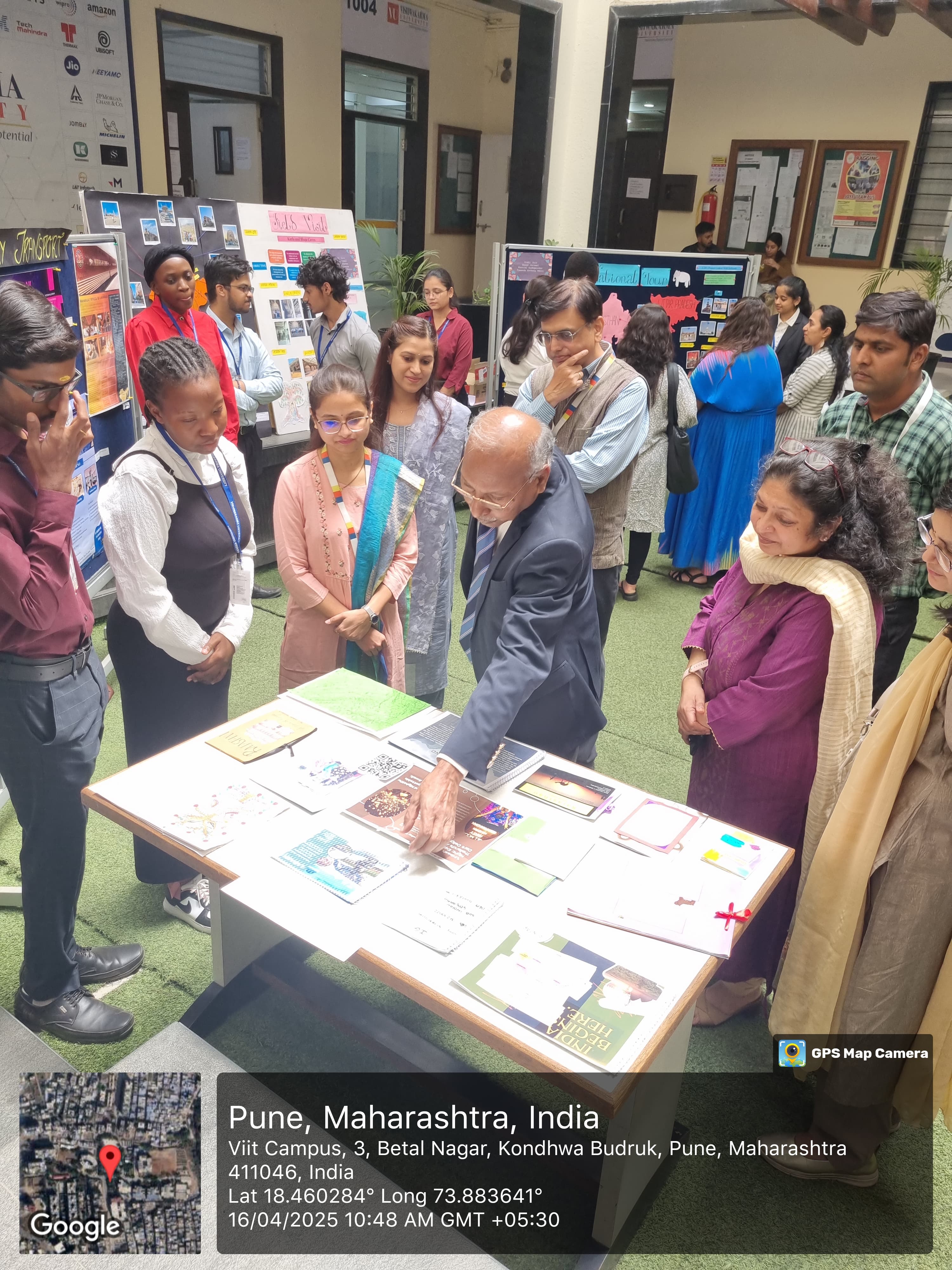
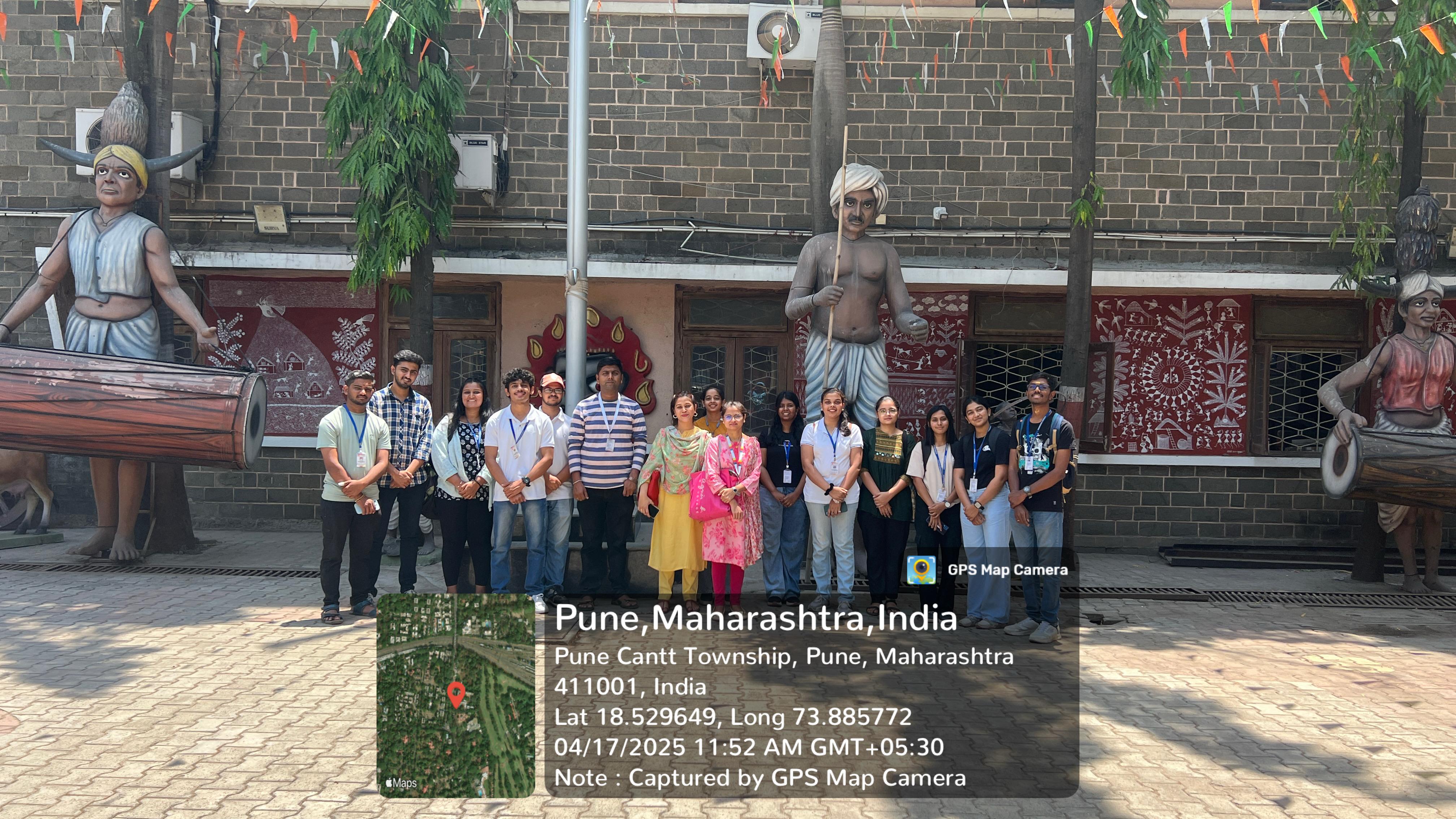
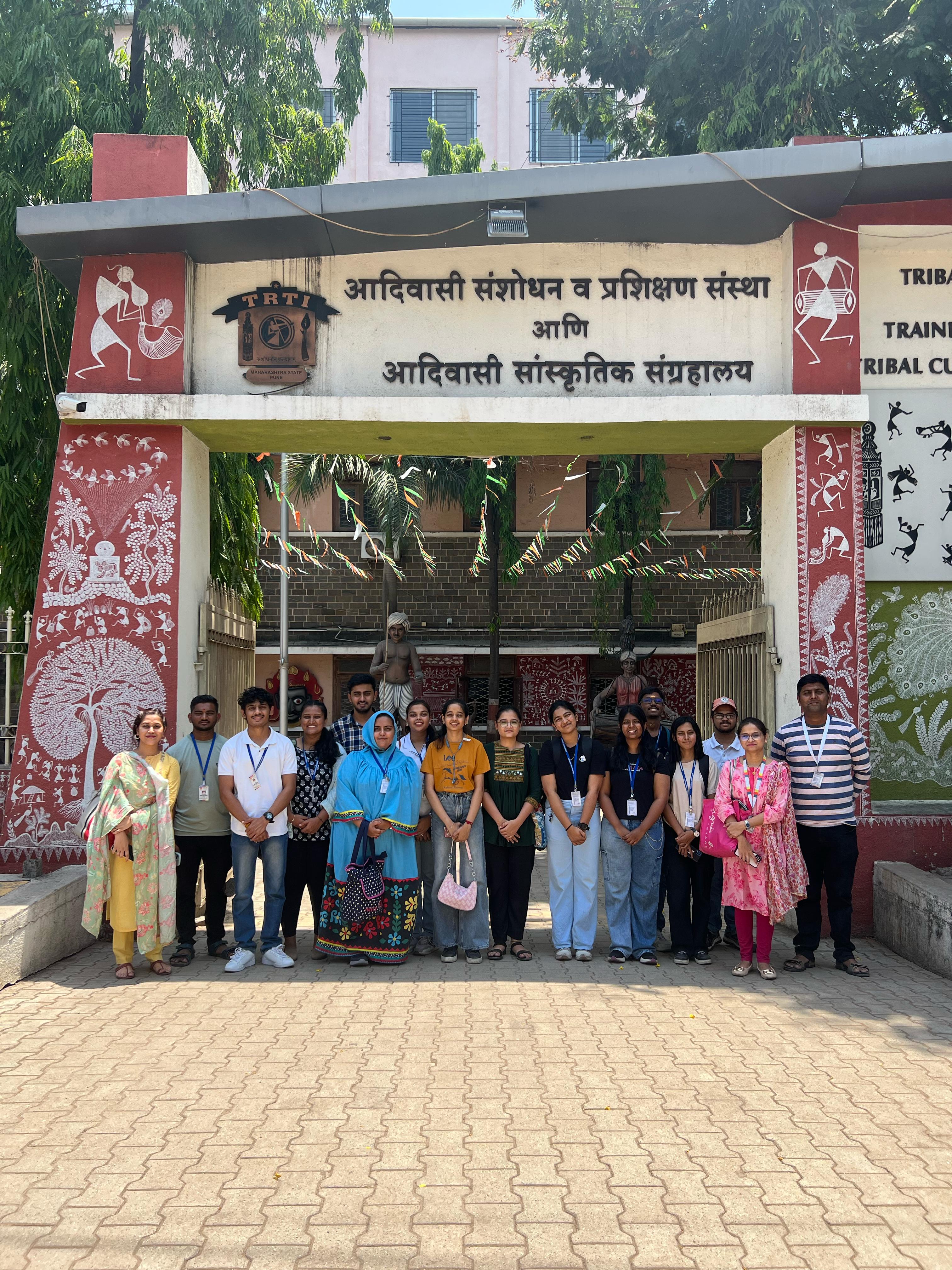
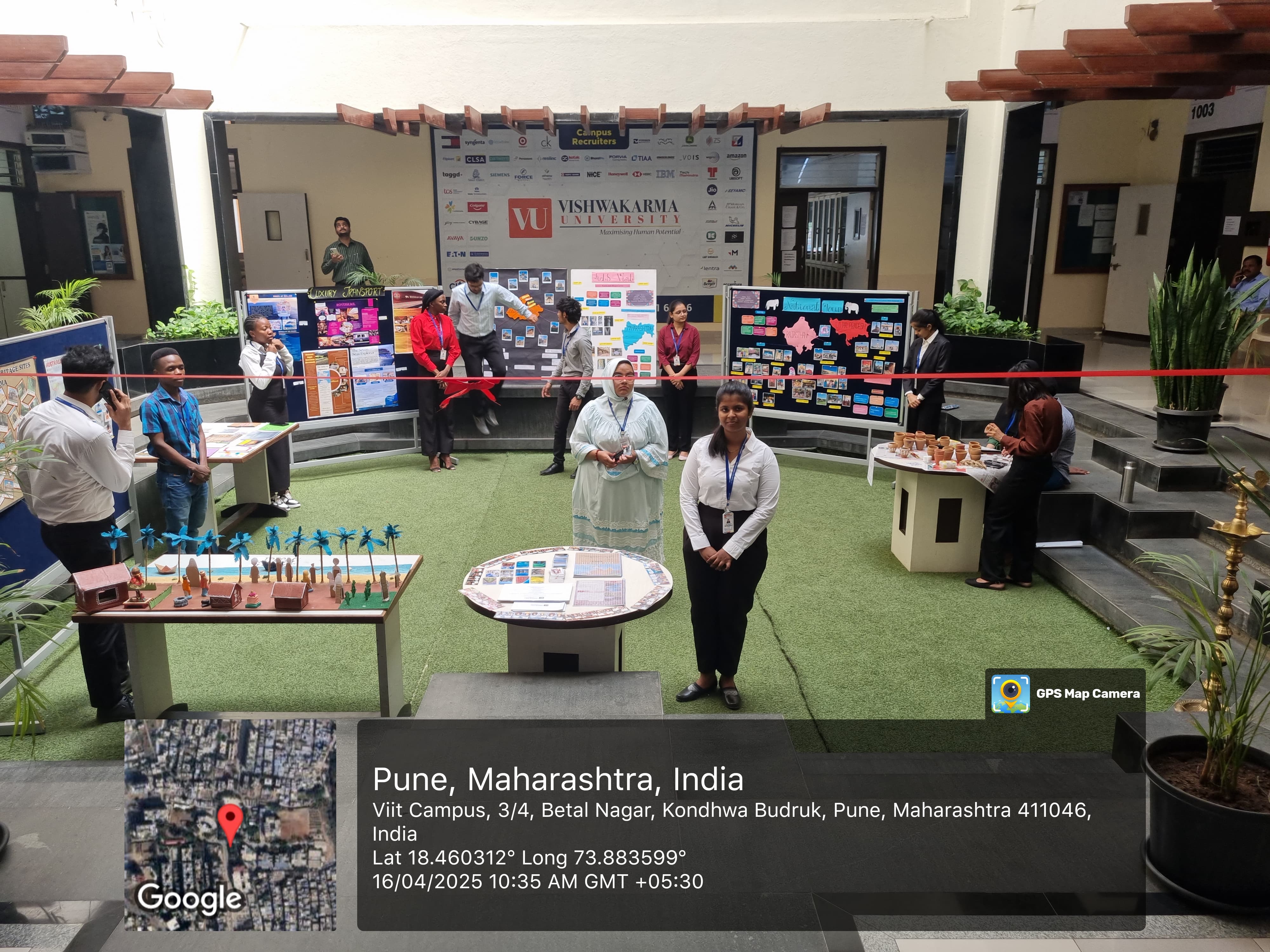
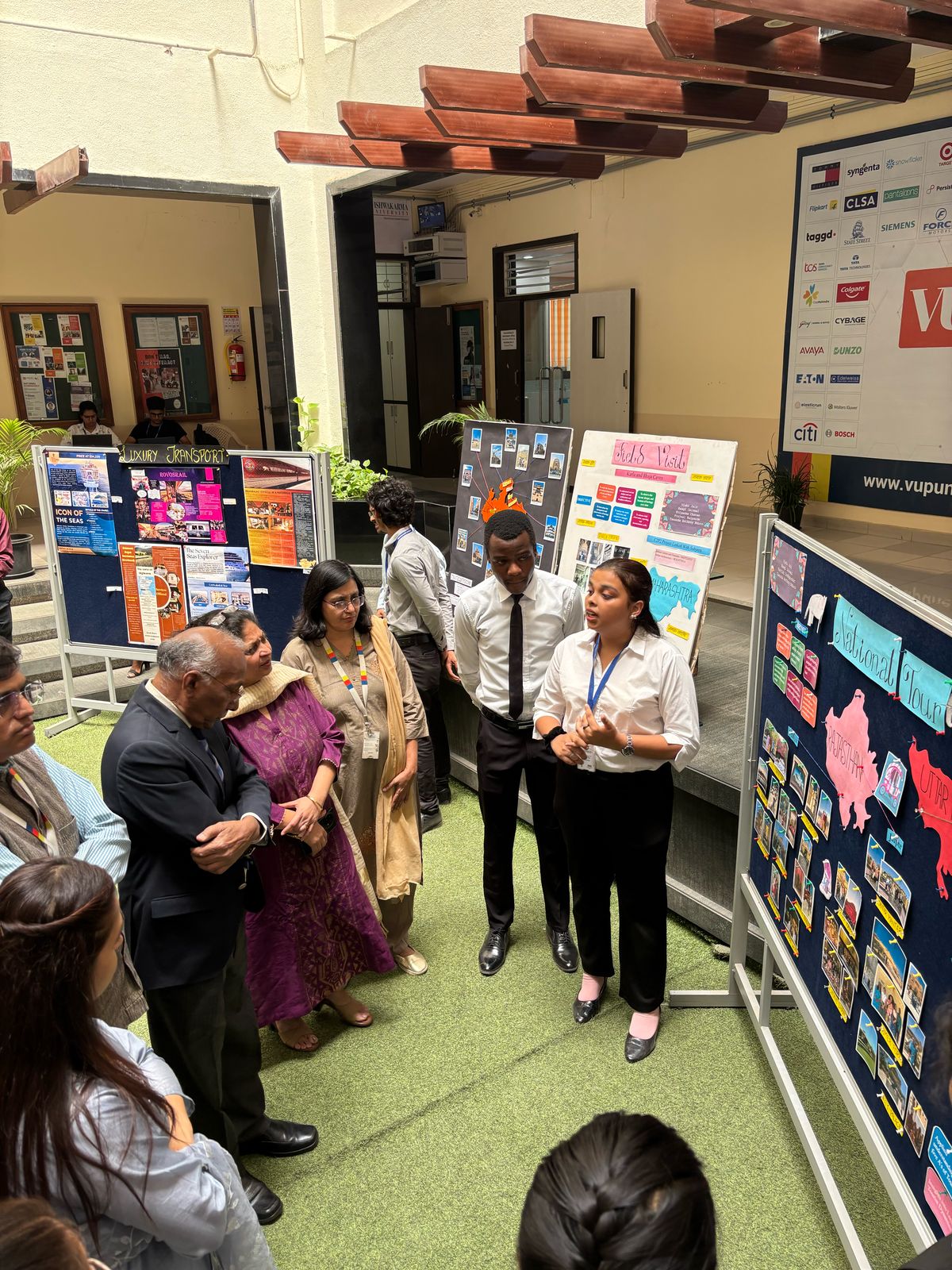
Vishwakarma University's Department of Travel and Tourism and the Centre of IKS collaboratively celebrated World Heritage Day on April 16th and 17th, 2025. The event featured an engaging exhibition of student projects on Indian culture and tourism, a creative reel making competition, and an insightful visit to the Tribal Museum, Pune. The activities successfully fostered cultural awareness and appreciation among students.
Activities:
Day 1 – Wednesday, April 16th, 2025
a. Exhibition of Students' Projects (C2P2) at the Eventorium: This exhibition showcased the diverse and insightful projects created by students under the C2P2 initiative. These projects highlighted the richness of Indian heritage through visual and interactive displays, covering themes such as traditional art forms, architectural marvels, historical monuments, festivals, and indigenous practices. The aim was to deepen cultural awareness and provide experiential learning opportunities.
b. Reel Making Competition: A platform for students to express their creativity and digital storytelling skills. Participants created engaging short videos (reels) centered on the theme of Indian Heritage and Tourism. Entries were judged based on originality, content relevance, visual appeal, and storytelling impact. Winning participants were awarded certificates in recognition of their achievements. This competition encouraged digital innovation and heritage awareness through modern social media formats.
Day 2 – Thursday, April 17th, 2025
Outcome:
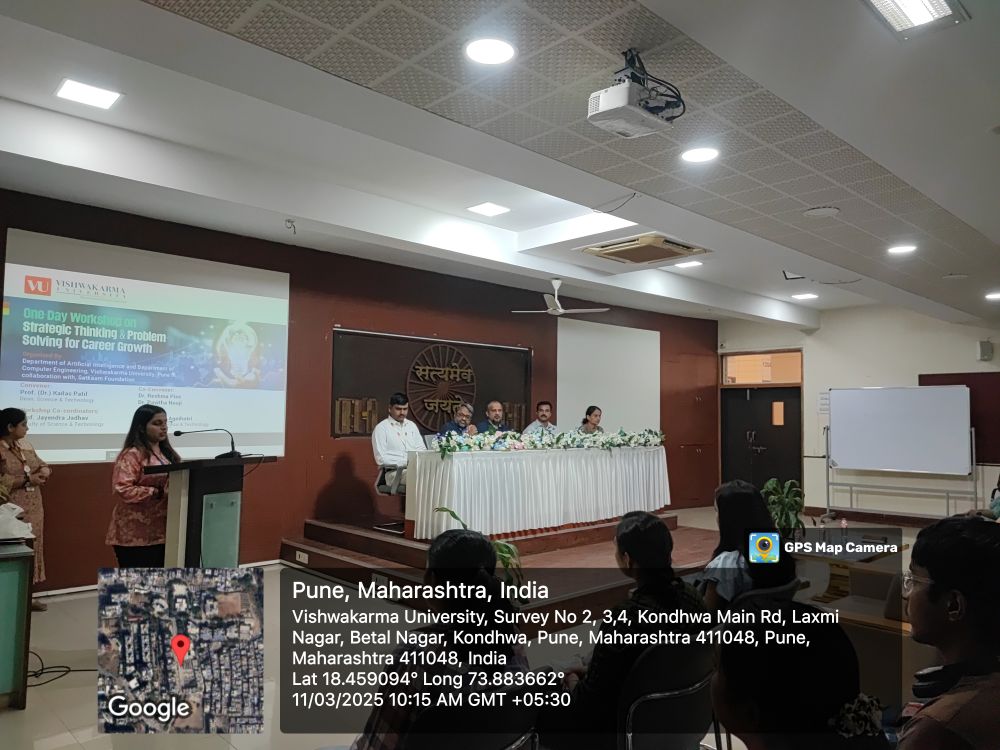
Name of the Event: One-Day Workshop on Strategic Thinking & Problem-Solving for Career Growth
Organizing Body:
Department of Artificial Intelligence and Department of Computer Engineering, Vishwakarma University, Pune in collaboration with, Satkaam Foundation
Date of Event conduction: 11th March, 2025
Venue: Classroom No. / Auditorium: Auditorium
Time: 10.00 AM to 1.00 PM
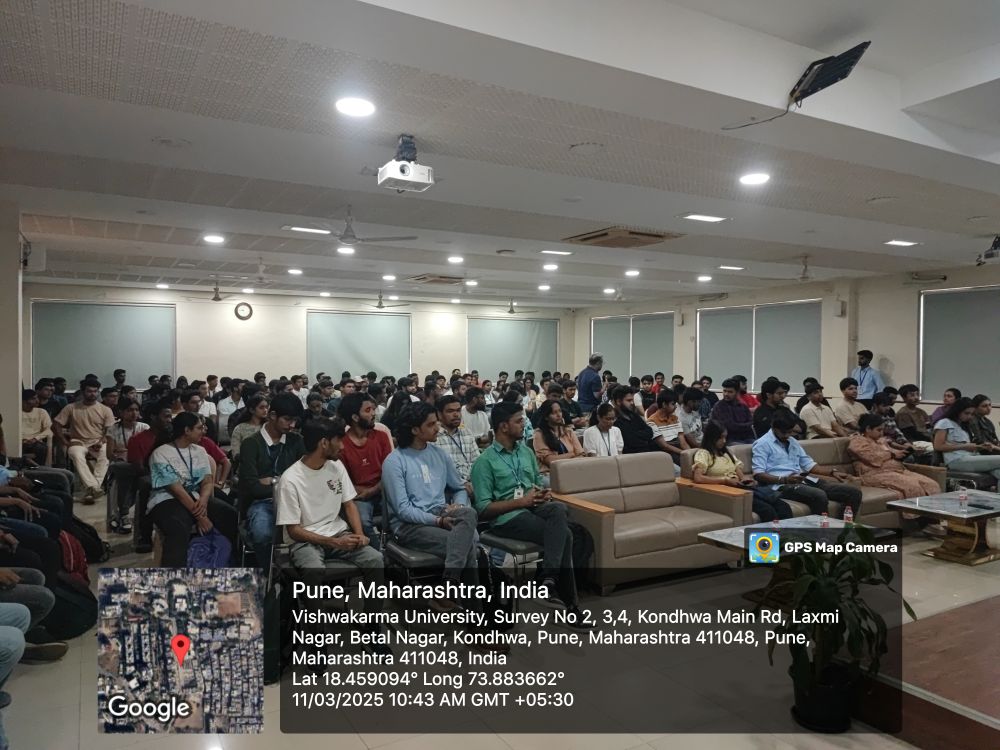
No. of Participants: 83
Faculty Event Coordinator:
Convener
Dr. Kalias Patil,
Dean, Science & Technology
Co-Convener
Dr. Reshma Pise
Dr. Pavitha Nooji
Workshop Coordinators:
Prof. Jayendra Jadhav, Faculty of Science & Technology
Prof. Richa Agnihotri, Faculty of Science & Technology
Objective:
The workshop aims to empower participants with a comprehensive understanding of Critical Thinking, Problem Solving, Articulation, and Inquisitiveness and their significance in the corporate world. Through interactive sessions and real-world case studies, attendees will develop essential skills to analyse situations logically, approach problems strategically, communicate ideas effectively, and foster a mindset of curiosity and continuous learning. Additionally, the workshop will provide insights into how these competencies contribute to professional growth, leadership, and decision-making in dynamic work environments. By the end of the workshop, participants will be equipped with practical strategies to enhance their cognitive and communication abilities, preparing them to navigate challenges confidently and excel in their careers.
Event Summary:
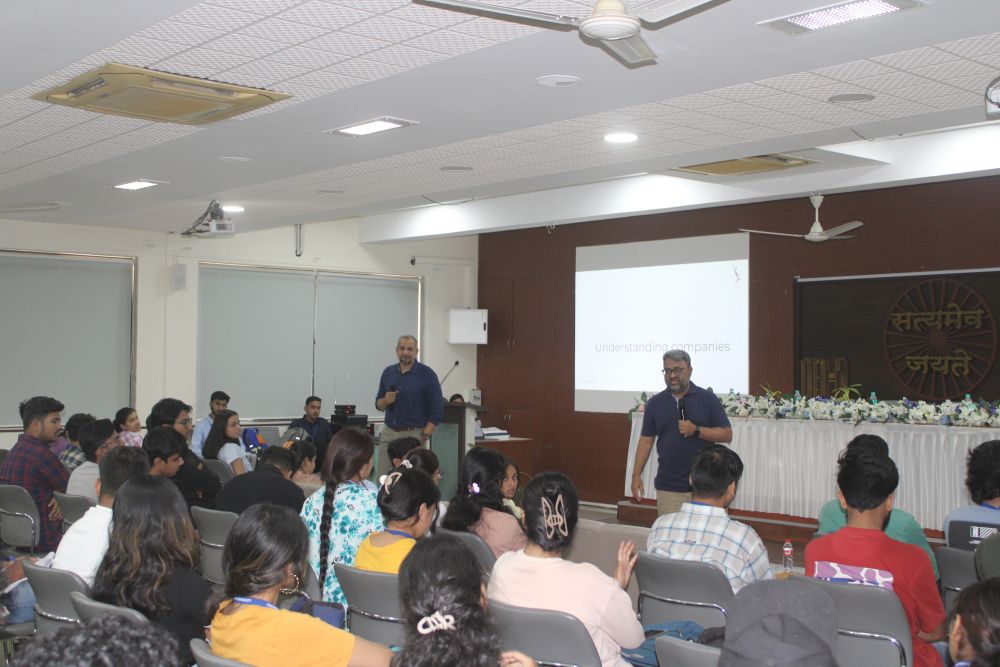
The One-Day Workshop on Strategic Thinking & Problem-Solving for Career Growth was conducted by the Department of Artificial Intelligence and Department of Computer Engineering, Vishwakarma University, Pune, in collaboration with Satkaam Foundation on March 11, 2025 at the VU Auditorium, Eco-Campus Building.
The workshop aimed to equip participants with critical thinking, problem-solving, articulation, and inquisitiveness skills. Through interactive sessions and real-world case studies, students learned how to analyze problems logically, develop strategic solutions, and enhance their communication abilities. The workshop emphasized the importance of these skills in career growth, leadership, and decision-making.
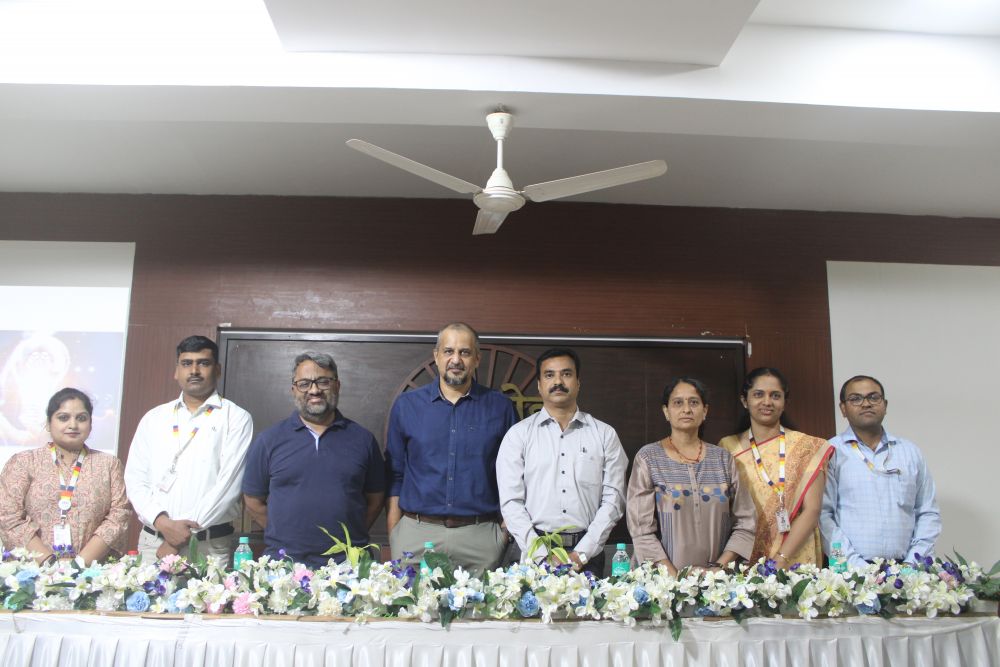
The sessions were led by Mr. Abhijit Bhide (Co-Founder, Satkaam) and Mr. Rahul Bhide (India Center Head & Director of Products, Mindbody). The event was coordinated by Prof. Jayendra Jadhav and Prof. Richa Agnihotri, with Dr. Kalias Patil (Dean, Science & Technology) as the Convener and Dr. Sandip Thite (Associate Dean, Science & Technology) as the Co-Convener.
Outcome:
NAVIGATION
QUICK LINKS
PROGRAMMES
CONTACT US
Only for Students
+91 9590300911Only for Faculties
+91 8669908316Copyright © Vishwakarma University, Pune 2026 All rights reserved..
[Best viewed in IE 10+, Firefox, Chrome, Safari, Opera.]
Powered by