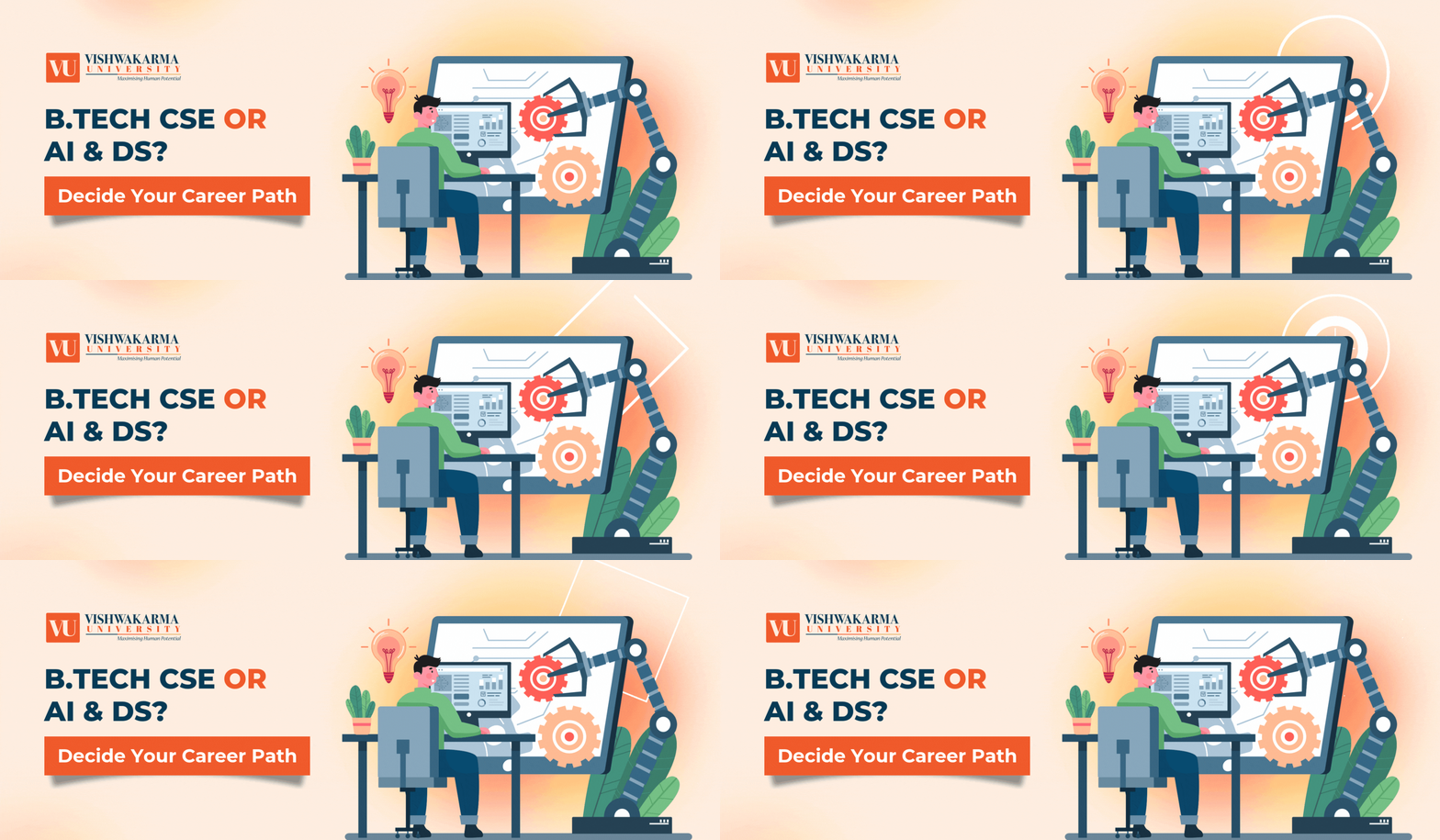
Confused between B.Tech in CSE and B.Tech in AI & DS? Discover key differences, career options, future demand, salaries, and why Vishwakarma University is your best choice.
International Conference on Reverse Logistics and Circular Economy Strategies for Sustainable Development (ICRCSD 2025)
Dates: 15–16 July 2025
Venue: Vishwakarma University, Pune, Maharashtra, India
Mode: Hybrid (Online & Offline)
Organized by: Vishwakarma University, Pune
In collaboration with: SUNY Binghamton University, New York, USA
Publication Partners: Apple Academic Press (AAP) & CRC Press (Taylor & Francis Group)
Inauguration Ceremony Highlights
Date & Time: 15th July 2025, 10:00 AM – 10:50 AM
Venue: Auditorium, Building 1, Vishwakarma University
The inauguration of ICRCSD 2025 marked a grand opening to two days of academic and professional engagement on sustainable development themes. The ceremony
commenced with the arrival of esteemed dignitaries, followed by a traditional lighting of the ceremonial lamp.
Dignitary Addresses:
Keynote Sessions
Following the inauguration, two distinguished keynote sessions were conducted:
Technical Sessions and Paper Presentations
ICRCSD 2025 featured 16 high-quality research papers presented across five thematic tracks, encompassing both online and offline formats:
Conference Tracks & Themes:
1. Reverse Logistics & Supply Chain Management
2. Circular Economy Models & Business Strategies
3. Sustainable Development Goals (SDGs) & Environmental Policy
4. Technological Innovations & Digital Transformation
5. Industry-Specific Circular Economy Applications
Each session was chaired by subject experts from academia and industry, fostering rich dialogues and feedback loops. The presented research spanned innovative topics such as:
Conclusion
ICRCSD 2025 successfully brought together researchers, industry professionals, and policy advocates to exchange knowledge, best practices, and emerging strategies in sustainability. With keynote insights, scholarly research, and international collaboration, the conference underscored the pivotal role of reverse logistics and circular economy in driving sustainable development. The hybrid format enabled inclusive participation, amplifying the global impact of this flagship event.
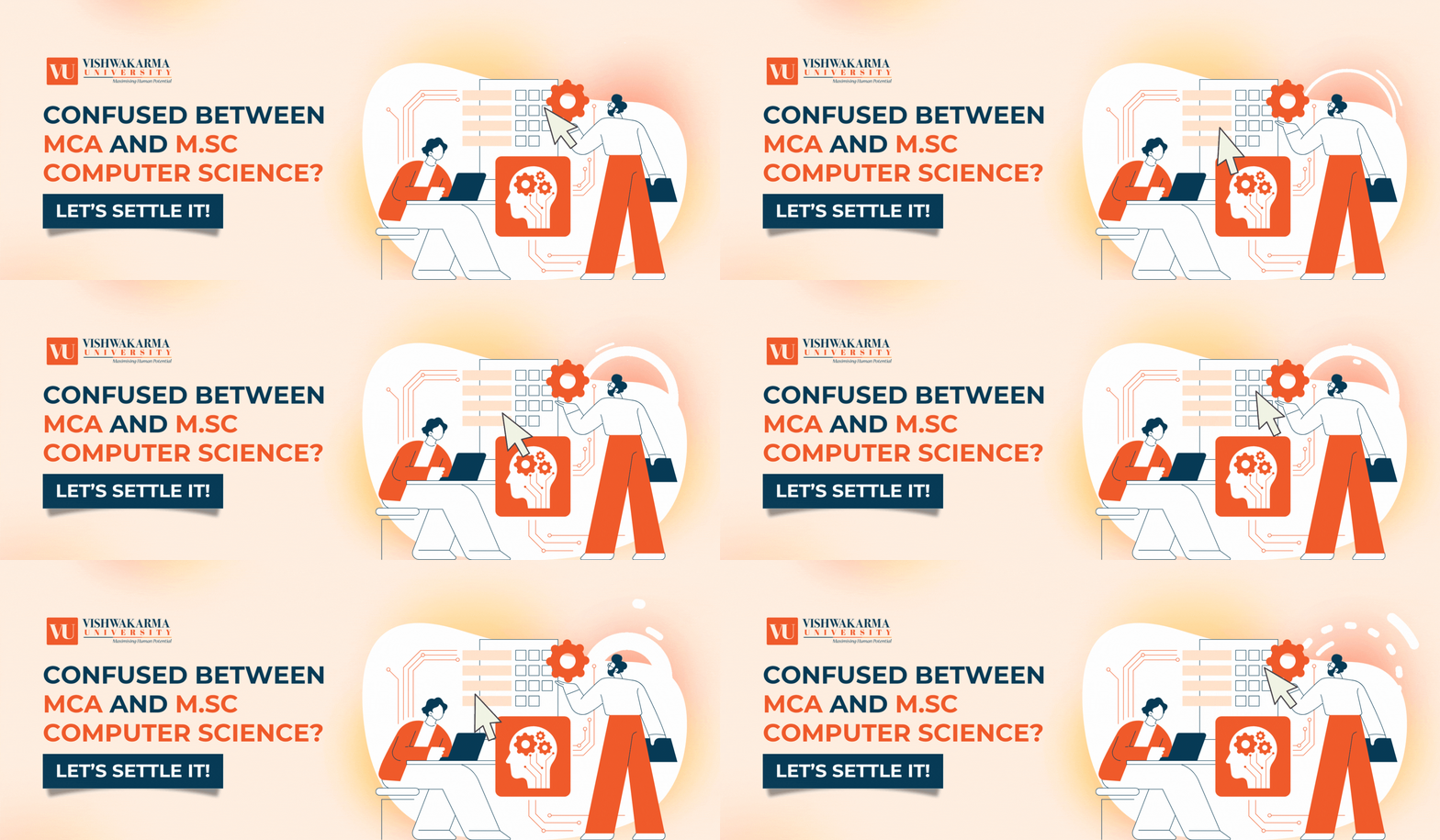
Confused between MCA and M.Sc. Computer Science? Discover the key differences, career opportunities, salary comparisons, and expert insights to decide which course is better for your future in IT.
The guest lecture” The Evolution and Future of Mobile Application Development” aims to provide MCA second-year students with a comprehensive understanding of mobile application development, exploring its evolution, current trends, and future directions. The session will delve into various platforms, technologies, and methodologies, offering insights into industry best practices and the challenges faced by developers. Divyansh Pratap-Android Developer at Flextr By OneApps Solutions(Android Dev), Divyansh brings a wealth of experience in native and cross-platform development, offering practical insights and real-world examples.


The guest session on "Artificial Intelligence: Strategy and Coaching of Trending Technologies," aims to provide MCA second-year students with the forefront of technological transformation, and understanding its strategic applications is crucial for aspiring IT professionals. This session will be delivered by Rajeev Saxena, CEO of MysticAI LLC, a leader with 30 years of experience in companies like IBM, Samsung, and various U.S. startups. Over the past decade, Rajeev Saxena has built businesses in AI, Data Analytics, and SaaS.


The Department is organizing an online guest session on "Artificial Intelligence and Machine Learning: Revolutionizing the Future", aimed at providing students with insights into the latest advancements and real-world applications of AI and ML technologies.
Speaker: Dr. Manmeet Singh, Scientist, IITM (Ph.D. from IIT-Bombay), Fellow at the University of Texas.
Objective:
This session will enhance students' understanding of AI and ML, showcase real-world applications in scientific research and environmental forecasting, encourage critical thinking on AI ethics and future trends, and inspire innovation through interdisciplinary learning.
.jpg)

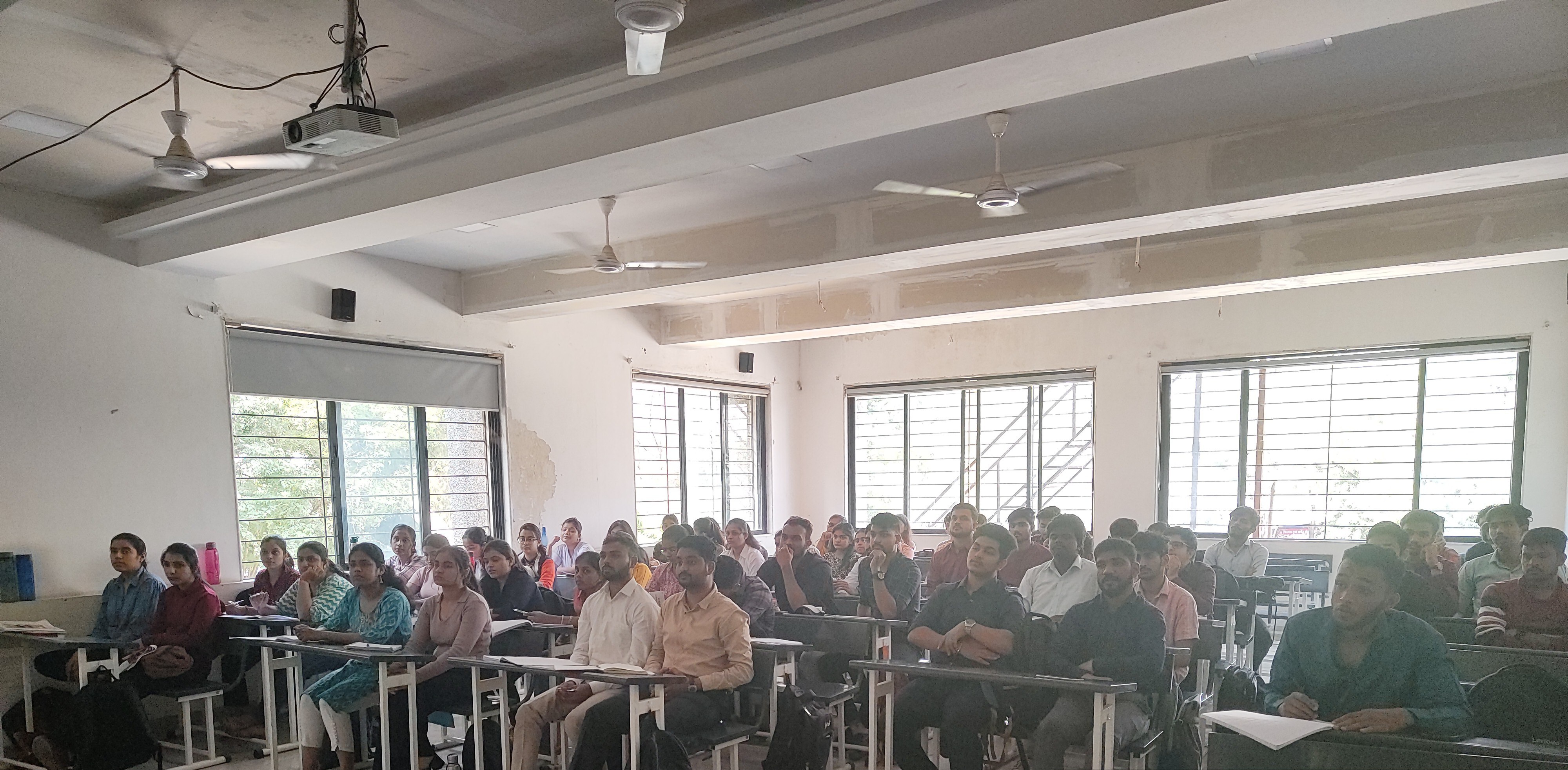
The Department organized an Aptitude Workshop for MCA students, conducted by Mr. Rohit Runwal, to help them prepare effectively for placement interviews. The session focused on enhancing students' problem-solving skills, logical reasoning, and quantitative aptitude—key areas assessed during campus recruitment processes.
Objective:
The workshop offered valuable tips, practice exercises, and interactive learning to boost students' readiness for their career journeys.
.jpg)
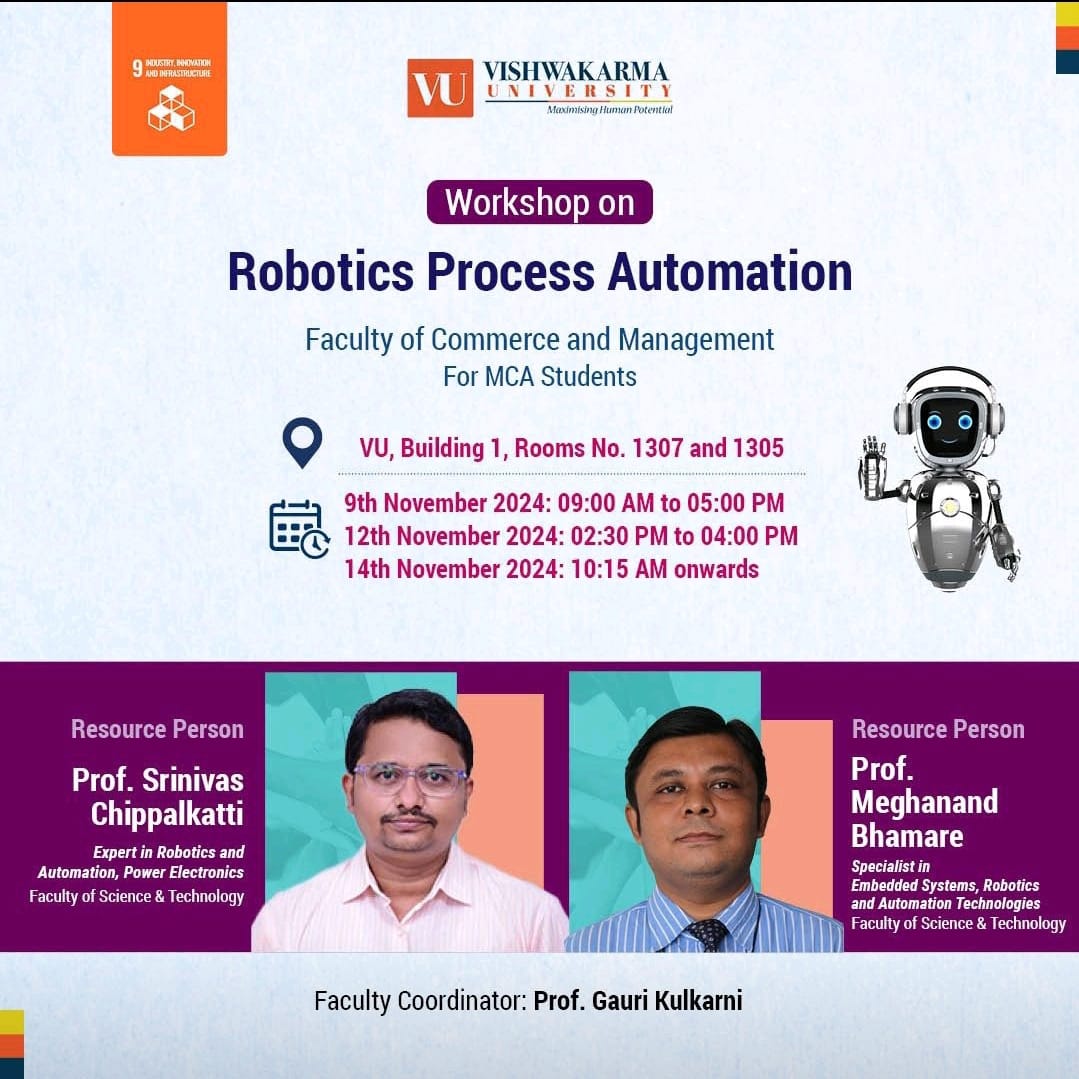
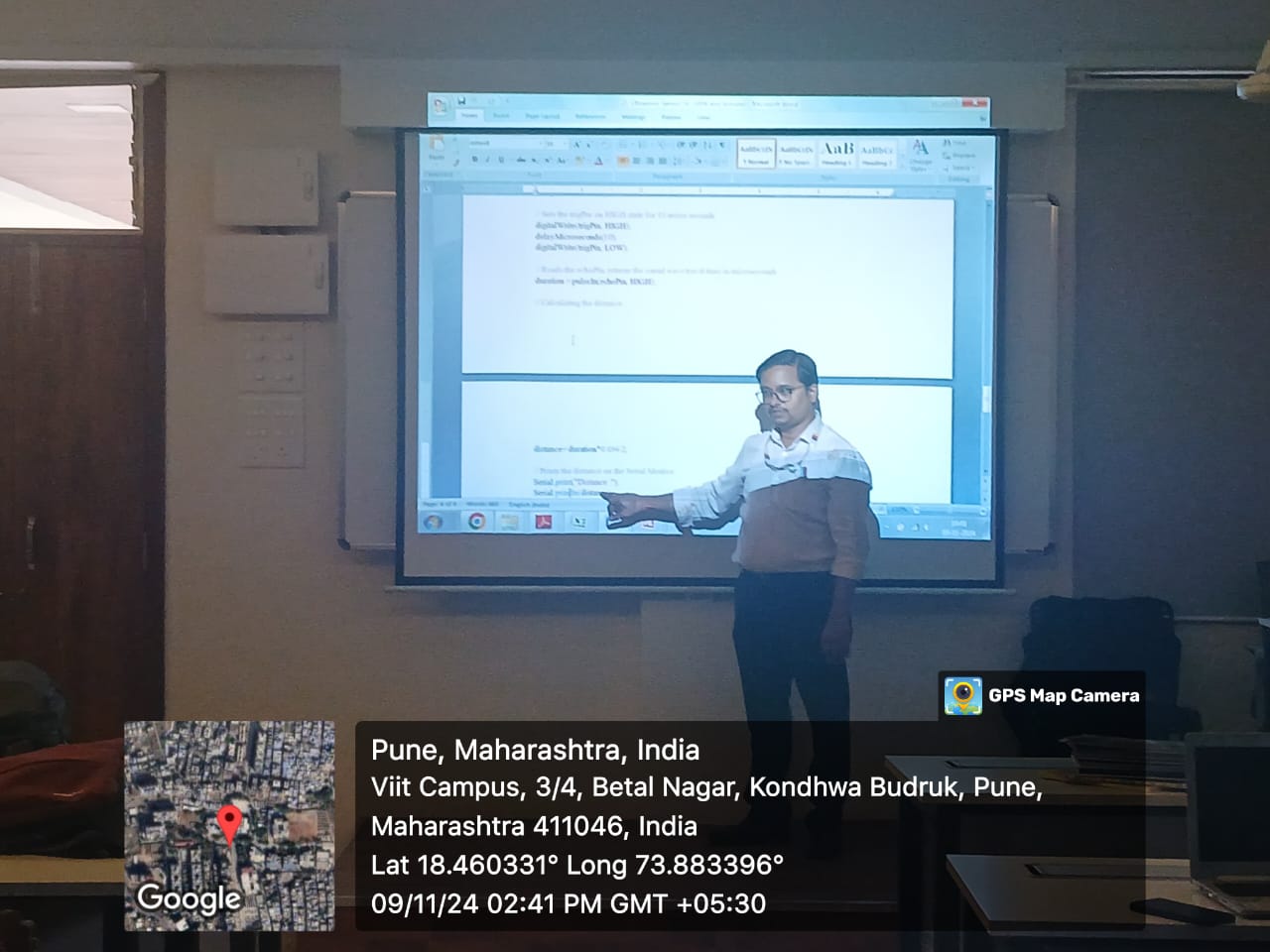
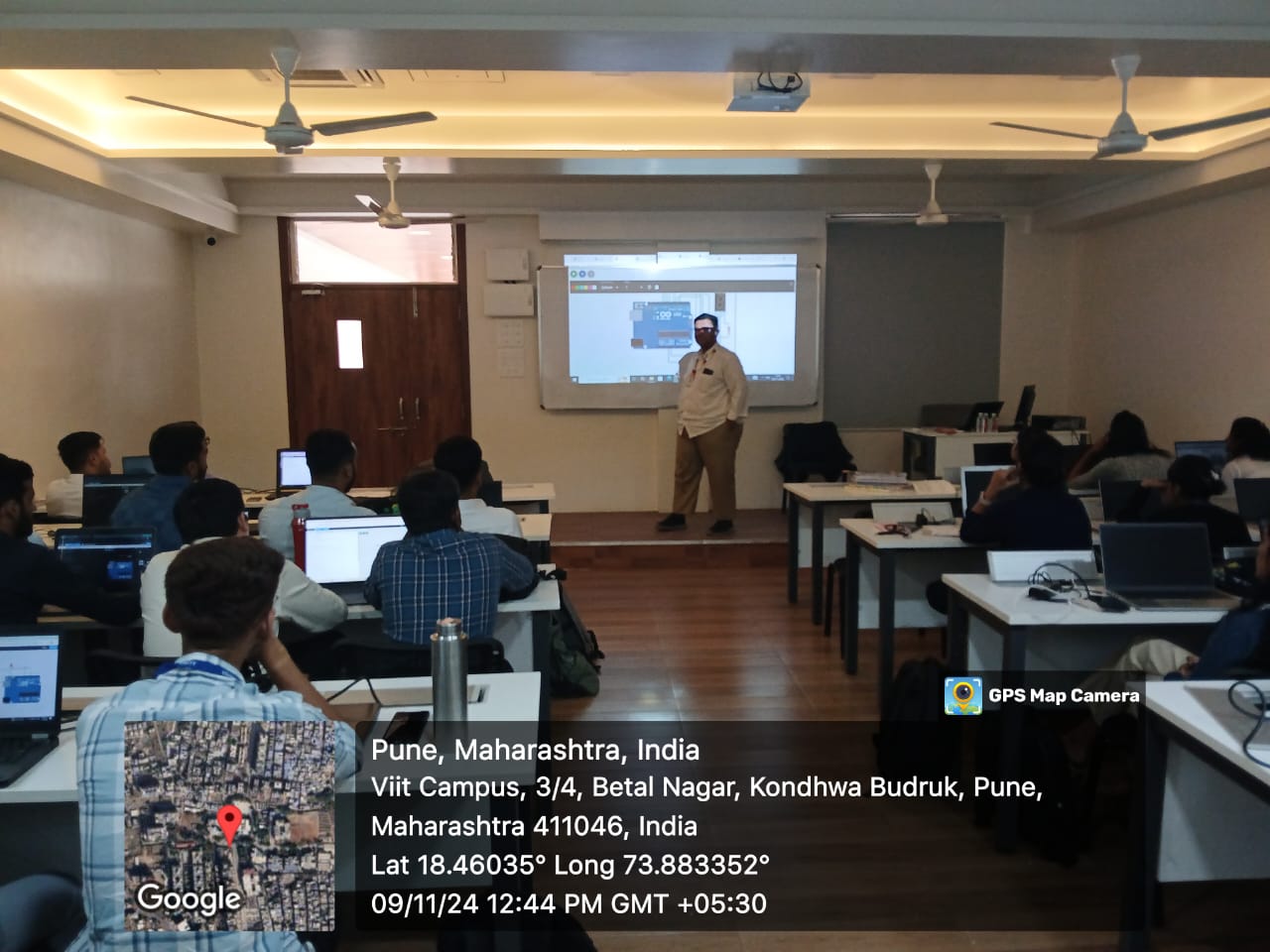
Roboics workshop: Robotics Process Automation is a key subject for MCA Semester III students, reflecting the growing importance of automation and robotics across industries. Focusing on Sub Robotics—an advanced blend of robotics and AI—the workshop is organized by the Department of Computer Application in collaboration with the Faculty of Science and Technology. Co-Ordinator: Prof. Gauri Kulkarni And Resource Persons:Prof. Srinivas Chippalkatti (Expert in Robotics and Power Electronics),Prof. Meghanand Bhamare (Specialist in Embedded Systems and Robotics).
Objectives:
.jpeg)
.jpeg)
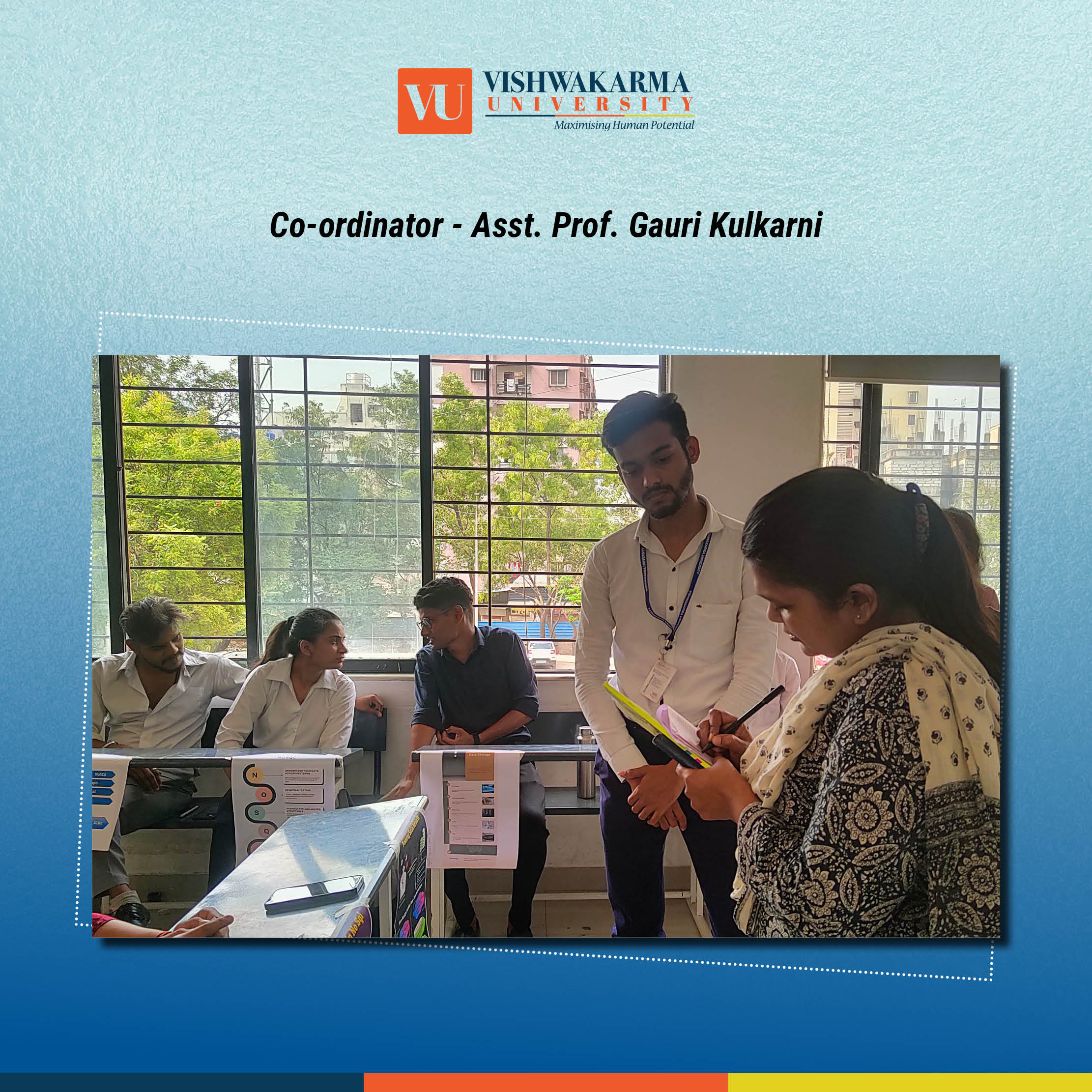
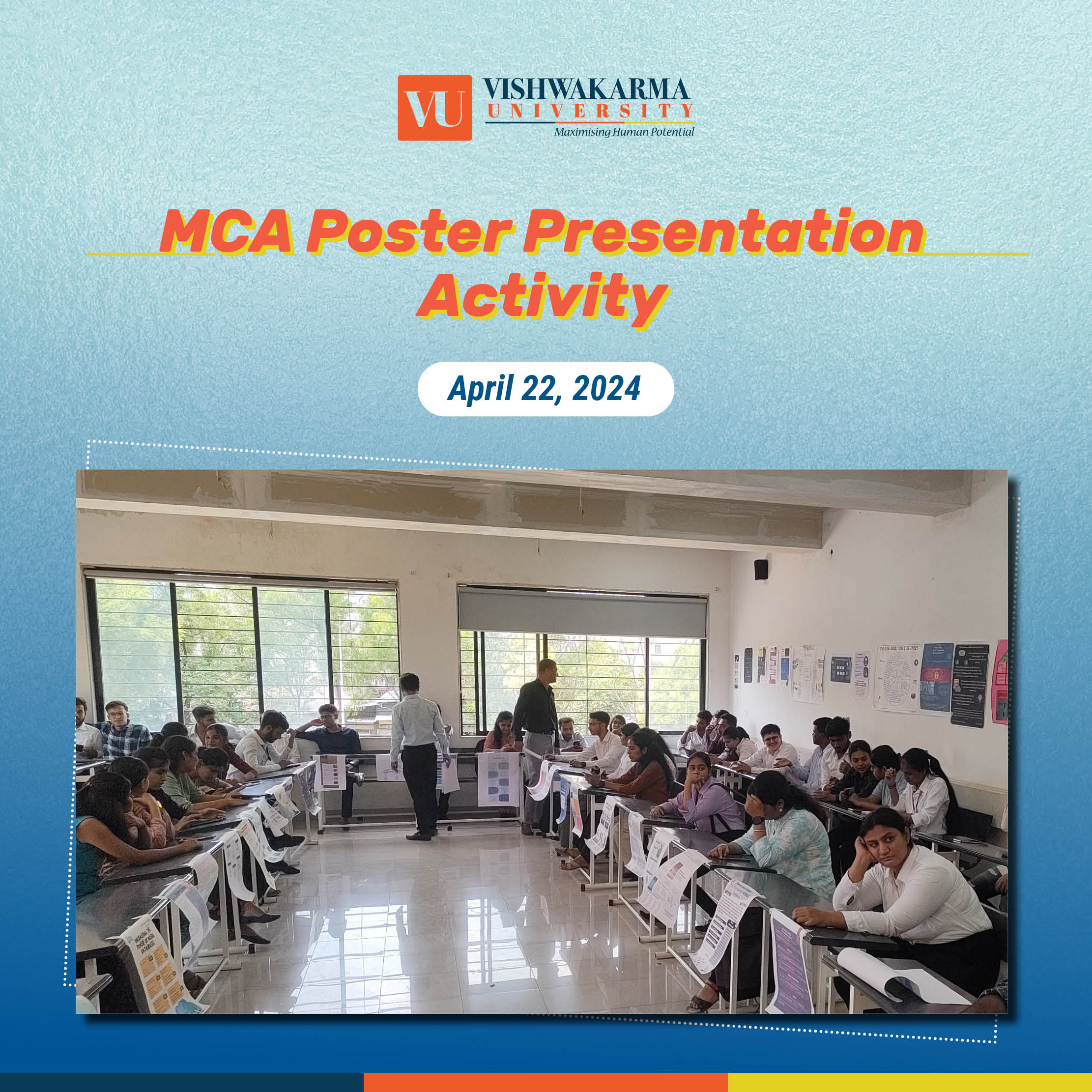
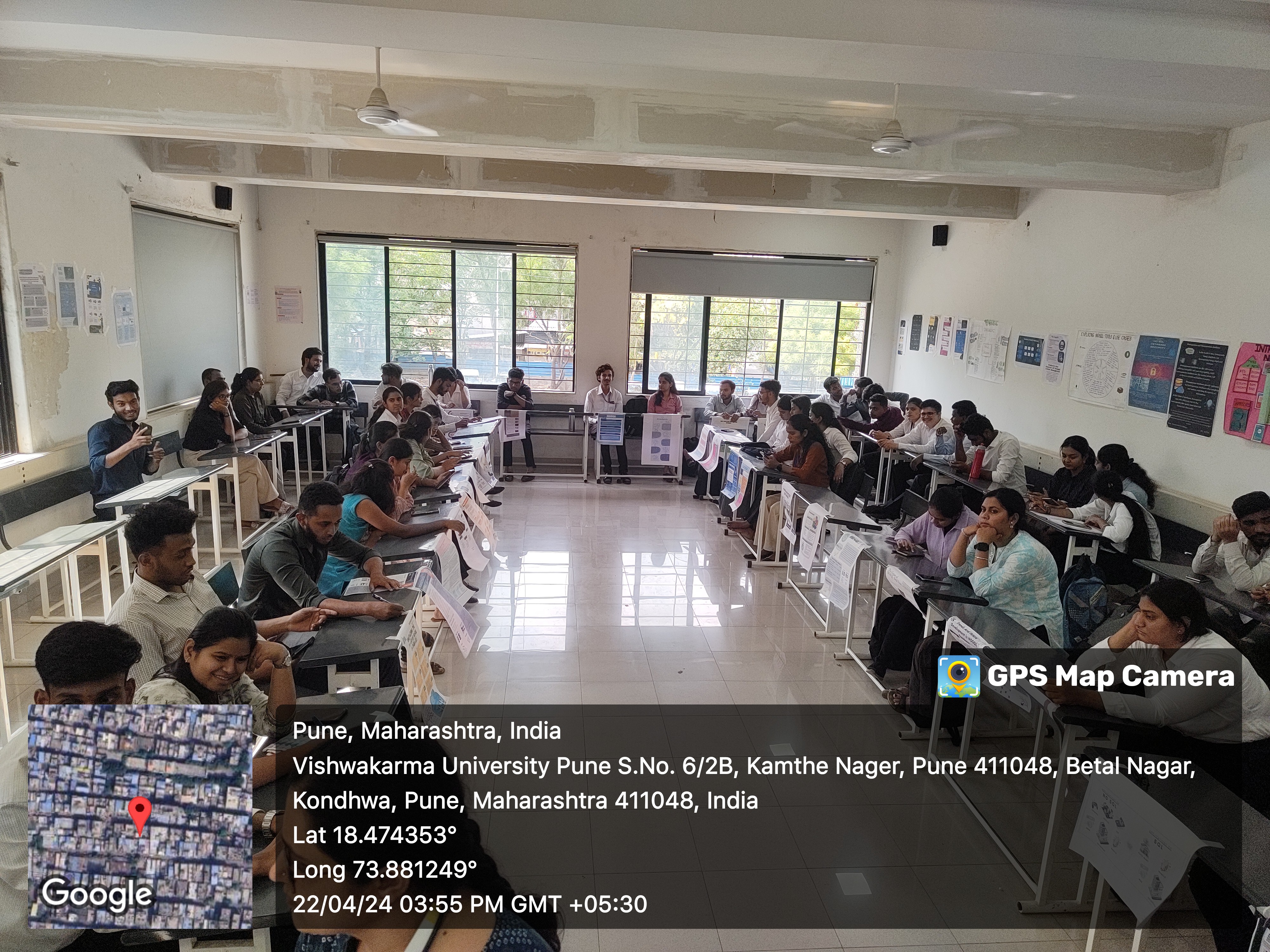
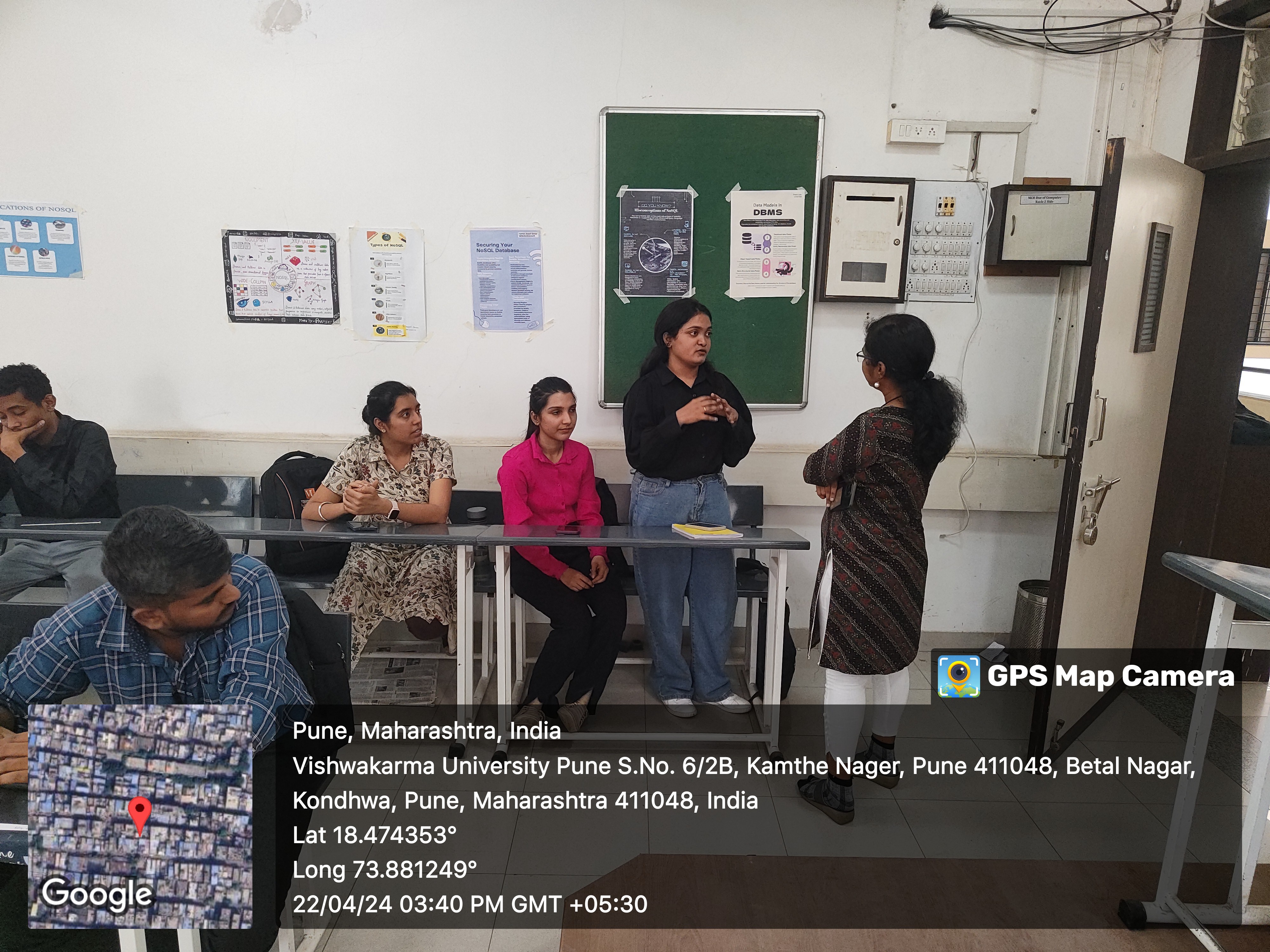
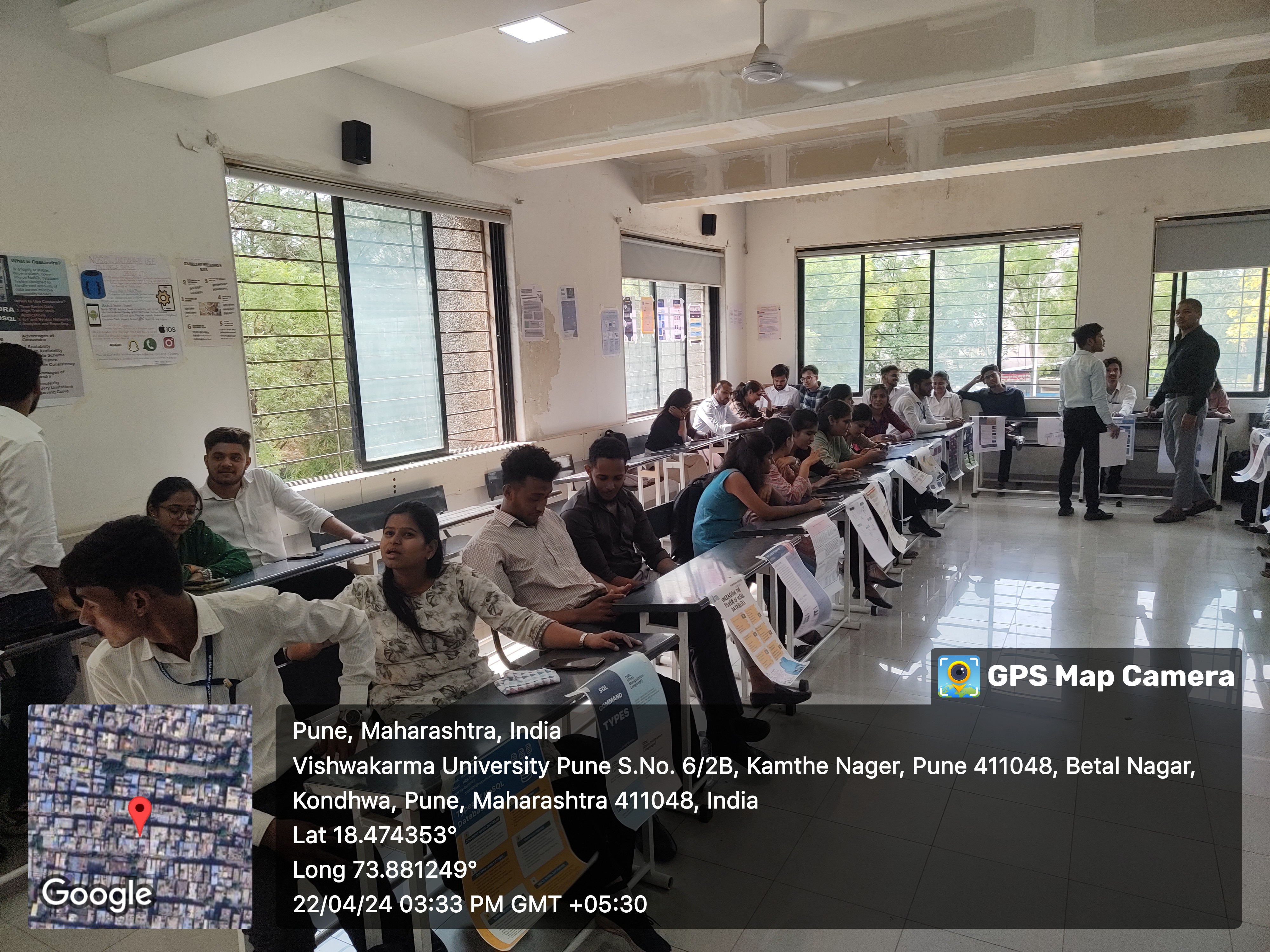
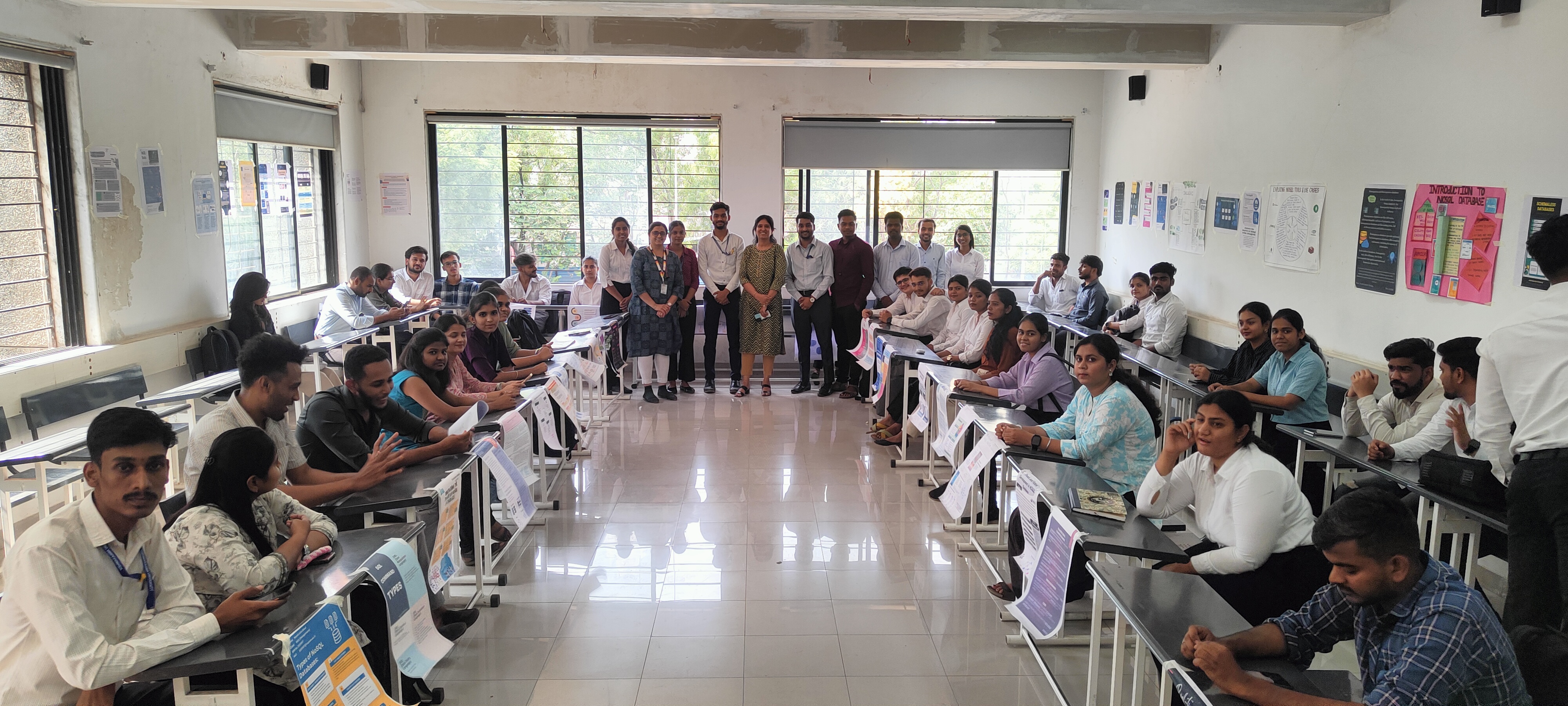
The Department of Computer Application organized the MCA Poster Presentation Activity under the C2P2 Initiative. This academic event provided MCA students a platform to present their research and projects on topics like System Architecture, Object-Oriented Databases, and NoSQL and its types. Students engaged in discussions, showcased their technical knowledge, and received valuable feedback from faculty experts.Co-ordinator: Asst. Prof. Gauri Kulkarni, Evaluators: Prof. Swati Shriyal and Prof. Pallavi Morey (Department of Science and Technology).
Objectives:
NAVIGATION
QUICK LINKS
PROGRAMMES
CONTACT US
Copyright © Vishwakarma University, Pune 2026 All rights reserved..
[Best viewed in IE 10+, Firefox, Chrome, Safari, Opera.]
Powered by