Subscribe to this RSS feed
Thursday, 10 September 2020 10:07

Documents Required

As applicable for the UG / PG Programme

For Reserved Category Students – Caste Certificate, Caste Validity, and Non-Creamy Layer Certificate, are additionally required (over and above listed documents).

Submit all/Pending documents as early as possible to complete the admission process. For the last date of submission of documents, contact the university Admissions Office/ Student’s sections.

Thursday, 10 September 2020 10:06

How To Apply

Option 1- Online Form Filling

Option 2 – Offline (In Person) Form Filling

Note: Vishwakarma University (VU), Pune charges an application form fee.

Friday, 28 August 2020 06:57

LLM


One year full time post-graduate course for Master in Law (LL.M) with specialization in Criminal Law, Business Law, International Law & Arbitration, Cyber Law and IPR (Intellectual Property Rights) Laws.

Tuesday, 25 August 2020 10:12

Culture and its expression in Architecture

Kashmiri Culture

Architecture as an expression of culture 

One thinks of ‘Culture’ usually in terms of lived practices like food, language, dress, and rituals.  Architecture is rarely thought to be a part of culture even though it is an integral part of culture; some might even say it is an expression of it, and rightly so. We do understand the relation clearly between the two in respect to religious buildings – the minaret of the masjid, the spire of a church, the dome of a Gurdwara or the sanctorum of a temple, are clear enough examples. Culture draws from architecture, inasmuch as architecture draws from culture. The question is how? What relations can be drawn? 

Culture and Lifestyle 

What comes first? Culture or architecture? This is a chicken and hen question – circles have no beginnings! The way we experience life, we shape the worlds around us accordingly. The way we shape the worlds around us, we live our lives accordingly. 

chawl

Consider it this way: In Mumbai, low cost housing is almost an impossibility in a city where population exceeds land by a far mile. One solution was creation of low cost Chawl rooms in Mumbai – large buildings with one room apartments called Kholi. A typical Mumbai Chawl is designed as a building of multiple floors, each accessed by a central staircase which opens into a long passage that runs the length of each floor. The passage is open on one side, and on the other side a row of doors opens into tenements. The passage then serves as a balcony, where people can socialize, stand and get fresh air and sun. This unique design creates its own culture. Since doors can’t be closed during the day, as it will encourage gossip, privacy is impossible. In its place rises a very closely knit community where ‘Know thy neighbour’ is practiced in the truest and most literal sense. In a residential society with separate apartments, this bonhomie is impossible, and accordingly privacy is maintained at the expense of an individualistic culture. 

Kashmiri Da’eb

Similarly, in urban Kashmir, an appendage was constructed with houses keeping in mind gender roles and cultural norms. Houses typically were built with a Da'eb or a specially designed verandah. 

kashmiri daeb

Traditionally, the houses had a stone staircase usually of three steps that led to the house via a landing called 'brandh'. Usually, it was placed at the exact center of the face of the house, which served the dual purpose of aesthetics as well as easy access to the house. The Da'eb was constructed on the first floor, right above the brandh on the ground floor.  The Da'eb was of particular use to women, who would use it to see off the men going to work, while also remaining hidden from public gaze. Besides, it allowed women to form an informal network of communication, and share gossip, recipes, news and other concerns. Architecture thus became a tool of subversion of patriarchal norms. Yet, another consequence of Da’eb being a female space is that it became a recurring motif of Kashmiri songs and Kashmiri amorous poetry, and so became an integral element of literary culture, as well as erotic transactions. 

Has architecture anything to do with politics?

All fine and good, but one important question is: Has architecture anything to do with politics? You might be forgiven for thinking the answer is no! Not so! Architecture is deeply determined by politics. Historically, architecture has been defined by the tilt of those who are in power. For example, Mughals brought in a new style of architecture, which was a symmetrical and decorative blend of Persian, Turkish, and Indian architecture. This style differs from earlier styles by including large spherical domes, slender minarets at the corners, large halls, vaulted gateways, and exquisite delicate ornamentation. Buildings of importance like Red Fort, from the rampart of which governance was extended was built in this style reminding people of the association between power and place. 

Similarly, when the British conquered India, they abandoned the Mughal architecture and favoured the Italian gothic style leading to what is called Indo-Saracenic architecture. Victoria Memorial, for example, was built as a symbol of British power, a means to inspire awe. Lord Curzon summed it best: "Let us, therefore, have a building, stately, spacious, monumental and grand, to which every newcomer in Calcutta will turn, to which all the resident population, European and Native, will flock, where all classes will learn the lessons of history, and see revived before their eyes the marvels of the past." To prove, the overarching effects of colonialism, the country’s highest court: The Supreme court was designed in the Indo-British style. The impact of British policies was too deep to be shaken off lightly.        

The author of this article Richa Singh is a Content Writer with Investronaut. She is a keen traveller and an avid reader

Tuesday, 25 August 2020 10:05

Growth of E-commerce fuels need for skilled Management Graduates

The internet, coupled with advances in mobile technologies for computing and communication, is transforming businesses globally and opening new possibilities for both customers and organizations.  

E-commerce is expanding steadily in India. Customers have the ever-increasing choice of products at the lowest rates. E-commerce is probably creating the biggest revolution in the retail industry, and the trend is growing.

The dynamic growing e-commerce environment has led the customer to avail comforts as varied as car service or doctor’s appointment with a simple android app. The buying experience has been freed of the bondage of distance or time multiplying manifold the ease of access. The Indian customers, just like their global counterparts, can shop from the comfort of their homes. Buyers have varied choice with a wider range of products and prices from global vendors. They can use their smartphones from anywhere 24/7 to shop.

Figure 1: Growth of E-commerce

With Amazon prepped up for its first cashier-less shop ‘Amazon Go’ in Seattle, e-commerce is set to witness a paradigm shift. It allows the customer to place the products directly into their bags and get charged for them from their online account saving them the hassle of waiting in the queue or check out. This utopian concept is a result of an amalgamation of cameras, sensors and artificial intelligence. Adopted to Indian markets, the technology can significantly reduce the madding weekend rush in the supermarkets.

As mentioned in The Daily Pioneer dated, 24th Jan 2018, all kinds of retails— big and small— want to leverage the advantages offered by digital retail e-commerce platforms, which enable them to spend less money on real estate while reaching out to more customers in tier-2 and tier-3 cities.

Some of the top e-commerce companies in India are:

Figure 2: Some top e-commerce companies.

Another very recent report in The Economic Times dated 22nd Jan 2018 states that e-commerce companies are emerging as a major driver of commercial vehicle demand, with online sellers and logistic providers consolidating warehousing solutions and opting for hub-and-spoke model. Major commercial vehicle makers, including Tata Motors, Ashok Leyland and Mahindra Truck & Bus, report a significant surge in sales to transporters catering to the e-commerce sector. 

This stupendous growth in the e-commerce space, needs a huge demand for trained management professional who can expertly handle the challenges. Companies are hiring e-commerce specialists in large numbers. But the demand is outdoing the supply.

Very few B-Schools in India have been able to keep pace with the changing demand in the skills required to handle e-commerce jobs. The jobs would require skills like big data analytics, logistics management, digital marketing, and technology management among other general management skills.

The e-commerce field thrives on interdisciplinary activity that calls for multiple skills to execute tasks.  However, due to the lack of interdisciplinary learning in the traditional education, there is a great deficit of professionals who can directly take job roles in this sector. The extensive business prospects combined with the low availability of skilled workers makes this filed a fertile ground for job opportunities.

Since the field of e-commerce involves interdisciplinary concepts, a traditional pedagogical framework cannot deliver the full gist of this challenging field. An interdisciplinary programme in management trains the student in all domains required to become a successful manager in the e-commerce industry. With live projects and internships, the students get ready to take on the challenges of this sector. 

(The above article is a summary of recent articles appearing in The Daily Pioneer, The Economic Times and The Forbes Magazine)

References:

https://economictimes.indiatimes.com/jobs/ecommerce-companies-drive-cv-demand-post-gst/articleshow/62612814.cms?utm_source=contentofinterest&utm_medium=text&utm_campaign=cppst

http://www.forbesindia.com/article/state-of-the-mba/indian-business-education-is-strongly-influenced-by-the-american-model-yale-acting-dean-anjani-jain/49129/1

http://www.livemint.com/Companies/bV9TfiahkAAgzgDBdAIvoL/Amazon-to-open-first-cashierless-shop-to-public-on-Monday.html

http://www.dailypioneer.com/avenues/managing-e-commerce.html

Dr. Jayashree Vispute

Assistant Prof & HoD CM Department, Vishwakarma University

Tuesday, 25 August 2020 10:00

Look out for thease three future techno trends in education

How does technology impact the ability of education to build effective skills in students in the always connected world of today?
Wireless, mobile and other digital technologies are shaping new patterns of delivering education. In India alone, the market of e-learning is predicted to cross 1.29 $ billion by the end of 2018. The combined ease of portable mobile devices, and fast internet speeds have created a massive scope for students to benefit from digital learning by creating smart classrooms anywhere, anytime. Futuristic technologies like cloud computing, and Internet of things will accelerate the development of artificial intelligence.


Following trends are likely to influence the interaction of education and digital technology in the near future:

Internet of things(IOT):


IOT is the reality of our times. Syncing and connecting devices e.g. smartphones with computers creates networks from software, hardware, data and service which leads to seamless data transfer. IOT will create more effective smart-classes through remote learning. Technology like interactive boards, digital highlighters, digital textbooks, smartwatches and IP enabled smart glasses will accelerate learning as students will corroborate with peers, mentors and educators from the comfort of classroom or homes. Moreover, accurate and updated data about employability, revenue generation and innovation after students’ graduate will be available as students remain connected through such digital networks.

Cloud Computing:
Rather than saving data in a computer or a local network, data is now being saved on remote servers hosted by internet. Cloud Computing will aid digital education by bringing those students into education who are traditionally excluded by offline learning. Students will be able to pursue diploma or education through online tutorials, submission and correction of assignment and exams online. This will create a more flexible system of education. As technology becomes more effective remote areas will also be connected through smart classes, and so create more equal access to education. Basically this will mean more diverse MOOCs (Massive online Open Courses) to include long term and advanced courses than offered now.

Artificial Intelligence (AI):
AI will redefine the educational experience in future. It will take over basic functions like grading, and reduce teacher burden. Not only will this save time, but also allow teachers to research more. Already OMR sheets are marked by computers, but AI will allow more advanced and complex submissions to be graded. AI technology will aid individualized learning as big data gathered from internet of things, stored over clouds will identify topics and lacunae by emphasizing relevant topics, repeating topics which have been inadequately understood or mastered. This will lead to calculation of optimum learning pace for each student on the basis of learning capacity. Students will be able to experiment and create in AI driven digital smart classrooms without fearing judgment, while being provided constant feedback.

Authored by Dr. Yogesh Deshpande. Dean and Professor Dept. of Computer EngineeringVishwakarma University, Pune


Tuesday, 25 August 2020 09:58

When internships become more than domain learning.

FB Post Internship TM 1260x400

Last week, the Builders Association of India (BAI) Pune Chapter started its 11th cycle of hiring interns. BAI has been taking interns for the last 6+ years and has been very successful in growing and sustaining this activity. This year itself, more than 150 students from various engineering institutes of Pune have been selected for the one-month internship at various sites of the members of BAI. 45 students out of these are from Vishwakarma Institute of Information Technology (VIIT).

As I was addressing the students, memories of my internship with Tata Motors which was for a period of one year, came to mind. I was assigned to Tata Automation Limited (TAL) for the first six months and the six months to the C Block Pimpri Plant which was the gears manufacturing plant.

In TAL, my boss Mr. R.K.Joshi put me on his design team for machines and systems. TAL had its own manufacturing plant for manufacturing of special purpose machines and had customers from across industries and geographies. One day my boss asked me if I had a license to drive a car and if I was proficient at it. To which I answered in the affirmative. He said, “Good. Tomorrow the Vice President of one of our important customers is visiting Pune to see the progress of the machine that we are making for him. I want you to receive him at the airport at 7 am. Also, our engineer who is working on the project is on leave and will join only at 11 am tomorrow. Hence, I do not want you to bring the customer back to our office before ”

I was taken aback. I believed I was there to train to be a good engineer with learning in engineering technology. And here I was being asked to be a or driver! I was there to be an engineer. I needed to learn technology. I was now being asked to receive as if I was a or a driver.

Not wanting to go up against a higher authority I did what was asked of me. For the next two I became the Customer Relationship Officer of our group. I had to do an airport pickup, have breakfast, lunch, or dinner when the seniors were not available, coupled with Pune Darshan and shopping for the wives and kids of the visiting officials. I hardly had any time for any engineering related work. I couldn’t imagine what I would write in my Project Report at the end of my internship. How would I answer my guide? Would I fail if I said that I was a driver and picked up no engineering related work?

Today, after 15 years in the profession, I the importance of that learning. I that it was that learning that made me capable of talking and befriending customers, vendors, partners, and other professional relations. I today cherish all that time. In fact, my guide gave me extra marks for this work and appreciated me for doing this in addition to the engineering work.

I suggest to all students that internship is a must for hands-on knowledge. Along with that not remain attached to only technology. We must develop social skills and do every task that our intern manager would assign us. Am sure the internship experience would help all as it has been a huge benefit to personally me.

Bharat Agarwal @ the BAI

Tuesday, 25 August 2020 09:56

Media for Sale : Unethical Journalism and Fake News

Linkedlin Post For Fake News 1

 After the demonetization of currency notes in 2016, the media frantically reported that the new 2000 rupee notes shall carry a GPS chip embedded in them that can track the location of the person carrying them. It was later revealed to be a fake news.

There are numerous such instances that reveal the rampant corruption in the media today and its malicious manifestation in the form of fake news. It has exposed the credibility deficit and a lack of journalistic ethics prevalent in media today.

 Origins of fake news-

‘Fake News’, a term heavily popularized by the U.S. President Donald Trump may have gained currency in recent times but it has been around as far as the history goes back. There are numerous examples in history where misinformation was spread against rivals to gain political mileage. Octavian, the first Roman emperor and his campaign against his rival Mark Antony being the case in point.

 What is fake news?

Fake news defies the journalistic ethics of honest and balanced reporting and present distorted facts or false information as real news to mislead the masses. Fake news would typically be biased towards a particular party or ideology and carry selective quotes to support a particular view point. It is not only limited to fake stories, doctored videos and photo shopped pictures as much make for fake news. The intention could be political propaganda, financial gains or to create sensational stories to attract web traffic on social media.

Reach and influence of fake news-

TV and print journalism are as much infected with fake news as Facebook, Twitter, WhatsApp and other social media sites. With easy accessibility to internet and the average time people spend on social media the reach of fake news is bound to be widespread. However, reach is different from influence. The quantum of influence it has on making public opinions is debatable.

Steps taken to curb fake news-

In the face of mounting criticism popular social media sites have taken steps to root out the menace of fake news. But the fact that even seasoned journalists and politicians fall prey to it and end up sharing and posting doctored pictures and videos shows that the check mechanism need to be escalated.  

Richa Singh
Journalism and Mass Communication Department

Tuesday, 25 August 2020 09:53

Is Engineering Education in Crisis ?

Linkedlin Post For Engineering Education in Crisis

The aim of education is to equip us with the ability to analyze any situation logically, systematically and gracefully. Once the objective of education is clear, we can develop ways to inculcate it in students through their area of interest. One’s passion, priority and property -aptitude/inclination (3 Ps) should decide what one chooses to study.
Engineering as a knowledge field is valid only when it is supported by application. It calls for passion and a knack for lateral thinking. Engineering is the sum total of techniques, logic, design, analysis, statistic, probability, etc. The coordination between all these aspects result in products useful for the mankind.

However, lately engineering education has fallen into despair and seems to be losing its relevance. Most of the engineers are collecting degrees without learning the essential skills to handle core engineering tasks. According to an article published in the India Today, 1.5 million engineers graduate in India every year. Out of which 97 per cent of the engineering graduates aspire for a job either in software or core engineering. However, only 3 per cent have the required skill sets to find employment in software and the product market, and only 7 per cent are equipped to handle core engineering tasks. The rest simply do not have adequate skills to be employed.

This dismal state of engineering education is a result of a number of factors. Outdated curriculum, lack of updated reference/text books, insufficient academic rigor, the demand for readymade solutions, lack of innovation and knowledge-based outcomes, adopting an exam centric approach, absence of pedagogical innovations, ill equipped laboratories etc. are some of the onerous issues that stare engineering education in the face.

Rethinking the approach to education is the key to rectifying the situation.

Excellence in research and good quality teaching are inter-related. Stake holders should encourage fresh ideas and foster them till they see the light of the day. During undergraduate studies engineering students must contribute their knowledge at every level of functionality by identifying real life problems, designing methodology to solve it, analyzing the problem from a user point of view, executing the solution, checking the utility of solution. Mere successful completion of undergraduate study, does not make one capable enough to build any type of usable product. The knowledge and skills gained during undergraduate studies need to be strengthened either by pursuing post-graduation degree or by gaining work experience to successfully build products. 

Understanding the basic principles of science is equally important as engineers build applications that are based on fundamental scientific knowledge. E.g. working of robots is based on physics and mathematics, water treatment is based on the science of chemistry. A deep understanding of engineering principles and practices may open you to a wide variety of career opportunities in domains other than engineering and technology. Good engineers may end up building successful careers in finance, marketing, etc.

Indian engineering education needs to take a leaf from the German universities to make engineering programmes more industry relevant. Engineering programmes in Germany run in a close symbiotic relationship with the industry which allows students to learn skills in real life scenario. While engineering education in India is largely theoretical. 

Development of a civilization always go hand-in-hand with development of technology. Thus, good quality engineering education was, is and will always be needed in the society. For sustainable development of this field, we need passionate engineers, as passion combined with perseverance will definitely lead to excellence.

Refrences-
https://www.indiatoday.in/education-today/featurephilia/story/engineering-employment-problems-329022-2016-07-13

Authored by Maya Kurulekar. Assistant Professor STEM,  Vishwakarma University, Pune

Tuesday, 25 August 2020 09:51

Eco-friendly fashion

Article Eco Friendly Fashion 1260x400

What does Natalie Portman, Meghan Markel, Diya Mirza and Kate Middleton and the Duchess of Cambridge share? Well, apart from the simple fact that they all are incredibly famous, they are all vocal supporters of eco-fashion.

Prefixes like organic, green, eco are in vogue. They originate from the same sensibility as the increasingly popular concept of organic farming and green technology. The motto to go green is dawning upon the fashion world too.

Do we ever pause to ponder about the clothes that we discard? What happens to them? Where do they go? What consequences do they have on the environment? The fashion world is waking up to the rude reality of landfills piling up with used clothes. The fad for fast trendy fashion has lead to devastating consequences for the environment. Fashion industry is considered to be the second largest polluter of environment after oil.

What is eco friendly fashion?
Eco-fashion upholds the fashion trends by employing environment friendly practices in manufacturing clothes and accessories. Eco-fashion ensures the use of natural fibers made of bamboo, hemp and other natural products as opposed to petroleum based fibers and promising no or as little wastage as possible. Upcycling the waste material to make fashion products is also one of the prime exercises of practicing eco fashion.

Global scene
With premium fashion brands like Gucci promising to go fur-free before unveiling their summer/spring 2018 collection and H&M pledging to recycle polyester, use hemp and organic cotton, commitment to eco friendly fashion appears to be taking leaps in the Western consciousness. Style quotient intact, look and quality of fiber maintained, eco friendly fashion is being taken seriously, shedding the ‘hippy’ tag being attached to it. Celebrity designers like Stella Mc Cartney, has put in sustainable efforts to put eco fashion in the mainstreams of runway fashion. In the West, Green is steadily becoming the new Black.

Indian scenario
Though ‘go green’ is the all-pervasive mantra, it still largely eludes the Indian fashion industry. A cursory glance at the fashion scene will reveal designers doing their bit in pockets to promote eco-fashion. However, it is difficult to place any known Indian designer or celebrity committed to the cause.

In order to ensure that eco- fashion descends from the high fashion ramps to the common man, you as a consumer can make a difference. Pick up environment friendly clothes each time you shop and you can alter the demand pattern of the industry. So exercise your choice wisely.

Authored by Richa Singh, Content Writer Investronaut.

Page 72 of 96

Copyright © Vishwakarma University, Pune 2026 All rights reserved..

[Best viewed in IE 10+, Firefox, Chrome, Safari, Opera.]

Powered by  

Programme Brochures
Apply for Admission
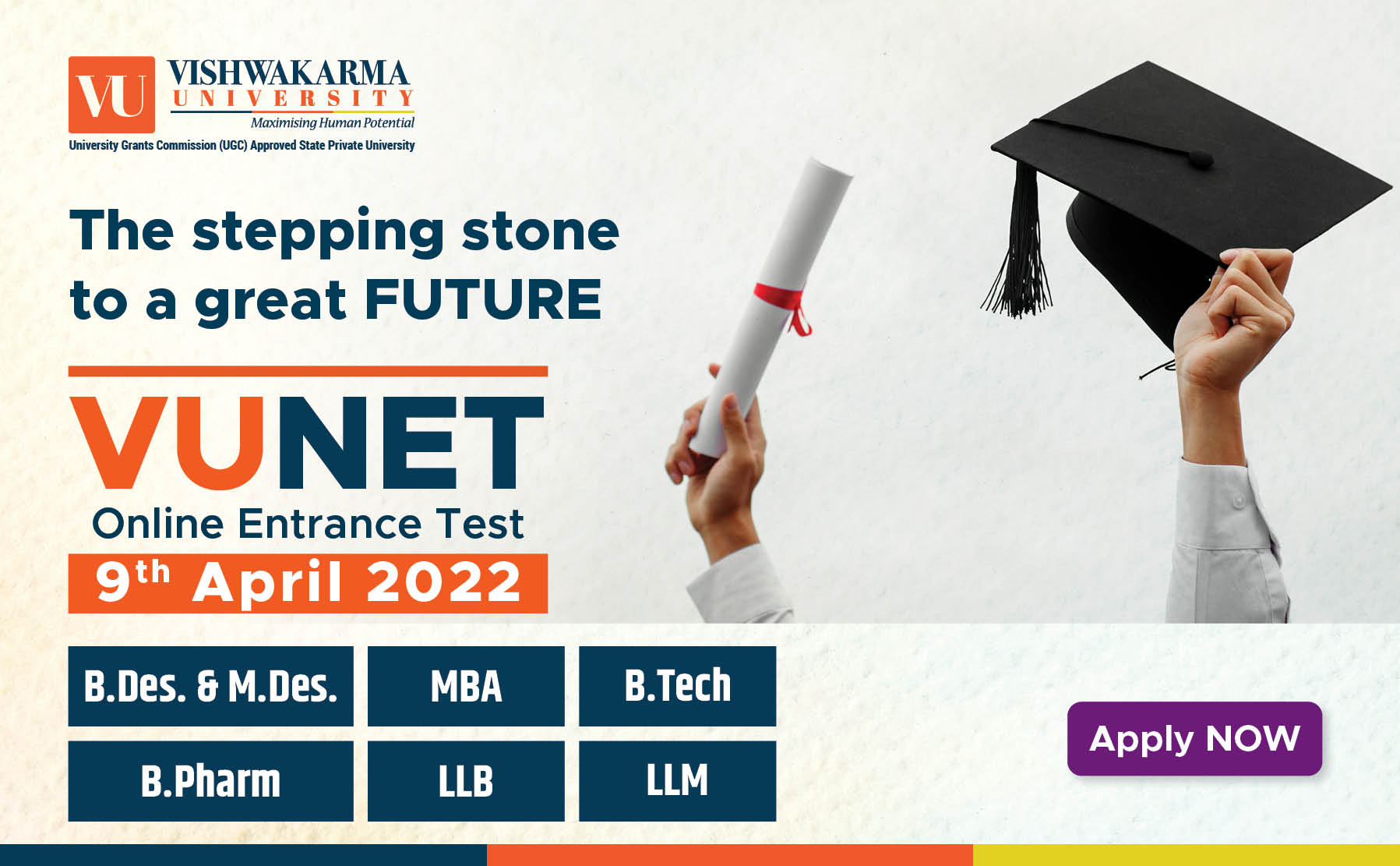
Register for VUNET
Register for VUPET
Ph.D Enquiry